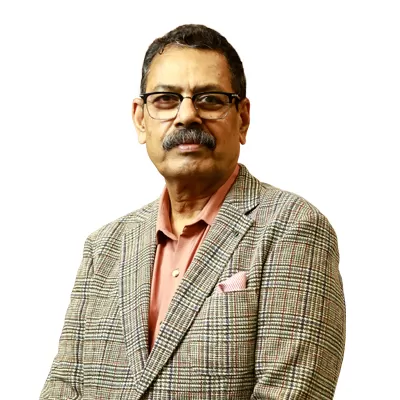
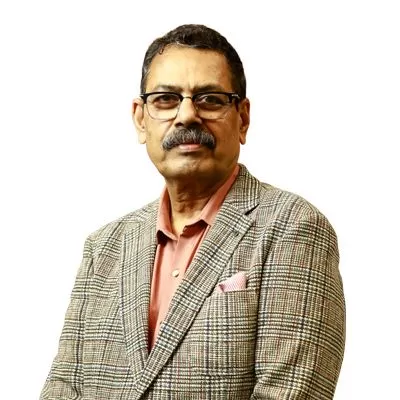
As energy gains global importance, L&T has built a strong presence across hydrocarbons, power, renewables and green technologies. With energy contributing significantly to its revenues, the company is now focused on sustainability and future readiness. In conversation with PRATAP PADODE, Editor-in-Chief, CW, Subramanian Sarma, Deputy Managing Director & President, L&T outlines the company’s strategy for transition, talent and technology.With energy becoming increasingly vital and a key contributor to L&T’s revenues, how do you see the segment evolving?We’ve been building energy infrastructure in India and West Asia for nearly 30 years –starting with equipment manufacturing, then moving into EPC projects in hydrocarbons, thermal power and power transmission and distribution. More recently, we’ve taken on large solar EPC contracts and made strides in offshore wind.We’re now leveraging our offshore experience to enter wind farm development. As part of our energy transition, we’ve committed to carbon neutrality by 2040, with operations becoming water neutral by 2035. We’ve created a clear roadmap and set up a dedicated green energy vertical focusing on electrolysers, green hydrogen EPC and derivatives like green methanol and ammonia.L&T today spans the full energy spectrum. I believe a diverse mix – oil, gas, coal, hydrogen, nuclear, hydro – will coexist as no single source can meet global demand. Our strategy is to build on our capabilities and stay active across the entire energy value chain to stay relevant in the evolving landscape.With new energy technologies emerging rapidly, how is L&T upskilling its workforce to keep pace?In some areas, upskilling is a natural progression – like moving from thermal to solar, or onshore to offshore – so the learning curve is manageable. But with newer technologies like green hydrogen and electrolysers, we saw a capability gap early and acted on it. We hired experienced talent and set up a Green Council with global experts from the US, Europe and East Asia, which meets quarterly to track innovation. We’ve also partnered with academic institutions like IIT Bombay and built an R&D centre in Hazira with top electrochemistry talent to drive green tech innovation.Our approach combines academic collaboration, internal training, external hiring and robust R&D. We also groom fresh talent through hands-on exposure. On-the-job learning is most effective – implementation itself is the greatest teacher.At L&T, we take great pride in our learning culture. In fact, many fondly say L&T stands for Learning and Training rather than Larsen & Toubro. Continuous development is part of our DNA.Do power, hydrocarbons and renewables all fall under one energy umbrella at L&T? How do you balance your focus between hydrocarbons and renewable energy when it comes to projects?While we operate as one group, our businesses are organised into ICs (independent companies) that function like standalone listed entities, with their own leadership, governance and support systems. This decentralised model allows each business – power, hydrocarbons or renewables – to pursue growth, boost market share and improve profitability, while aligning with our overall energy vision. We create an IC when a segment shows strong growth potential. For instance, we have dedicated ICs for renewables, power T&D and separate ICs for onshore and offshore hydrocarbons. Emerging areas like offshore wind are structured as Strategic Business Groups. This model allows each unit to pursue its own priorities and growth path while aligning with L&T’s overall vision. It gives us the flexibility and strategic focus to tap into opportunities across both hydrocarbons and renewables.How is L&T aligning with the National Green Hydrogen Mission?We’re fully aligned. We recently won the first green hydrogen project awarded by Indian Oil Corporation through reverse auction – an outcome of two to three years of active bidding and policy advocacy. We’ve helped shape the mission’s framework and are awaiting the formal award. We’re also bidding for similar projects at other refineries and remain engaged in forums and policy discussions to support ecosystem development. India has the potential to be a global green hydrogen export hub, and we aim to be a leading player, contributing across both the implementation and policy fronts.With your decades of experience in the Middle East, do you see a need for more strategic partnerships in the region?Partnerships are dynamic and context-specific. Some companies need them for market access, technical expertise, risk-sharing or financial strength. But L&T doesn’t face those constraints. We have strong market access and solid credentials and are regularly awarded large contracts on our own.That said, we’re open to partnerships when they make strategic or commercial sense, especially if they add value or improve cost competitiveness. We’ve done joint projects like the Riyadh Metro, our offshore contract with Aramco (with Subsea7), and rail projects with Chinese partners. We don’t need partnerships to survive but we welcome them when they enhance execution, competitiveness or profitability. That flexibility has served us well.Given the rising geopolitical risks in the region, do you see alliances as a way to mitigate those risks?Geopolitical risks are quite different – they can't really be mitigated through alliances. Partnerships are valuable when a collaborator can bring market access, technical expertise or financial strength. But in the case of geopolitical tensions, both partners are usually affected equally. If there’s a disruption, it impacts everyone involved, regardless of the alliance.So, geopolitical risk is something that must be assessed independently. I’ve seen such tensions come and go. Most escalations stabilise before reaching a critical point. Even now, I believe the current situation will de-escalate soon. So, while we factor in geopolitical risk, it’s not a reason to form alliances.Is there a strong revenue link between your energy portfolio and the Middle East?Absolutely. While India is seeing strong energy demand, the Middle East remains key due to the scale and complexity of projects. We’ve built a solid presence and track record there. Currently, our revenue split between India and the Middle East is fairly balanced – ranging from 55:45 to 50:50, depending on the year. This balanced approach works well and we’ll continue tapping both markets based on future opportunities.What is the current revenue mix for the entire energy portfolio within L&T’s overall business?It’s growing steadily. Energy, including renewables, now contributes about 35 to 40 per cent of our total revenue, driven by large hydrocarbon contracts, rising renewable projects and a revival in thermal power. Our order book stands at around Rs 2 trillion, and there’s still room for further growth.Coming to technology, while L&T has a strong presence in the IT space through its verticals, how are you applying advanced technologies like AI and digital twins within your core construction and engineering projects to improve efficiency?Technology integration is a key focus for us. Since 2017, our Chairman has championed this push. We have a central digital centre, and each IC has its own digital function.I understand L&T ranks among the top three construction companies globally for tech adoption, covering IoT, digital twins, facial recognition and safety systems. With the rise of generative AI, we’ve built a dedicated AI team and are developing 108 algorithms to streamline processes like contract analysis and document review. We’re actively deploying digital twins in energy and construction, using BIM for 3D and 4D design coordination. Going forward, AI-driven tools will be increasingly integrated across operations.Do you see these technologies – like AI, digital twins and others – actually improving efficiency, rationalising costs and yielding measurable returns?They should. We often ask ourselves, ‘Where’s the money?’ – meaning, how does this reflect in our bottom line? While it may not show as a direct line item, it’s certainly having an impact. In fact, without these technological interventions, our bottom line might have looked worse. That said, it’s not just about choice anymore; it's a necessity. If we don’t adopt these technologies, we risk being left behind.How do you see government policies, both in India and globally, shaping your future pipeline, especially in areas like decarbonisation? So far, domestic policies have largely helped. Mandates like green hydrogen blending and PLI schemes for electrolysers and batteries have opened new opportunities. India’s carbon credit market is still evolving, but once mature, it could offer real benefits. Internationally, if carbon credits become tradable, in India, our lower production costs in green energy could boost the country’s global share.Are decarbonisation efforts underway in India’s construction sector?Absolutely. Construction is as challenging as cement or steel. Many of our sites lack grid access, so we rely on diesel. Still, we use biofuels, intelligent equipment chips, digital fuel monitoring and rooftop solar at labour camps. We're experimenting with blended cement and water recycling. But we need electric or hybrid machinery and ecosystem-wide support to truly accelerate decarbonisation.Speaking of smart cities, your Smart World division was a significant step. While it began as a model for Indian municipalities, you've also taken it abroad. How is that progressing?It’s going well. In India, urban gaps drove adoption – surveillance and data-led management were key. Globally, especially in the Middle East, interest is rising. One standout example closer to home is the Kumbh Mela. We played a major role in deploying smart technologies – traffic management, facial recognition, water systems and crowd management. We operated a central command centre that helped manage between 400 and 600 million people over a short period. With rising tech adoption, how is L&T addressing cybersecurity?It’s a serious, evolving threat. Defence-related business is especially vulnerable, so we’ve built strong firewalls. Our corporate cybersecurity team uses advanced tech and simulated hacking to spot weak links. It’s a constant arms race – we must stay vigilant as threats grow more sophisticated.Has the real-estate boost improved the viability of the Hyderabad Metro?It’s still a challenging asset, but real estate has helped through leasing and sales. Footfalls have risen from 2-3.5 lakh to 5 lakh. If that grows by another 1.5 lakh and we reduce debt, we’ll reach operational breakeven, paving the way for better monetisation.As a leader, what disruptions do you foresee, and how are you preparing?Technology remains the biggest disruptor – even for nation builders like us. I read about a dam in China built entirely by robots. If such models scale, traditional construction could be at risk. Humanoid tech is advancing too, especially in Japan and the US. Climate-related disruptions are another concern. We must stay adaptive, embrace emerging tech early and rethink models to remain relevant.