Andhra Approves Rs 250 Billion Green Energy Projects
POWER & RENEWABLE ENERGY

Andhra Approves Rs 250 Billion Green Energy Projects

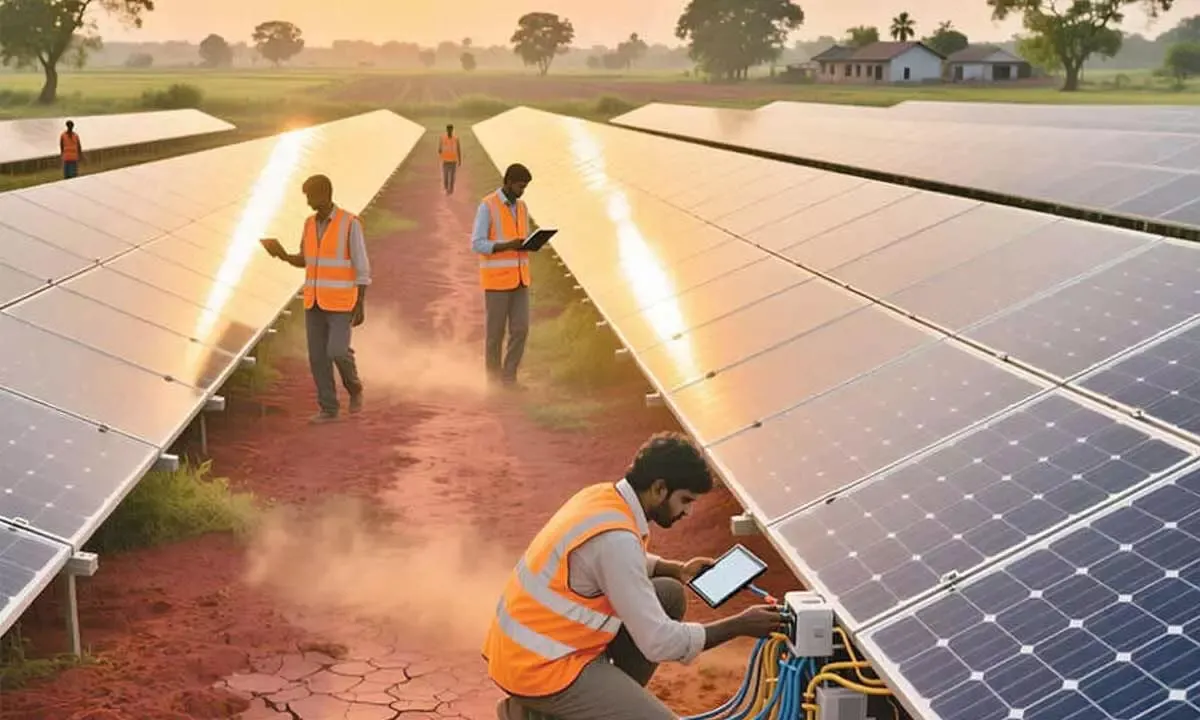
Andhra Pradesh is poised to become a major hub for renewable energy following the approval of three large-scale clean energy projects worth Rs 250 billion, with a combined capacity exceeding 2,800 MW. The clearance was granted by the State Investment Promotion Board (SIPB) during its meeting on 8 October 2025.

The approved ventures include a 400 MW solar project by Tata Power Renewable Energy Ltd, a 400 MW solar-plus-battery storage project by ACME Urja One Pvt Ltd, and a 2,000 MW pumped-hydro storage project by Chinta Green Energy Pvt Ltd.

Tata Power Renewable Energy Ltd will develop its 400 MW (AC) / 560 MWp (DC) solar power plant across Erragudi, Avulenna, Siripi, Dudekunta, Ankampalli, and Taguparthy villages in Beluguppa mandal, Anantapuramu district. The project site does not overlap with any other renewable or wind zones.

ACME Urja One Pvt Ltd will set up a 400 MW (AC) / 580 MWp (DC) solar project with an integrated 600 MWh battery energy storage system (BESS) at Kamalapadu, Konakondla, and Gullapalem villages in Vajrakarur mandal, also in Anantapuramu district. Both projects must be completed within 24 months.

Meanwhile, Chinta Green Energy Pvt Ltd received approval for a 2,000 MW pumped-hydro project at Duggeru in Makkuva mandal, Parvathipuram–Manyam district. The facility, to be completed within 48 months, will utilise 24 million cubic metres (MCM) of water for initial filling and 1.5 MCM annually from the Vengalaraya Sagar I, Vengala Rao Sagar II, and Thotapalli reservoirs, subject to water availability.

According to the State Energy Department, these initiatives align with Andhra Pradesh’s clean-energy policy, which targets over 160 GW of renewable capacity, potential investments of Rs 10 trillion, and the creation of 750,000 direct and indirect jobs.

To attract investment, the state government has fixed a land-lease rate of Rs 31,000 per acre per year, with a 5 per cent escalation every two years, and extended exemptions on stamp duty, registration fees, and land-conversion charges. All approved projects will receive deemed non-agricultural status and qualify for Central government grants under the Ministry of New and Renewable Energy (MNRE).

Andhra Pradesh is poised to become a major hub for renewable energy following the approval of three large-scale clean energy projects worth Rs 250 billion, with a combined capacity exceeding 2,800 MW. The clearance was granted by the State Investment Promotion Board (SIPB) during its meeting on 8 October 2025. The approved ventures include a 400 MW solar project by Tata Power Renewable Energy Ltd, a 400 MW solar-plus-battery storage project by ACME Urja One Pvt Ltd, and a 2,000 MW pumped-hydro storage project by Chinta Green Energy Pvt Ltd. Tata Power Renewable Energy Ltd will develop its 400 MW (AC) / 560 MWp (DC) solar power plant across Erragudi, Avulenna, Siripi, Dudekunta, Ankampalli, and Taguparthy villages in Beluguppa mandal, Anantapuramu district. The project site does not overlap with any other renewable or wind zones. ACME Urja One Pvt Ltd will set up a 400 MW (AC) / 580 MWp (DC) solar project with an integrated 600 MWh battery energy storage system (BESS) at Kamalapadu, Konakondla, and Gullapalem villages in Vajrakarur mandal, also in Anantapuramu district. Both projects must be completed within 24 months. Meanwhile, Chinta Green Energy Pvt Ltd received approval for a 2,000 MW pumped-hydro project at Duggeru in Makkuva mandal, Parvathipuram–Manyam district. The facility, to be completed within 48 months, will utilise 24 million cubic metres (MCM) of water for initial filling and 1.5 MCM annually from the Vengalaraya Sagar I, Vengala Rao Sagar II, and Thotapalli reservoirs, subject to water availability. According to the State Energy Department, these initiatives align with Andhra Pradesh’s clean-energy policy, which targets over 160 GW of renewable capacity, potential investments of Rs 10 trillion, and the creation of 750,000 direct and indirect jobs. To attract investment, the state government has fixed a land-lease rate of Rs 31,000 per acre per year, with a 5 per cent escalation every two years, and extended exemptions on stamp duty, registration fees, and land-conversion charges. All approved projects will receive deemed non-agricultural status and qualify for Central government grants under the Ministry of New and Renewable Energy (MNRE).

Next Story
Real Estate

RBI Rate Cut Boosts Confidence Across Housing Market

Industry Context and Market DynamicsThe real estate industry has welcomed the RBI’s rate cut as a timely boost to affordability and demand. With home prices having risen steadily across major markets, even a marginal reduction in interest rates meaningfully strengthens purchasing power, especially for first-time and mid-income buyers.Ashish Jerath, President – Sales & Marketing, Smartworld Developers, observes:“The RBI’s 25-basis-point cut, bringing the repo rate down to 5.25%, is a timely boost for the real estate sector. Lower interest rates reduce borrowing costs, enabling homeb..

Next Story
Infrastructure Transport

BMC Resumes Rs 170 Billion Road Works, Targets 80 per cent By Jan 2026

Following the withdrawal of the southwest monsoon in October, the Brihanmumbai Municipal Corporation (BMC) has restarted work on 645 roads—covering 297.49 kilometres—under its large-scale concretisation programme. Data shows that more than 60 per cent of the resumed works are located in the western suburbs. Officials said the civic body aims to complete concretisation on 80 per cent of the roads where fresh work has begun by January 2026. Launched in 2022, the Rs 170 billion project seeks to concretise 700 kilometres of roads across Mumbai. All civil works were halted during the monsoon ..

Next Story
Infrastructure Urban

India Pushes Digital Shift In Urban Land Mapping

The Department of Land Resources (DoLR) under the Ministry of Rural Development has convened a National Symposium on NAKSHA – the National Geospatial Knowledge-based Land Survey of Urban Habitations – to advance India’s transition to modern, technology-driven land mapping. Speaking at the inaugural session, Secretary Manoj Joshi underscored the urgent need to move revenue departments away from outdated, tape-based methods and rough hand-drawn sketches. He stressed that adopting latitude–longitude-based digital mapping and GIS-linked registration systems is essential for economic stabi..

Advertisement

Subscribe to Our Newsletter

Get daily newsletters around different themes from Construction world.

STAY CONNECTED

Advertisement

Advertisement

Advertisement

Advertisement

Open In App