Andhra Pradesh Approves Small Modular Reactors as Thermal Alternative
POWER & RENEWABLE ENERGY

Andhra Pradesh Approves Small Modular Reactors as Thermal Alternative

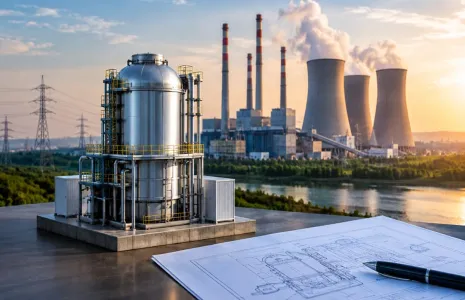
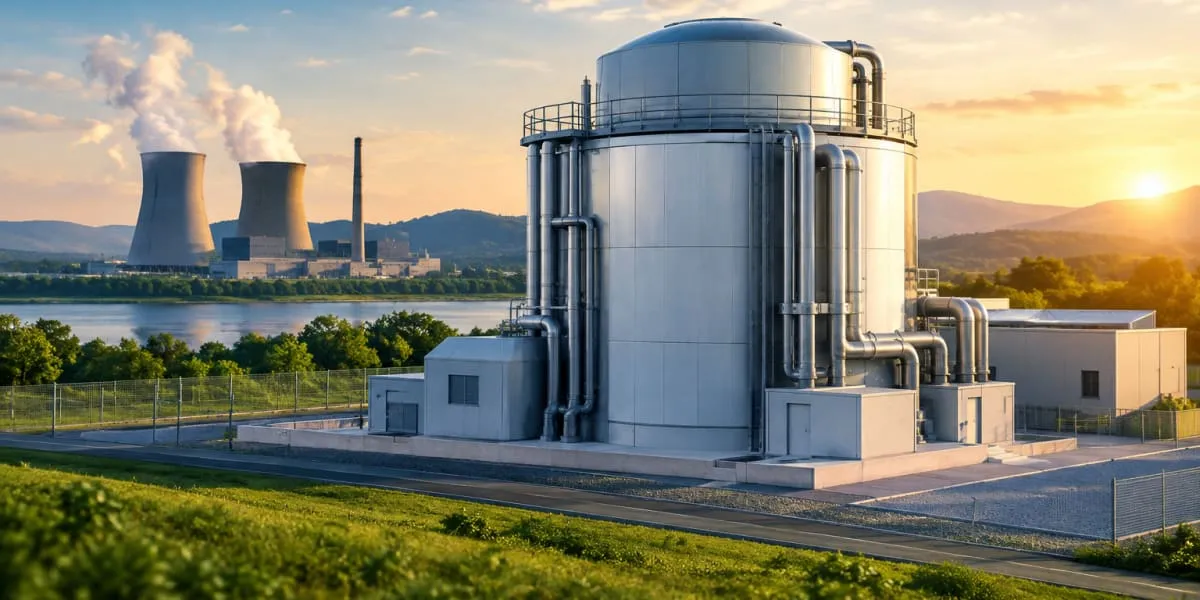
The Andhra Pradesh government has approved the exploration of nuclear power generation using Small Modular Reactors (SMRs) as an alternative to thermal power. The decision was announced on November 20 by K Vijayanand, special chief secretary for Energy, following a request from Andhra Pradesh Power Generation Corporation (APGENCO).

The state will examine the establishment of SMR-based nuclear power plants at retiring thermal power units or other suitable locations. The initiative will proceed after the technology has stabilised, according to the government order approving the proposal.

Vijayanand said the private sector would be permitted to participate in Andhra Pradesh’s effort to establish SMR nuclear power plants. The government has therefore opened the exploration process to potential private participation while assessing locations and the suitability of the technology for the state’s energy requirements.

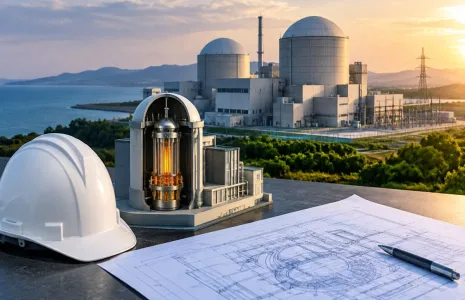
Unlike conventional nuclear power plants with capacity of around 700 MW(e), SMRs generally have capacity of about 300 MW(e), or approximately one-third of the output. Their smaller and modular design allows systems and components to be assembled in factories and transported as units for installation at selected sites.

The International Atomic Energy Agency (IAEA) describes SMRs as a low-carbon electricity option with a smaller physical footprint than conventional nuclear reactors. The technology uses nuclear fission to generate heat for power production and is designed to support more affordable construction, shorter building schedules and incremental deployment as electricity demand rises.

SMRs also require less fuel and typically need refuelling every three to seven years, compared with every one to two years for conventional nuclear plants. The IAEA has said some designs can operate for up to 30 years without refuelling, while SMRs can also be integrated with wind and solar generation in hybrid energy systems.

The Andhra Pradesh government has approved the exploration of nuclear power generation using Small Modular Reactors (SMRs) as an alternative to thermal power. The decision was announced on November 20 by K Vijayanand, special chief secretary for Energy, following a request from Andhra Pradesh Power Generation Corporation (APGENCO). The state will examine the establishment of SMR-based nuclear power plants at retiring thermal power units or other suitable locations. The initiative will proceed after the technology has stabilised, according to the government order approving the proposal. Vijayanand said the private sector would be permitted to participate in Andhra Pradesh’s effort to establish SMR nuclear power plants. The government has therefore opened the exploration process to potential private participation while assessing locations and the suitability of the technology for the state’s energy requirements. Unlike conventional nuclear power plants with capacity of around 700 MW(e), SMRs generally have capacity of about 300 MW(e), or approximately one-third of the output. Their smaller and modular design allows systems and components to be assembled in factories and transported as units for installation at selected sites. The International Atomic Energy Agency (IAEA) describes SMRs as a low-carbon electricity option with a smaller physical footprint than conventional nuclear reactors. The technology uses nuclear fission to generate heat for power production and is designed to support more affordable construction, shorter building schedules and incremental deployment as electricity demand rises. SMRs also require less fuel and typically need refuelling every three to seven years, compared with every one to two years for conventional nuclear plants. The IAEA has said some designs can operate for up to 30 years without refuelling, while SMRs can also be integrated with wind and solar generation in hybrid energy systems.

Related Stories

Gold Stories

Next Story
Real Estate

WSB Real Estate Partners Exits Six Housing Investments

WSB Real Estate Partners recently announced the successful exit of six residential investments across Bengaluru, Mumbai Metropolitan Region (MMR) and National Capital Region (NCR), delivering an average internal rate of return (IRR) of 19–21 per cent and an overall investment return of 1.4 times.The real estate-focused investment firm invested approximately Rs 7 billion across six mid-affordable housing projects over the past four years. All six investments were fully repaid between April and November 2026, several months ahead of their original investment tenures.WSB collaborated with sever..

Next Story
Infrastructure Transport

Aluminium Industry Seeks Policy Support for Rs 4 Trillion Investment

The Aluminium Association of India (AAI) has recently urged the government to introduce supportive policy measures to safeguard the sector’s proposed Rs 4 trillion investment pipeline. The association highlighted the need for a predictable policy framework to strengthen domestic manufacturing, expand production capacity and reduce import dependence.AAI submitted its recommendations for the Union Budget 2027-28 to the Ministries of Finance, Commerce and Industry, and Mines, along with the Department for Promotion of Industry and Internal Trade (DPIIT).India’s aluminium demand is projected t..
Next Story
Technology

ABB Unveils Intelligent Motor to Accelerate Industrial AI Adoption

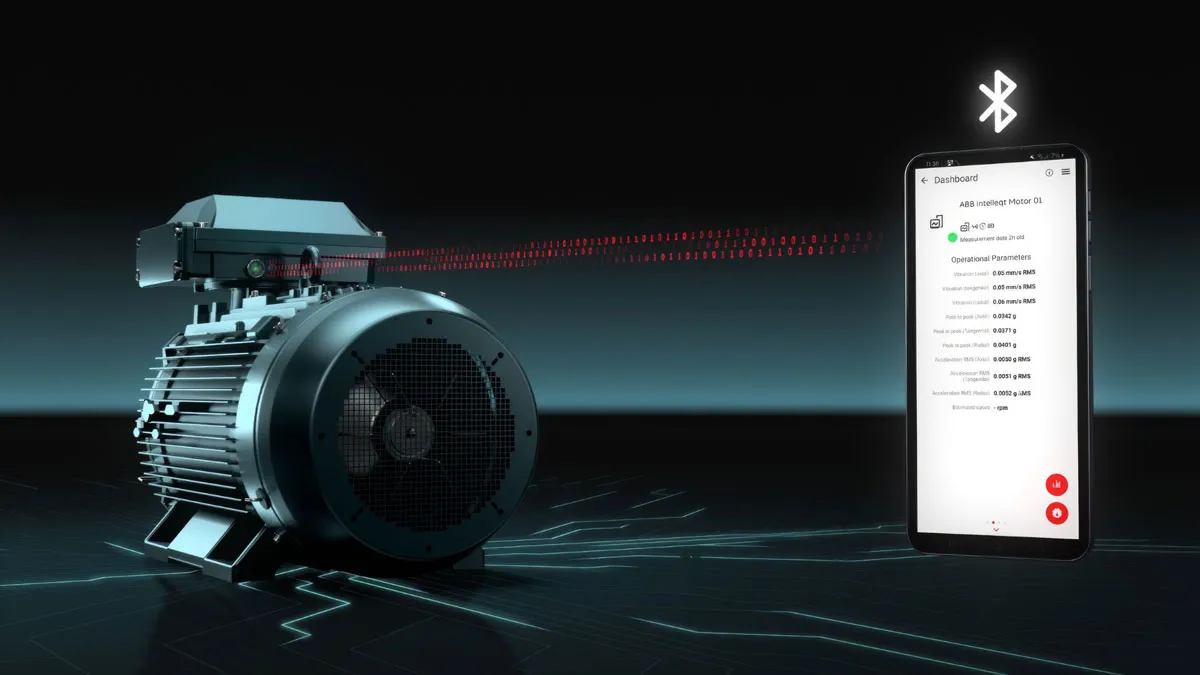
ABB recently launched Intelleqt, which it describes as the world’s first low-voltage motor with factory-integrated intelligence, at the SPS trade fair in Germany. Designed to deliver real-time operational insights from its first rotation, the motor enables industrial operators to integrate equipment-level data into existing digital platforms while retaining full ownership of their data.The launch addresses growing challenges in scaling artificial intelligence (AI) across industrial operations, particularly data quality and availability. According to Deloitte, while 84 per cent of manufacture..

Advertisement

Subscribe to Our Newsletter

Get daily newsletters around different themes from Construction world.

STAY CONNECTED

Advertisement

SPECIAL OFFER
QR Code