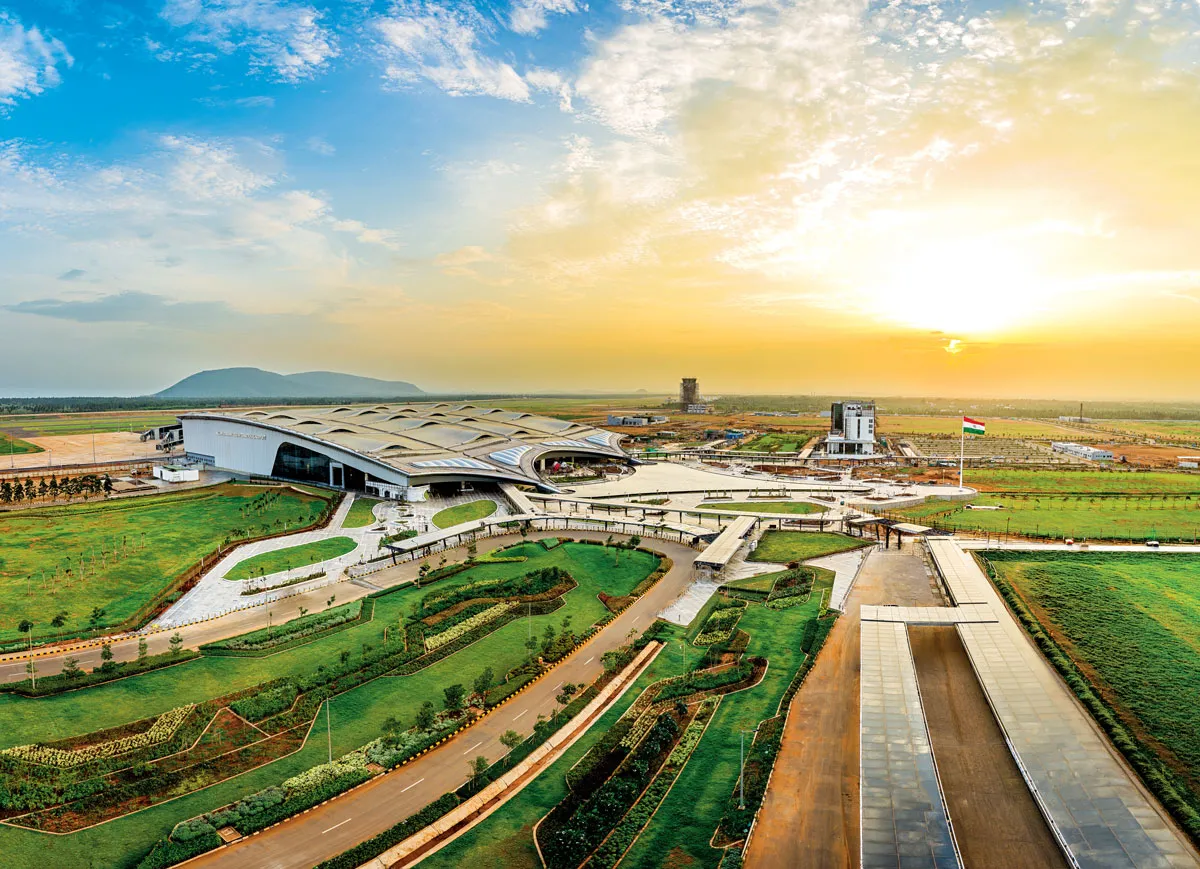
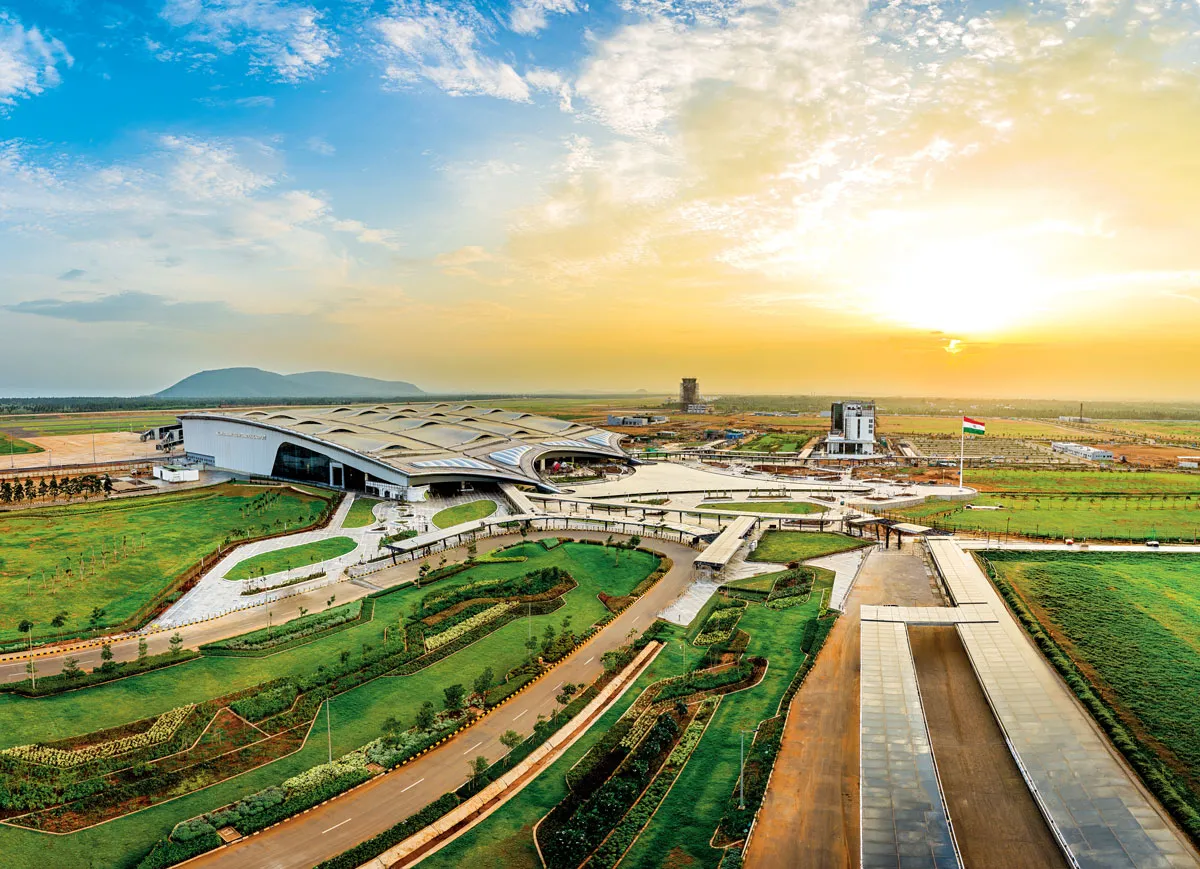
An airport can be structurally complete and still not be ready to fly. At Alluri Sitarama Raju International Airport at Bhogapuram, that distinction defines the project. Developed under a public-private partnership (PPP) between GMR Group and the Government of Andhra Pradesh at a cost of over Rs 56.40 billion, the greenfield airport began commercial operations on August 17, 2026, with an initial capacity of 6 million passengers annually. Its 77,342-sq-m terminal, 3,800-m Code 4E runway, 18 aircraft stands and 55-m ATC tower establish the scale. The more revealing story, however, is how the project was engineered to work as one system.From packages to performance“The most challenging part of commissioning Vizag was not making individual systems work but making them work together seamlessly,” says Prabhakara Rao Indana, Deputy Managing Director, GMR Group.That meant taking Operational Readiness and Airport Transfer (ORAT) beyond a final checklist. GMR ran simulations covering passenger flows, baggage throughput, emergency response, redundancies and operational interfaces. Automated power changeovers, HVAC performance under peak occupancy, baggage-system availability and the interface between operational technology and physical infrastructure were put under scrutiny.The coastal setting raised the stakes. The terminal is designed for wind speeds of up to 275 kmph and the ATC tower up to 295 kmph. Drainage resilience and utility reliability under extreme weather were, therefore, part of readiness, not afterthoughts.Speed without losing controlExecution began with a different scale of challenge. The project involved about 1.5 crore cu m of earthwork completed in nine months, the procurement of 16 lakh tonne of boulders without opening a quarry, and runway completion in 14 months. Excavated earth was reused, while 3D-enabled equipment, digital checklists and real-time safety tools were deployed to improve precision and speed.Digital coordination supported the physical pace. Publicly available BIM documentation details the use of 3D modelling, 4D and 5D BIM, VR, AR and laser scanning. The value was not simply better visualisation; it was the ability to coordinate disciplines and bring construction information closer to site execution.Test before you multiplyThe terminal ceiling shows the same logic at component level. Its gold Muggulu-inspired forms translate a traditional Andhra motif into a high-performance airport ceiling. “Drawing the Muggulu geometry was the easier part,” says Deependra Singh, Managing Director, durlum India. The harder task was turning it into repeatable engineered components that could take lighting, coexist with building services and still read clearly at terminal scale.About 18 months before opening, durlum India built a full-scale mock-up at the actual installation height. GMR and the design consultants studied the system from passenger eye level, assessed how the gold surfaces responded to lighting and finalised the Polylam vertical baffle system, RAL 1036 finish and concealed LED provision before volume production.That validation mattered because the Muggulu elements are hand-welded. Maintaining the same workmanship across the terminal meant fabrication, finishing, packing and dispatch had to follow the installation sequence. Lights, sprinklers and diffusers were coordinated into the ceiling geometry before production, limiting site modifications.The larger construction lesson is straightforward: Resolve uncertainty before multiplying it across site.Green after opening dayBhogapuram's sustainability strategy includes energy-efficient HVAC and lighting, a 5-mw solar plant, rainwater harvesting, smart building management, waste-management measures, EV charging and environmental monitoring. The terminal is designed to green building standards and is registered with the US Green Building Council (USGBC).Rao, however, places equal emphasis on what happens after opening. Rainwater harvesting, artificially created reservoirs, wastewater recycling and low-consumption fixtures form part of the water strategy. Integrated monitoring is intended to optimise HVAC, lighting and equipment performance throughout the asset lifecycle.durlum's package follows similar logic. Galvanised mild steel adds corrosion protection in the coastal environment; factory production reduces cutting onsite and enables scrap segregation for recycling; and individual components can be removed rather than replacing larger sections. Acoustic fleece is integrated into the perforated ceiling systems, while S4 panels can be removed and refitted without tools or disturbing adjacent panels.Sustainability here is not only about adding green features. It is about making the asset consume less, last longer and require fewer interventions.From maintenance to predictionThat lifecycle thinking extends into maintenance. According to Rao, HVAC, electrical substations, baggage handling, airfield ground lighting and utility infrastructure were designed with monitoring capability to track asset health, energy consumption and operating trends.At the Airport Predictive Operations Centre (APOC), operational data and equipment diagnostics can flag early degradation before failure affects airport operations. Rao points to reduced unplanned downtime, optimised spare-parts inventories and lower lifecycle costs as the potential payoff.That may be Bhogapuram's most relevant message for India's airport pipeline. A modern airport cannot be delivered as disconnected civil, MEP and technology packages. Long-term performance is decided much earlier – when interfaces are closed, mock-ups eliminate design risk, climate resilience is engineered in, and maintainability is considered before handover. Opening day proved the airport could fly. The harder test is whether those decisions keep it flying efficiently for decades.- PRANJAL PATILFACT FILE Project cost: Over Rs 56.40 billionTerminal: 77,342 sq mRunway: 3,800 m, Code 4ECommercial operations: August 17, 2026Developer & operator: GMR Visakhapatnam International Airport (GVIAL) Government stakeholder: Government of Andhra Pradesh/Andhra Pradesh Airports Development Corporation (APADCL) EPC contractor: Larsen & Toubro Construction Architectural design contributor: E&A Design Consultants LLP Engineering & airport asset management: GMR Engineering & Management Services (GEMS) IT managed services partner: WAISL Metal ceiling systems: durlum India – POLYLAM and associated Muggulu-inspired ceiling elements Air navigation/CNS-ATM services: Airports Authority of India (AAI) Quotes:“Sustainability has been approached as a lifecycle strategy rather than a project milestone.” - Prabhakara Rao Indana, Deputy Managing Director, GMR Group“Maintaining the same workmanship across the full terminal quantity required much tighter control.” - Deependra Singh, Managing Director, durlum IndiaUpdated Fact FileFACT FILECommercial operations: August 17, 2026 Project cost: Over Rs 56.40 billionTerminal (area sq m): 77,342 sq mPassenger capacity: 6 million passengers annually (expandable to over 40 million)Developer & operator: GMR Visakhapatnam International Airport (GVIAL)EPC contractor: L&T ConstructionArchitectural design contributor: E&A Design Consultants LLPEngineering & airport asset management: GMR Engineering & Management Services IT managed services partner: WAISLMetal ceiling systems: durlum India Handrails & railing systems: Sun Corporation Fabricators & Engineers (Sun Railings)Integrated airport security systems: Godrej Enterprises Group Structural glazing & façade systems: Glaze Techno Facade Systems Aluminium composite cladding: Aludecor Lamination Glass substrates: Gold Plus Glass Industry Pedestrian walkway glazing: SOBHA Glazing & Metal WorksArchitectural concrete formwork: Wallgreens Formsolutions LLP CISF accommodation facility: Bheemaa Infra Solutions Automation control panels: VMAG Automation Systems