Andhra Pradesh Approves SMR Assessment as Thermal Alternative
ECONOMY & POLICY

Andhra Pradesh Approves SMR Assessment as Thermal Alternative

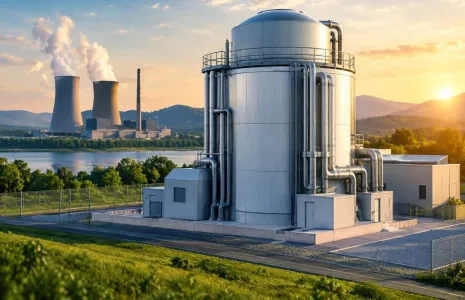
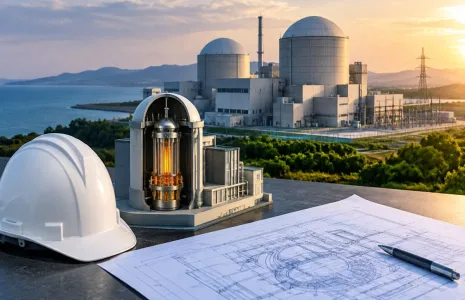
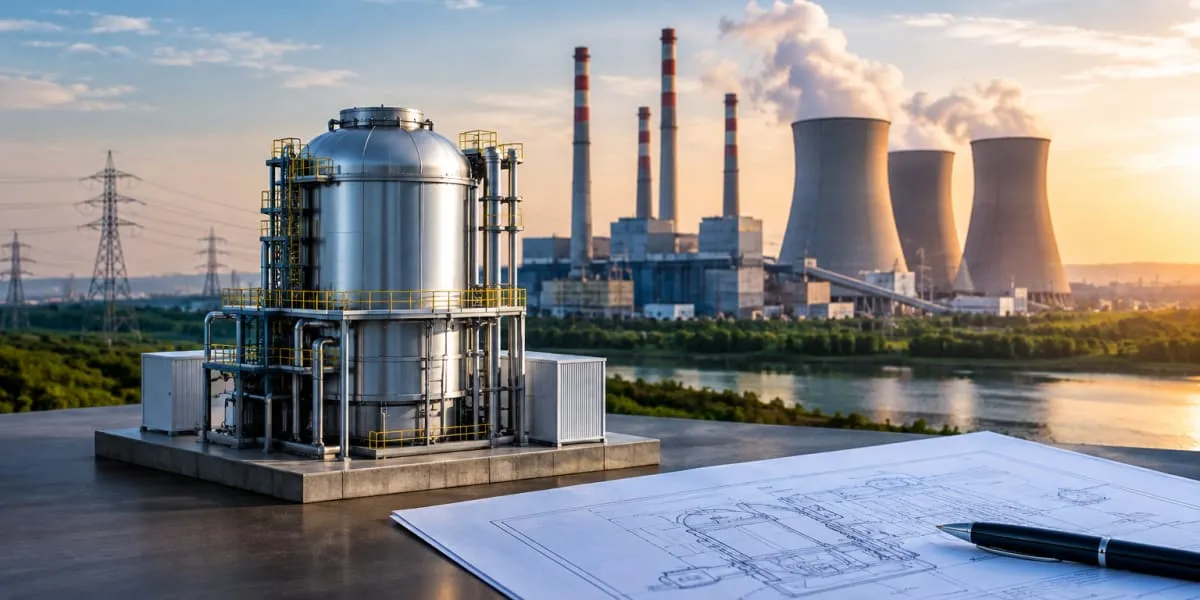
The Andhra Pradesh government has approved an initial assessment of nuclear power based on Small Modular Reactors (SMRs) as a possible alternative to thermal generation. The state will examine whether SMR-based plants can be deployed at thermal power units nearing retirement or at other suitable locations, according to a media report.

The proposal follows a request from Andhra Pradesh Power Generation Corporation (APGENCO) to explore nuclear generation as thermal units are phased out. K Vijayanand, Special Chief Secretary (Energy), indicated that the state would examine the option after SMR technology stabilises. The government has also allowed for private-sector participation in the development of any projects that may emerge from the assessment.

The approval does not represent a decision to construct a specific nuclear plant. It does not establish a project capacity, investment requirement, construction schedule or commissioning date. The next stage will involve assessing technology options, identifying suitable sites and reviewing regulatory, financing and safety requirements before any project can progress beyond exploration.

SMRs generally have a smaller generation capacity and physical footprint than conventional nuclear reactors. Their modular systems can be manufactured and assembled before being transported to a project site, while some designs require less frequent refuelling. These features could allow the state to evaluate whether existing power-generation locations can support a different technology as older thermal units retire.

Private participation could broaden the pool of potential developers and investors if Andhra Pradesh moves from technology assessment to project development. However, no private company, SMR design or location has been identified so far. The assessment will determine whether the technology can provide a practical replacement or supplementary source of generation capacity currently supplied by thermal plants, while also establishing whether existing sites and infrastructure are suitable for future deployment.

The Andhra Pradesh government has approved an initial assessment of nuclear power based on Small Modular Reactors (SMRs) as a possible alternative to thermal generation. The state will examine whether SMR-based plants can be deployed at thermal power units nearing retirement or at other suitable locations, according to a media report. The proposal follows a request from Andhra Pradesh Power Generation Corporation (APGENCO) to explore nuclear generation as thermal units are phased out. K Vijayanand, Special Chief Secretary (Energy), indicated that the state would examine the option after SMR technology stabilises. The government has also allowed for private-sector participation in the development of any projects that may emerge from the assessment. The approval does not represent a decision to construct a specific nuclear plant. It does not establish a project capacity, investment requirement, construction schedule or commissioning date. The next stage will involve assessing technology options, identifying suitable sites and reviewing regulatory, financing and safety requirements before any project can progress beyond exploration. SMRs generally have a smaller generation capacity and physical footprint than conventional nuclear reactors. Their modular systems can be manufactured and assembled before being transported to a project site, while some designs require less frequent refuelling. These features could allow the state to evaluate whether existing power-generation locations can support a different technology as older thermal units retire. Private participation could broaden the pool of potential developers and investors if Andhra Pradesh moves from technology assessment to project development. However, no private company, SMR design or location has been identified so far. The assessment will determine whether the technology can provide a practical replacement or supplementary source of generation capacity currently supplied by thermal plants, while also establishing whether existing sites and infrastructure are suitable for future deployment.

Related Stories

Gold Stories

Next Story
Real Estate

WSB Real Estate Partners Exits Six Housing Investments

WSB Real Estate Partners recently announced the successful exit of six residential investments across Bengaluru, Mumbai Metropolitan Region (MMR) and National Capital Region (NCR), delivering an average internal rate of return (IRR) of 19–21 per cent and an overall investment return of 1.4 times.The real estate-focused investment firm invested approximately Rs 7 billion across six mid-affordable housing projects over the past four years. All six investments were fully repaid between April and November 2026, several months ahead of their original investment tenures.WSB collaborated with sever..

Next Story
Infrastructure Transport

Aluminium Industry Seeks Policy Support for Rs 4 Trillion Investment

The Aluminium Association of India (AAI) has recently urged the government to introduce supportive policy measures to safeguard the sector’s proposed Rs 4 trillion investment pipeline. The association highlighted the need for a predictable policy framework to strengthen domestic manufacturing, expand production capacity and reduce import dependence.AAI submitted its recommendations for the Union Budget 2027-28 to the Ministries of Finance, Commerce and Industry, and Mines, along with the Department for Promotion of Industry and Internal Trade (DPIIT).India’s aluminium demand is projected t..

Next Story
Technology

ABB Unveils Intelligent Motor to Accelerate Industrial AI Adoption

ABB recently launched Intelleqt, which it describes as the world’s first low-voltage motor with factory-integrated intelligence, at the SPS trade fair in Germany. Designed to deliver real-time operational insights from its first rotation, the motor enables industrial operators to integrate equipment-level data into existing digital platforms while retaining full ownership of their data.The launch addresses growing challenges in scaling artificial intelligence (AI) across industrial operations, particularly data quality and availability. According to Deloitte, while 84 per cent of manufacture..

Advertisement

Subscribe to Our Newsletter

Get daily newsletters around different themes from Construction world.

STAY CONNECTED

Advertisement

SPECIAL OFFER
QR Code