Haryana Approves First Private Power Distributor
POWER & RENEWABLE ENERGY

Haryana Approves First Private Power Distributor

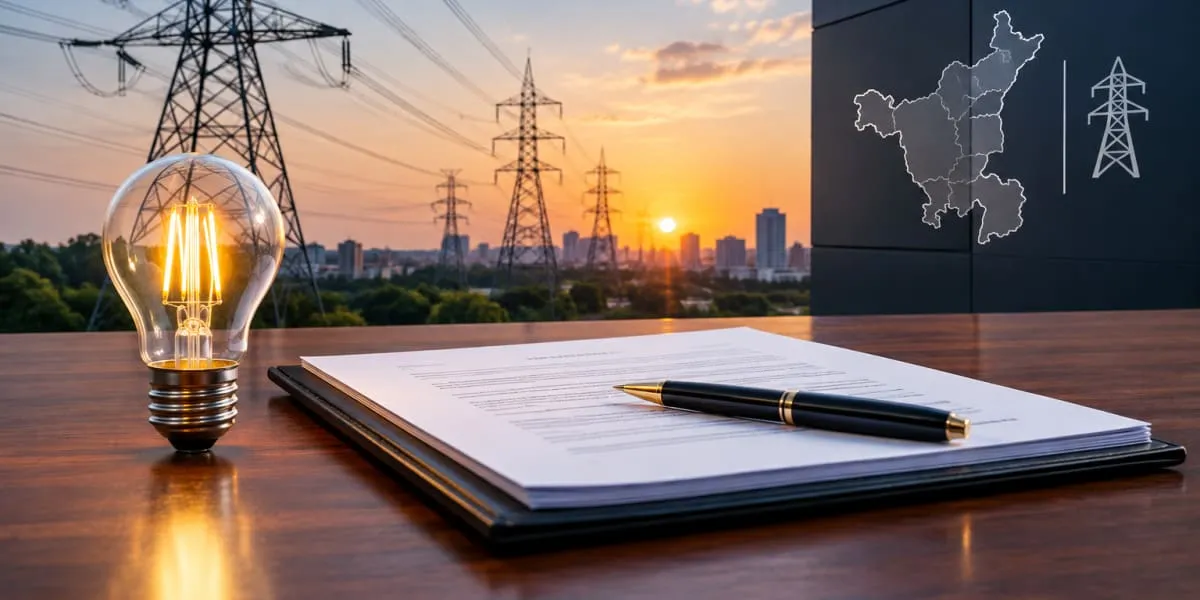
The Haryana Electricity Regulatory Commission (HERC) has granted Eleven Power a 25-year parallel electricity distribution licence for Gurugram and Nuh, despite opposition from power sector employees and the state government. The licence will take effect after the regulatory process is completed and will make Eleven Power the first private distributor to operate in Haryana.

Haryana’s electricity distribution sector is currently dominated by two state-owned distribution companies, Uttar Haryana Bijli Vitran Nigam and Dakshin Haryana Bijli Vitran Nigam. The approval is intended to give consumers a choice of supplier and introduce competition, but the government has said it will challenge the order before the Appellate Tribunal for Electricity.

Under Section 14 of the Electricity Act, 2003, more than one distributor can operate in the same geographical area if each builds and maintains its own network. Eleven Power’s business plan envisages capital investment of Rs. 47.17 bn over five years from 2026-27 to 2030-31. The company has formed a consortium with Advait Energy Transitions, Vision India Services and HEC Infra Projects to develop infrastructure.

Energy sector experts have warned that parallel networks could raise delivery costs because infrastructure and fixed expenses would be spread across separate consumer bases. Fixed expenses account for about 38 to 56 per cent of a distribution company’s total annual revenue requirement, while fixed charges collected from consumers contribute only about 9 to 20 per cent of revenue. A shift of consumers to the new distributor could therefore weaken the incumbent’s ability to recover costs.

The most significant dispute concerns cross-subsidies, through which commercial and industrial consumers help fund electricity supplied to households and farmers. Dakshin Haryana Bijli Vitran Nigam has said Gurugram and Nuh account for 35.23 per cent of its sales and 42.98 per cent of revenue, which stood at Rs. 94.94 bn in 2025-26. It estimates revenue losses ranging from Rs. 4.24 bn to Rs. 42.72 bn if between 2.5 per cent and 45 per cent of sales shift to Eleven Power. The private company has disputed the projections and said its plan assumes only 2.5 per cent of existing sales will move in 2027-28.

The Haryana Electricity Regulatory Commission (HERC) has granted Eleven Power a 25-year parallel electricity distribution licence for Gurugram and Nuh, despite opposition from power sector employees and the state government. The licence will take effect after the regulatory process is completed and will make Eleven Power the first private distributor to operate in Haryana. Haryana’s electricity distribution sector is currently dominated by two state-owned distribution companies, Uttar Haryana Bijli Vitran Nigam and Dakshin Haryana Bijli Vitran Nigam. The approval is intended to give consumers a choice of supplier and introduce competition, but the government has said it will challenge the order before the Appellate Tribunal for Electricity. Under Section 14 of the Electricity Act, 2003, more than one distributor can operate in the same geographical area if each builds and maintains its own network. Eleven Power’s business plan envisages capital investment of Rs. 47.17 bn over five years from 2026-27 to 2030-31. The company has formed a consortium with Advait Energy Transitions, Vision India Services and HEC Infra Projects to develop infrastructure. Energy sector experts have warned that parallel networks could raise delivery costs because infrastructure and fixed expenses would be spread across separate consumer bases. Fixed expenses account for about 38 to 56 per cent of a distribution company’s total annual revenue requirement, while fixed charges collected from consumers contribute only about 9 to 20 per cent of revenue. A shift of consumers to the new distributor could therefore weaken the incumbent’s ability to recover costs. The most significant dispute concerns cross-subsidies, through which commercial and industrial consumers help fund electricity supplied to households and farmers. Dakshin Haryana Bijli Vitran Nigam has said Gurugram and Nuh account for 35.23 per cent of its sales and 42.98 per cent of revenue, which stood at Rs. 94.94 bn in 2025-26. It estimates revenue losses ranging from Rs. 4.24 bn to Rs. 42.72 bn if between 2.5 per cent and 45 per cent of sales shift to Eleven Power. The private company has disputed the projections and said its plan assumes only 2.5 per cent of existing sales will move in 2027-28.

Related Stories

Gold Stories

Next Story
Building Material

Nuvoco reports 13.5% revenue growth in Q2 FY27

Nuvoco Vistas Corp. Ltd. reported consolidated revenue of Rs 27.9 billion for Q2 FY27, up 13.5% year on year. Cement sales volume rose 9% to 4.7 million tonnes (MMT), while EBITDA increased 11% to Rs 4.11 billion.The company said it began its cement operations in 2014 with a 2.3 MMT per annum (MMTPA) operation at Nimbol. It now aims to reach 35 MMTPA of cement capacity by FY28, nearly 15 times its initial capacity. Its portfolio spans cement, ready-mix concrete and modern building materials.On sustainability and cost efficiency, Nuvoco partnered with CleanMax for a 46.4 MW wind-solar hybrid re..
Next Story
Infrastructure Urban

Thermax showcases water technologies at WETEX 2026

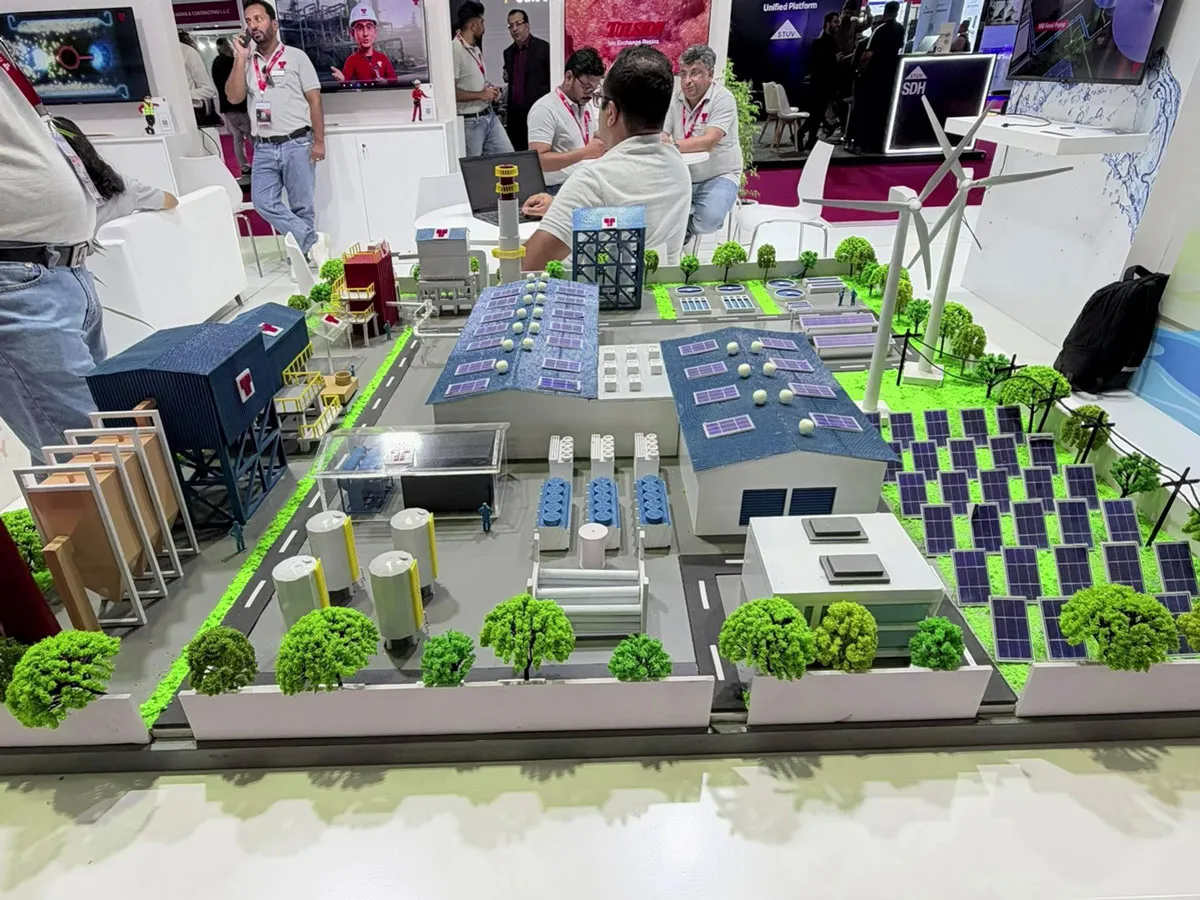
Thermax Limited showcased its seawater desalination and industrial water recovery technologies at the Water, Energy, Technology and Environment Exhibition 2026 (WETEX), held at Dubai World Trade Centre from October 20 to 22. Its digital showcase featured solutions intended to help industries secure reliable water supplies, improve resource efficiency and reduce environmental impact.Dubai Electricity and Water Authority’s (DEWA) financial annual report stated that desalinated water production rose 5.51% year on year in the first quarter of 2026 to 37.57 billion imperial gallons. By June 2026,..
Next Story
Infrastructure Energy

Bondada receives LOI for 120 MWh battery storage project

Bondada Engineering Limited, a Hyderabad-based engineering, procurement and construction (EPC) company, has received a Letter of Intent (LOI) from Gujarat Industries Power Company Limited (GIPCL) for a 20 MW/120 MWh Vanadium Redox Flow Battery Energy Storage System (VRFB BESS). The project will be developed at GIPCL’s 165 MW natural gas power plant complex in Vadodara, Gujarat, and includes a 10-year operations and maintenance (O&M) contract.Bondada Engineering said the project is India’s largest grid-scale VRFB energy storage system. It marks the company’s expansion into advanced en..

Advertisement

Subscribe to Our Newsletter

Get daily newsletters around different themes from Construction world.

STAY CONNECTED

Advertisement

SPECIAL OFFER
QR Code