+
QuantE’s Zero-Capex Solar Slashes Housing Bills by 50%
POWER & RENEWABLE ENERGY

QuantE’s Zero-Capex Solar Slashes Housing Bills by 50%

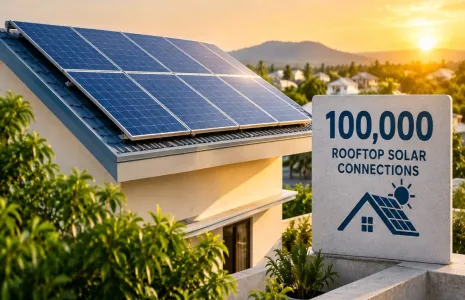
With residential electricity bills dropping by nearly 50 per cent through zero-capex solar deployments, QuantE Energy Tech is targeting India’s housing societies at scale. Akshat Khare and Ankush Vashisht, Co-Founders, outline how IoT and AI-enabled monitoring and a service-led model are...

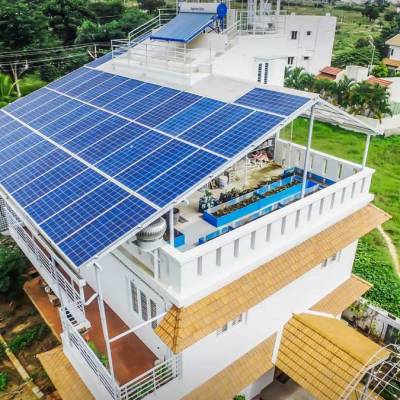
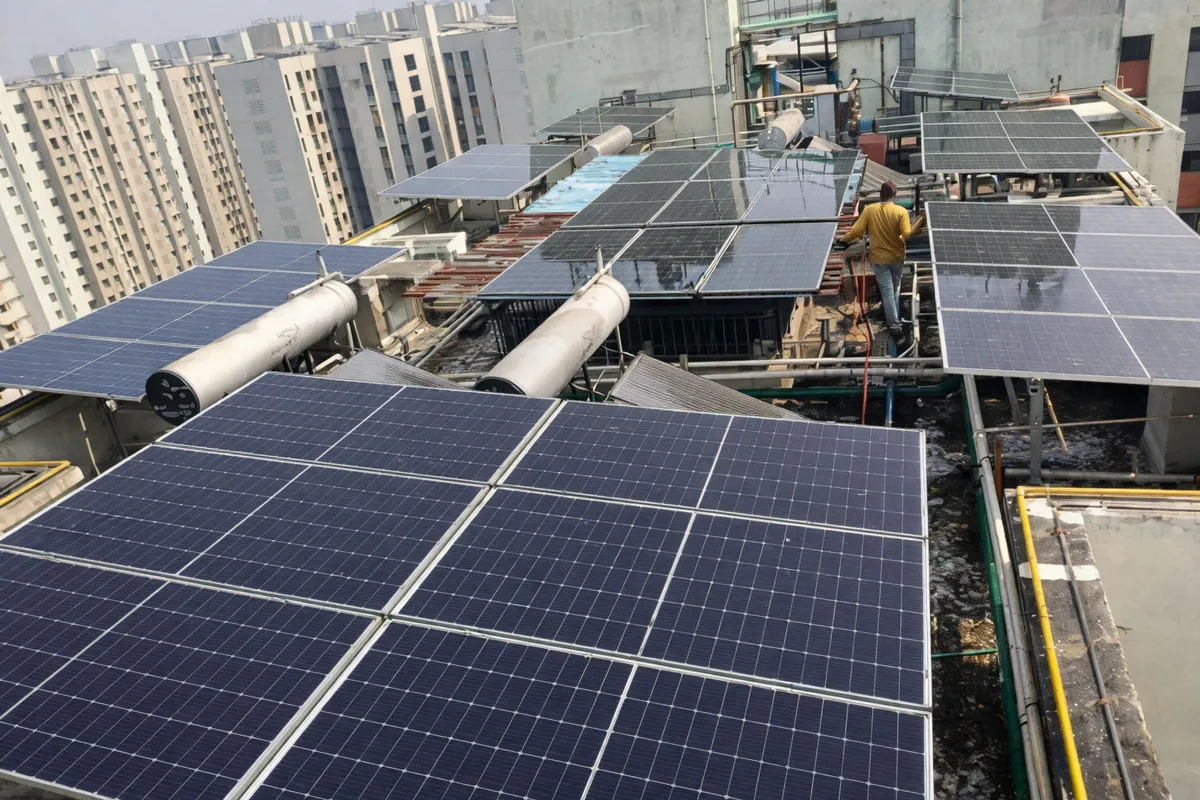
With residential electricity bills dropping by nearly 50 per cent through zero-capex solar deployments, QuantE Energy Tech is targeting India’s housing societies at scale. Akshat Khare and Ankush Vashisht, Co-Founders, outline how IoT and AI-enabled monitoring and a service-led model are accelerating rooftop solar adoption in an interview with CW.What technology advances are enabling rooftop solar to be integrated as core infrastructure in high-density residential projects?The biggest shift has been the move from standalone EPC-led installations to service-led models backed by digital monitoring. Today, rooftop solar is no longer viewed as an add-on but as long-term infrastructure. With continuous performance tracking using technology, predictive maintenance and structured operational frameworks, solar can reliably support dense residential loads over extended periods. This allows societies to treat energy generation as a managed utility rather than a one-time installation.How does IoT and AI based monitoring improve performance assurance and asset management for developers and housing societies?IoT plays a critical role in maintaining asset performance. Traditionally, once EPC players commissioned a plant, maintenance often suffered. With IoT, we monitor generation data daily and monthly, allowing us to identify degradation trends. Additionally, we also bring in an element of intelligence in this entire business model through AI. Preventive maintenance – such as panel cleaning – is triggered by quick data analysis rather than physical inspection. Additionally, the system generates real time alerts for faults, enabling immediate corrective action. This ensures generation losses are minimised and asset health is maintained throughout the lifecycle. This way, we are able to reduce losses due to maintenance issues by up to 85 per cent!From a B2B perspective, how does the solar-as-a-service (OPEX) model improve project viability compared to traditional EPC-led rooftop installations?In EPC-led models, the asset owner bears upfront capex and long-term performance risk, often without inhouse expertise. Under the OPEX or RESCO model, that risk shifts to the service provider. Customers pay only for the electricity consumed, while performance, maintenance and asset optimisation remain our responsibility. This model is particularly attractive for organisations whose core business is not energy management, as it delivers predictable savings without operational complexity.Have you partnered with real-estate developers to integrate solar infrastructure and at what stage are solar rooftops integrated?Although so far, our projects have been mainly with people-run housing societies rather than developer-managed properties, we are very keen to partner with good developers who want to build economically sustainable green societies. Partnering with reputed and listed developers is a key part of our growth strategy. Solar integration typically occurs once statutory approvals from local discoms are obtained, following due diligence and pre-synchronisation testing. Going forward, working with developers will allow solar to be embedded more seamlessly into residential projects.Can you cite a residential project where digital monitoring and zero-capex deployment have delivered measurable operational or cost benefits?One of our major projects is a 150-kw installation in the Ambernath region near Mumbai. Prior to solar deployment, the society paid nearly ₹ 22 per unit for electricity. Under our fixed-tariff power purchase agreement, this dropped to about ₹ 8.5 per unit for 10 years. The society achieved nearly 60 per cent savings without any upfront investment. The impact on cash flows was immediate.How relevant is the integration of solar, energy storage and EV charging for future residential and mixed-use construction in India?Solar growth in India is largely policy-driven, with ambitious national targets and schemes such as PM Surya Yojana focused on the housing sector. However, solar generation is intermittent, making energy storage increasingly important. With discoms introducing time-of-day tariffs, battery storage will become essential to maximise clean energy use beyond daylight hours. Storage will play a defining role in making integrated residential energy systems viable.Over the next three to five years, how does QuantE plan to scale its B2B partnerships while strengthening its technology platform?Our scaling strategy centres on partnering with credible developers and expanding our service footprint across housing projects. Strengthening our technology platform – particularly IoT-led monitoring and operational intelligence – will remain a priority. By combining financing, performance assurance and long-term asset management, we aim to make solar adoption simpler and more reliable for residential stakeholders while building a scalable B2B ecosystem.

Next Story
Equipment

Kabelschlepp India Installs Robotic VMC in Bengaluru

Kabelschlepp India, part of the Tsubaki Group, has installed a state-of-the-art Vertical Machining Center (VMC) integrated with robotic automation at its Bengaluru facility. The inauguration was held in the presence of Henning Preis, President & CEO, Kabelschlepp Group, Jörg Schulz, Vice President – Production, and Srinivas P. Kamisetty, Managing Director, Kabelschlepp India.The high-precision CNC VMC is designed for advanced milling, drilling, tapping and multi-axis machining. Equipped with a vertical spindle orientation, automatic tool changer and intelligent CNC control system, it en..

Next Story
Infrastructure Transport

Highway Delivery Reset!

Project delays and inefficiencies continue to bedevil the progress of India’s National Highways network. A multi-pronged reform agenda is needed to inject greater transparency and accountability at every stage – from planning and procurement to execution, maintenance and oversight. This article offers key recommendations and reform strategies that government stakeholders – from the Ministry of Road Transport & Highways (MoRTH) and the National Highways Authority of India (NHAI) to state agencies and oversight bodies – should pursue to put highway development on a better track.Decen..

Next Story
Infrastructure Transport

MSIDC Executes ₹37,000 Crore Road Programme

With Rs 37,000 crore worth of road projects under execution across Maharashtra, Maharashtra State Infrastructure Development Corporation (MSIDC) is driving one of the state’s largest infrastructure programmes. Dr Brijesh Dixit, Managing Director, discusses the institutional reforms, execution frameworks, financing strategies and technology adoption enabling timely, high-quality delivery, in conversation with PRATAP PADODE, Editor-in-Chief, CW.With over Rs 37,000 crore worth of road projects underway across districts – many under tight timelines – what institutional and executio..

Advertisement

Subscribe to Our Newsletter

Get daily newsletters around different themes from Construction world.

STAY CONNECTED

Advertisement

Advertisement

Advertisement

Open In App