India’s Green Hydrogen Prices Drop to USD 4.4/kg
POWER & RENEWABLE ENERGY

India’s Green Hydrogen Prices Drop to USD 4.4/kg

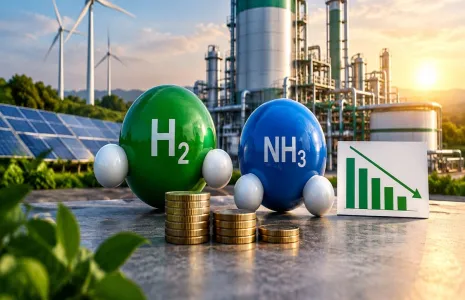
The cost of green hydrogen in India has fallen by more than USD 1 per kg in recent tenders floated by state-owned oil companies, Oil Minister Hardeep Singh Puri said on Thursday. Prices have dropped from USD 5.5 per kg to USD 4.4–4.5 per kg, signalling rapid progress in cost reduction for the zero-emission fuel.
At the World Hydrogen India conference organised by S&P Global, Puri highlighted that Larsen & Toubro quoted USD 4.5 per kg, inclusive of tax, in a tender for 10,000 tonnes per annum of green hydrogen production at Indian Oil Corporation’s Panipat refinery. The contract covers a 25-year supply period.
Subsequent tenders for 5,000 tonnes each from Bharat Petroleum Corporation Ltd (BPCL) and Hindustan Petroleum Corporation Ltd (HPCL) attracted bids of USD 4.39 per kg from Ocior Energy, indicating further price competitiveness. Puri expressed confidence that newer tenders would drive prices down even further.
Green hydrogen, produced by splitting water into hydrogen and oxygen using renewable electricity, is a clean fuel alternative for industries such as steel, cement, chemicals, transport, and power generation. India has set a target of producing 5 million tonnes annually by 2030 under the National Green Hydrogen Mission, which was launched in 2021 to capture 10 per cent of the global market.
Puri described green hydrogen as the “fuel of the future” and said India was uniquely placed to scale production and consumption locally. He emphasised the urgency of transition, noting that several states had already announced dedicated policies to support the sector.
According to S&P Global Commodity Insights, global hydrogen demand is projected to grow 3.5 per cent annually to reach 220 million tonnes by 2050, with 60 per cent expected from low-carbon sources. India’s strategy aims to scale production, reduce costs, enable exports and establish itself as a trusted hub for green hydrogen. 

The cost of green hydrogen in India has fallen by more than USD 1 per kg in recent tenders floated by state-owned oil companies, Oil Minister Hardeep Singh Puri said on Thursday. Prices have dropped from USD 5.5 per kg to USD 4.4–4.5 per kg, signalling rapid progress in cost reduction for the zero-emission fuel.At the World Hydrogen India conference organised by S&P Global, Puri highlighted that Larsen & Toubro quoted USD 4.5 per kg, inclusive of tax, in a tender for 10,000 tonnes per annum of green hydrogen production at Indian Oil Corporation’s Panipat refinery. The contract covers a 25-year supply period.Subsequent tenders for 5,000 tonnes each from Bharat Petroleum Corporation Ltd (BPCL) and Hindustan Petroleum Corporation Ltd (HPCL) attracted bids of USD 4.39 per kg from Ocior Energy, indicating further price competitiveness. Puri expressed confidence that newer tenders would drive prices down even further.Green hydrogen, produced by splitting water into hydrogen and oxygen using renewable electricity, is a clean fuel alternative for industries such as steel, cement, chemicals, transport, and power generation. India has set a target of producing 5 million tonnes annually by 2030 under the National Green Hydrogen Mission, which was launched in 2021 to capture 10 per cent of the global market.Puri described green hydrogen as the “fuel of the future” and said India was uniquely placed to scale production and consumption locally. He emphasised the urgency of transition, noting that several states had already announced dedicated policies to support the sector.According to S&P Global Commodity Insights, global hydrogen demand is projected to grow 3.5 per cent annually to reach 220 million tonnes by 2050, with 60 per cent expected from low-carbon sources. India’s strategy aims to scale production, reduce costs, enable exports and establish itself as a trusted hub for green hydrogen. 

Next Story
Resources

Jyoti Structures Launches Heat Safety Drive Across Sites

Jyoti Structures (JSL) has strengthened heat safety measures across its project sites and manufacturing facilities as temperatures rise across India. The company has implemented a Summer Safety Plan covering all transmission line projects to address risks related to heat stress, dehydration and worker fatigue.The initiative includes rescheduling work away from peak afternoon temperatures, provision of drinking water, ORS and lemon-salt solutions, and installation of rest shelters near work areas. Daily toolbox talks, worker health monitoring, first-aid preparedness, emergency transport arrange..

Next Story
Real Estate

MHADA Declares 82 Buildings Most Dangerous in Central and South Mumbai

The Maharashtra Housing and Area Development Authority (MHADA) has declared 82 buildings as most dangerous across Central and South Mumbai and has appealed to residents to vacate immediately. The list, prepared after structural assessments by the authority, identifies buildings judged to pose imminent risk to occupants and to passersby. Local civic bodies have been asked to coordinate evacuations and to make arrangements for temporary shelter and rehabilitation for displaced households. Officials said the authority prioritised buildings with visible structural distress, severe cracking, tiltin..

Next Story
Infrastructure Transport

Damage Reported At Halwara Airport Terminal After First Rains

Severe damage was reported at the terminal of Halwara Airport during the first major rain spell of the season, prompting immediate concern among aviation and local authorities. Images from the site showed water ingress and visible deterioration of the terminal interior, affecting passenger areas and ancillary services. The airport authority suspended certain operations temporarily to assess structural safety and ensure passenger wellbeing. Preliminary inspections have prioritised electrical systems and roof seals to prevent further water ingress. State aviation officials ordered a formal inqui..

Advertisement

Subscribe to Our Newsletter

Get daily newsletters around different themes from Construction world.

STAY CONNECTED

Advertisement

Advertisement

Advertisement