India Needs Faster Renewable Integration to Meet 2035 Climate Targets
POWER & RENEWABLE ENERGY

India Needs Faster Renewable Integration to Meet 2035 Climate Targets

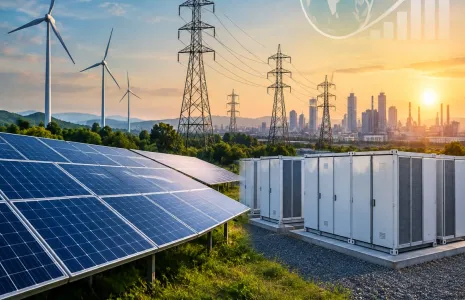
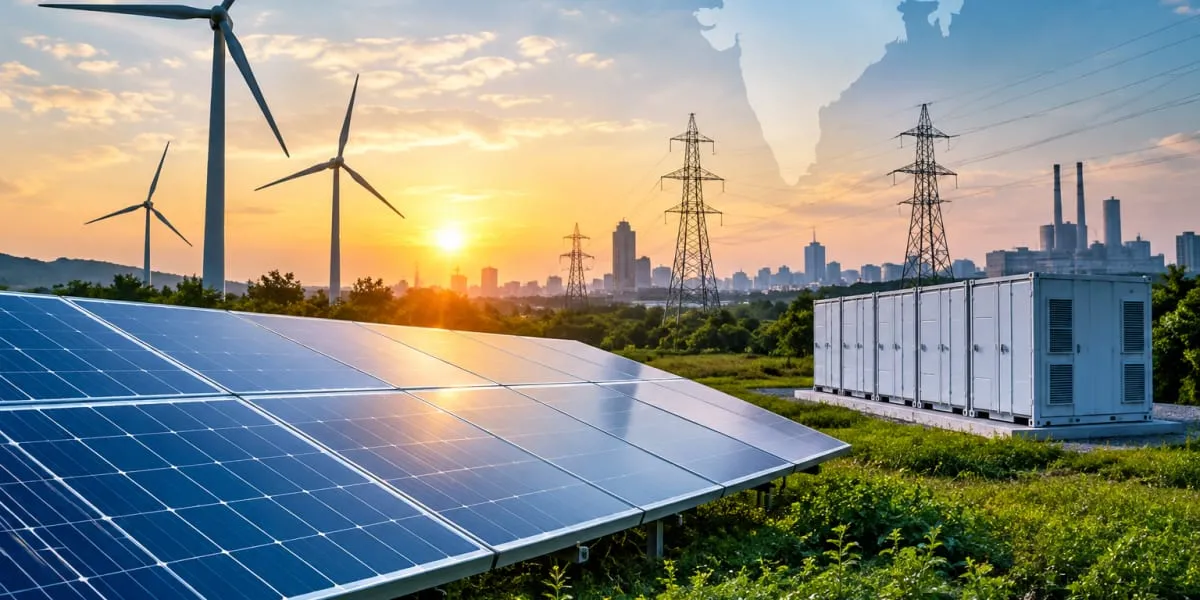
India must accelerate renewable energy integration, strengthen electricity grid infrastructure and expand battery storage to meet its enhanced climate commitments for 2031-2035, according to a report by Rubix Data Sciences. The report said rising industrial activity and electricity demand could make decarbonisation more difficult despite stronger policy commitments and increased renewable capacity.

The report, titled COP31: India’s Climate Commitments, Performance, and Priorities, said investments in electricity transmission, grid flexibility, battery storage and energy efficiency would have to accompany renewable energy deployment. Grid constraints and inadequate storage continue to limit the utilisation of clean power, creating challenges for translating installed capacity into sustained emissions reductions.

India’s position in the Climate Change Performance Index 2027 declined five places to 28th, from 23rd in 2026. The country ranked 40th in renewable energy, 31st in greenhouse gas emissions, 33rd in energy use and 13th in climate policy. Its per-capita greenhouse gas emissions remained below the global average at 2.25 t of carbon dioxide equivalent per person in 2025, compared with 5.18 t globally.

The Union Cabinet approved India’s revised Nationally Determined Contribution for 2031-2035 in March 2026. The commitments include reducing the emissions intensity of gross domestic product by 47 per cent from 2005 levels by 2035 and raising non-fossil fuel sources to 60 per cent of cumulative installed electricity capacity.

India also aims to create an additional carbon sink of 3.5-4 bn t of carbon dioxide equivalent through forest and tree cover by 2035, while retaining its net-zero emissions target for 2070. The report noted that emissions intensity had already fallen by 36 per cent between 2005 and 2020, exceeding the earlier 2030 target of 33-35 per cent, while non-fossil-based installed electricity capacity reached 54 per cent by July 2026.

At COP31, India is prioritising climate justice, equitable burden-sharing, predictable climate finance, technology transfer, capacity-building, adaptation and a just transition. The report said financial and technological support from developed economies remained important to help developing countries implement their climate strategies.

India must accelerate renewable energy integration, strengthen electricity grid infrastructure and expand battery storage to meet its enhanced climate commitments for 2031-2035, according to a report by Rubix Data Sciences. The report said rising industrial activity and electricity demand could make decarbonisation more difficult despite stronger policy commitments and increased renewable capacity. The report, titled COP31: India’s Climate Commitments, Performance, and Priorities, said investments in electricity transmission, grid flexibility, battery storage and energy efficiency would have to accompany renewable energy deployment. Grid constraints and inadequate storage continue to limit the utilisation of clean power, creating challenges for translating installed capacity into sustained emissions reductions. India’s position in the Climate Change Performance Index 2027 declined five places to 28th, from 23rd in 2026. The country ranked 40th in renewable energy, 31st in greenhouse gas emissions, 33rd in energy use and 13th in climate policy. Its per-capita greenhouse gas emissions remained below the global average at 2.25 t of carbon dioxide equivalent per person in 2025, compared with 5.18 t globally. The Union Cabinet approved India’s revised Nationally Determined Contribution for 2031-2035 in March 2026. The commitments include reducing the emissions intensity of gross domestic product by 47 per cent from 2005 levels by 2035 and raising non-fossil fuel sources to 60 per cent of cumulative installed electricity capacity. India also aims to create an additional carbon sink of 3.5-4 bn t of carbon dioxide equivalent through forest and tree cover by 2035, while retaining its net-zero emissions target for 2070. The report noted that emissions intensity had already fallen by 36 per cent between 2005 and 2020, exceeding the earlier 2030 target of 33-35 per cent, while non-fossil-based installed electricity capacity reached 54 per cent by July 2026. At COP31, India is prioritising climate justice, equitable burden-sharing, predictable climate finance, technology transfer, capacity-building, adaptation and a just transition. The report said financial and technological support from developed economies remained important to help developing countries implement their climate strategies.

Related Stories

Gold Stories

Next Story
Technology

Autodesk And Neilsoft Establish BIM And Digital Twin Centre Of Excellence In Pune

Autodesk and Neilsoft have partnered to establish a Built Environment and Architecture, Engineering, Construction and Operations (AECO) Centre of Excellence (COE) at Neilsoft's headquarters in Pune. The initiative aims to accelerate BIM and digital twin adoption across India, the Asia-Pacific (APAC) region and global markets.The centre will combine Autodesk Forma, its cloud-based AECO platform, with Neilsoft's digital twin capabilities and 30 years of Autodesk delivery expertise. It will focus on digital twin and building operations, integrated design and construction, sustainable design and E..
Next Story
Technology

L&T Technology Services Named Leader In Everest Group’s PLM Services PEAK Matrix Assessment 2026

L&T Technology Services (LTTS) has been recognised as a Leader in Everest Group’s inaugural Product Lifecycle Management (PLM) Services PEAK Matrix® Assessment 2026, highlighting its capabilities in engineering-led PLM transformation and product lifecycle services.The assessment recognises LTTS’ Engineering Intelligence (EI) offerings, which combine advisory, implementation, cloud PLM, digital thread, digital twin, Model-Based Systems Engineering (MBSE) and AI-enabled transformation capabilities. Its portfolio of accelerators, lifecycle services and AI-led solutions aims to help enter..

Next Story
Real Estate

Metro Satyam Announces Rs 4.5 Billion Luxury Project in Kharghar

Metro Satyam has announced One Crest, a luxury residential development in Sector 20, Kharghar, Navi Mumbai, with an estimated investment of Rs 4.5 billion and revenue potential of Rs 7 billion. The project will offer 3 and 4 BHK residences, along with a select collection of 2 BHK homes.A key feature of the development is VERVE, its lobby and clubhouse, furnished with Roberto Cavalli Home Interiors. The association with the Italian luxury interiors brand has been facilitated by ONIRO Group, in association with Czar Group in India, represented by partner Ashutosh Pathare. The project will also f..

Advertisement

Subscribe to Our Newsletter

Get daily newsletters around different themes from Construction world.

STAY CONNECTED

Advertisement

SPECIAL OFFER
QR Code