India Reaffirms Commitment to Global Solar Cooperation
POWER & RENEWABLE ENERGY

India Reaffirms Commitment to Global Solar Cooperation

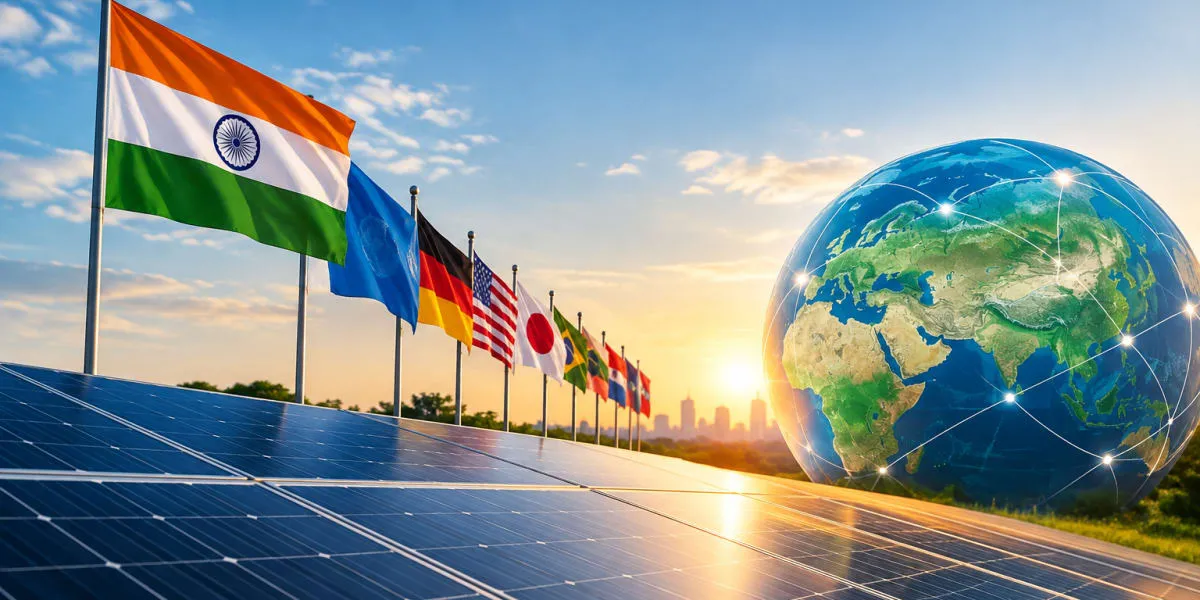
India has reaffirmed its commitment to international solar cooperation and the equitable distribution of the benefits of renewable energy development, Union Minister for New and Renewable Energy Pralhad Joshi said in New Delhi. His remarks followed the Bharat Renewable Energy Summit and Expo 2026, where he highlighted India’s election as president of the International Solar Alliance (ISA) for a third consecutive term.

Joshi said discussions at the event had reinforced the need to move from solar commitments to investments, partnerships to projects, and ambition to measurable impact. He said solar deployment needed to be financed in areas where it could deliver the greatest social and economic benefits, particularly underserved communities and developing regions.

The minister described the $200 mn Africa Solar Facility as an important step towards unlocking investment in Africa’s distributed renewable energy sector. India has committed around Rs. 2.25 bn to the initiative, demonstrating its support for affordable solar access. Joshi also referred to the $300 mn Nigeria Distributed Renewable Energy Fund as a model for expanding similar financing approaches across the continent.

India’s cooperation with France led to the establishment of the ISA in 2015, and the alliance has since developed into a platform for international cooperation, particularly among countries of the Global South. It now has 130 signatory and member countries. ISA-supported initiatives in Fiji, Madagascar, Comoros and Seychelles have helped power healthcare facilities and schools, provide clean drinking water and support agricultural cold storage, strengthening livelihoods and climate resilience.

Joshi said India’s PM-KUSUM initiative had helped empower 3 mn farmers through solar energy by reducing irrigation costs and creating additional income opportunities. The ISA is working to adapt the model across member countries, especially in Africa, with farmers placed at the centre of the energy transition.

He also highlighted 17 Solar Technology Application Resource Centres, the Global Capability Centre-SHINE and the AI-enabled ISA Academy. These institutions are intended to strengthen capacity, develop skills and use emerging technologies to accelerate solar deployment and advance the alliance’s vision of empowering communities through accessible clean energy.

India has reaffirmed its commitment to international solar cooperation and the equitable distribution of the benefits of renewable energy development, Union Minister for New and Renewable Energy Pralhad Joshi said in New Delhi. His remarks followed the Bharat Renewable Energy Summit and Expo 2026, where he highlighted India’s election as president of the International Solar Alliance (ISA) for a third consecutive term. Joshi said discussions at the event had reinforced the need to move from solar commitments to investments, partnerships to projects, and ambition to measurable impact. He said solar deployment needed to be financed in areas where it could deliver the greatest social and economic benefits, particularly underserved communities and developing regions. The minister described the $200 mn Africa Solar Facility as an important step towards unlocking investment in Africa’s distributed renewable energy sector. India has committed around Rs. 2.25 bn to the initiative, demonstrating its support for affordable solar access. Joshi also referred to the $300 mn Nigeria Distributed Renewable Energy Fund as a model for expanding similar financing approaches across the continent. India’s cooperation with France led to the establishment of the ISA in 2015, and the alliance has since developed into a platform for international cooperation, particularly among countries of the Global South. It now has 130 signatory and member countries. ISA-supported initiatives in Fiji, Madagascar, Comoros and Seychelles have helped power healthcare facilities and schools, provide clean drinking water and support agricultural cold storage, strengthening livelihoods and climate resilience. Joshi said India’s PM-KUSUM initiative had helped empower 3 mn farmers through solar energy by reducing irrigation costs and creating additional income opportunities. The ISA is working to adapt the model across member countries, especially in Africa, with farmers placed at the centre of the energy transition. He also highlighted 17 Solar Technology Application Resource Centres, the Global Capability Centre-SHINE and the AI-enabled ISA Academy. These institutions are intended to strengthen capacity, develop skills and use emerging technologies to accelerate solar deployment and advance the alliance’s vision of empowering communities through accessible clean energy.

Related Stories

Gold Stories

Next Story
Infrastructure Energy

Essar Signs PPA for 300 MW Hybrid Renewable Energy Project

Essar Renewables, the renewable energy arm of Essar Power, has signed a Power Purchase Agreement (PPA) with NHPC for a 300 MW renewable energy project in Andhra Pradesh. The agreement follows the company’s successful bid for the project two years ago. Essar Power will invest approximately Rs. 45 bn in the development. The project will combine solar and wind generation with Battery Energy Storage Systems (BESS), enabling the supply of reliable and dispatchable renewable power. It forms part of Essar Power’s plan to build a diversified energy portfolio of approximately 5 GW across renewable,..

Advertisement

Subscribe to Our Newsletter

Get daily newsletters around different themes from Construction world.

STAY CONNECTED

Advertisement

SPECIAL OFFER
QR Code