India to Invite Offshore Wind Tenders in Tamil Nadu, Gujarat
POWER & RENEWABLE ENERGY

India to Invite Offshore Wind Tenders in Tamil Nadu, Gujarat

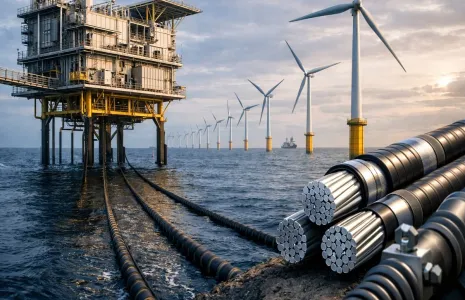
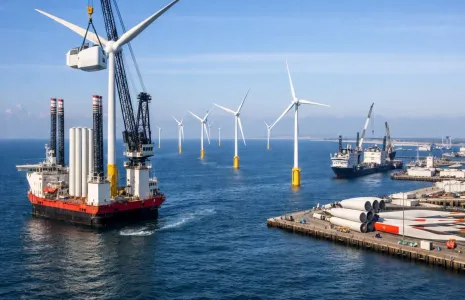
In a major step towards clean energy, the Union government is expected to invite tenders for setting up offshore wind energy projects of 500 megawatts (MW) each in Tamil Nadu and Gujarat by February next year, Union Minister for New and Renewable Energy Pralhad Joshi announced on Thursday.

Speaking at the seventh International Trade Fair and Conference on Renewable Energy in Chennai, Joshi stated that the government aims to achieve 500 gigawatts (GW) of renewable energy capacity by 2030, with offshore wind projects contributing significantly to that target. Of this, between 100 GW and 110 GW will come from wind energy alone. “We are taking concrete steps to develop India’s vast offshore wind potential, targeting 30 GW through initial tenders,” he added.

The minister emphasised that Tamil Nadu, Gujarat, Karnataka, and Maharashtra continue to lead India’s wind power revolution. “The steady humming of wind turbines, especially here in Tamil Nadu, symbolises India’s clean energy dream,” he remarked.

Highlighting the importance of domestic manufacturing, Joshi urged the development of a world-class wind manufacturing ecosystem that is efficient, competitive, and land-optimal. He noted that the reduction in Goods and Services Tax (GST) on renewable energy equipment is encouraging greater production. He also suggested repowering old wind farms by replacing outdated, smaller turbines with modern, high-capacity units.

Tamil Nadu’s Minister for Electricity and Transport, S S Sivasankar, who also addressed the conference, said the state’s coastline has a potential of over 35 GW of offshore wind energy, supported by strong and consistent wind speeds. “Through the National Institute of Wind Energy (NIWE) and the India–Denmark Green Strategic Partnership, we are preparing for India’s first offshore wind project off the Tamil Nadu coast,” he said.

Sivasankar further mentioned that the recently announced Green Transition Alliance (India–Denmark, 2025) will enhance cooperation in offshore wind, energy storage, and industrial decarbonisation.

He also highlighted Tamil Nadu’s long-standing leadership in renewable energy, stating that the state ranks fourth nationally in total installed renewable capacity, with over 25,500 MW generated from renewable sources. In wind energy alone, Tamil Nadu stands second nationwide, with an impressive installed capacity of 11,500 MW.

In a major step towards clean energy, the Union government is expected to invite tenders for setting up offshore wind energy projects of 500 megawatts (MW) each in Tamil Nadu and Gujarat by February next year, Union Minister for New and Renewable Energy Pralhad Joshi announced on Thursday. Speaking at the seventh International Trade Fair and Conference on Renewable Energy in Chennai, Joshi stated that the government aims to achieve 500 gigawatts (GW) of renewable energy capacity by 2030, with offshore wind projects contributing significantly to that target. Of this, between 100 GW and 110 GW will come from wind energy alone. “We are taking concrete steps to develop India’s vast offshore wind potential, targeting 30 GW through initial tenders,” he added. The minister emphasised that Tamil Nadu, Gujarat, Karnataka, and Maharashtra continue to lead India’s wind power revolution. “The steady humming of wind turbines, especially here in Tamil Nadu, symbolises India’s clean energy dream,” he remarked. Highlighting the importance of domestic manufacturing, Joshi urged the development of a world-class wind manufacturing ecosystem that is efficient, competitive, and land-optimal. He noted that the reduction in Goods and Services Tax (GST) on renewable energy equipment is encouraging greater production. He also suggested repowering old wind farms by replacing outdated, smaller turbines with modern, high-capacity units. Tamil Nadu’s Minister for Electricity and Transport, S S Sivasankar, who also addressed the conference, said the state’s coastline has a potential of over 35 GW of offshore wind energy, supported by strong and consistent wind speeds. “Through the National Institute of Wind Energy (NIWE) and the India–Denmark Green Strategic Partnership, we are preparing for India’s first offshore wind project off the Tamil Nadu coast,” he said. Sivasankar further mentioned that the recently announced Green Transition Alliance (India–Denmark, 2025) will enhance cooperation in offshore wind, energy storage, and industrial decarbonisation. He also highlighted Tamil Nadu’s long-standing leadership in renewable energy, stating that the state ranks fourth nationally in total installed renewable capacity, with over 25,500 MW generated from renewable sources. In wind energy alone, Tamil Nadu stands second nationwide, with an impressive installed capacity of 11,500 MW.

Related Stories

Gold Stories

Next Story
Infrastructure Urban

KONE Opens India's First Digital Experience Centre in Pune

KONE, a global elevator and escalator manufacturer, has inaugurated its first Digital Experience Centre (DEC) in India, located in Pune. The facility aims to showcase how artificial intelligence (AI), connectivity and data-driven technologies can enhance customer experiences and improve building operations.The centre was inaugurated by Jussi Herlin, Executive Vice Chair, KONE Corporation; Philippe Delorme, President and CEO, KONE; and Nandan Nilekani, Co-founder and Chairman of the Board, Infosys.Designed as an interactive customer environment, the facility demonstrates digital solutions cover..

Next Story
Infrastructure Urban

CII GreenCo Launches Circularity Guidelines for Indian Industry

The Confederation of Indian Industry (CII) GreenCo Council has launched the CII GreenCo Circularity Guidelines – Pilot Version at the 17th CII GreenCo Waste & Resource Management Summit 2026 in Chennai. The initiative aims to strengthen resource efficiency, waste reduction and circular economy practices across Indian manufacturing and process industries.The guidelines introduce a structured framework with circularity indices covering raw materials, consumables, packaging and other resource inputs. These indicators will help industries assess existing practices, identify opportunities to ..

Next Story
Infrastructure Energy

Global Electronics Association Launches IPC-1783-CO2E Standard

The Global Electronics Association has introduced IPC-1783-CO2E, a new international standard aimed at improving consistency, transparency and comparability in product carbon footprint reporting across the electronics manufacturing industry.The standard, titled International Standard for Data Collection and Reporting of CO2 Equivalent (CO2e) Emissions for the Electronics Manufacturing Supply Chain, provides industry-specific guidance for collecting, estimating and reporting carbon emissions data.With increasing regulatory requirements and customer expectations, electronics manufacturers face c..

Advertisement

Subscribe to Our Newsletter

Get daily newsletters around different themes from Construction world.

STAY CONNECTED

Advertisement

SPECIAL OFFER
QR Code