India Urges Balanced Approach to Future Global Stocktake Under Paris pact
POWER & RENEWABLE ENERGY

India Urges Balanced Approach to Future Global Stocktake Under Paris pact

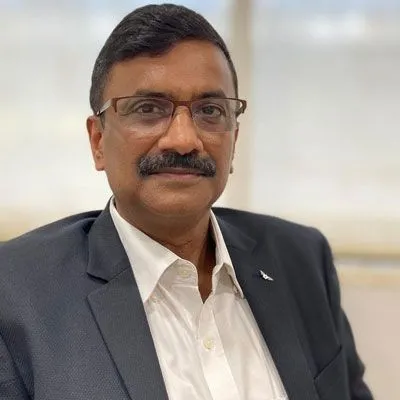
At the breakout session on the Global Stocktake (GST) during the Pre-CoP30 meetings in Brasilia on 13 October, Union Minister for Environment, Forest and Climate Change, Shri Bhupender Yadav, congratulated the world on successfully concluding the first GST, describing it as a strong affirmation of earnest implementation of the Paris Agreement.

He explained that GST is a five-year cycle to assess collective progress against the Paris goals. It is intended to bolster ambition by enabling Parties to evaluate shared advances, identify remaining gaps, and guide enhanced action at national and international levels.

In his address, Shri Yadav characterised the GST as a key driver of the Paris framework—fostering political momentum and sustaining dynamic efforts toward higher ambition. He urged that ongoing dialogues should incorporate the GST’s insights to catalyse cooperation and climate action.

Looking ahead, the Minister cautioned against rushing to embed scientific assessments without careful deliberation of their global relevance. He emphasised that science must be pursued with rigour, accuracy and robustness, drawing on all pertinent sources.

“We must now shift our emphasis to implementing ambitious climate measures, and above all, address the critical lack of resources for developing countries to deliver adaptation and mitigation,” he asserted. “Dialogue is important, but action is imperative.”

At the breakout session on the Global Stocktake (GST) during the Pre-CoP30 meetings in Brasilia on 13 October, Union Minister for Environment, Forest and Climate Change, Shri Bhupender Yadav, congratulated the world on successfully concluding the first GST, describing it as a strong affirmation of earnest implementation of the Paris Agreement. He explained that GST is a five-year cycle to assess collective progress against the Paris goals. It is intended to bolster ambition by enabling Parties to evaluate shared advances, identify remaining gaps, and guide enhanced action at national and international levels. In his address, Shri Yadav characterised the GST as a key driver of the Paris framework—fostering political momentum and sustaining dynamic efforts toward higher ambition. He urged that ongoing dialogues should incorporate the GST’s insights to catalyse cooperation and climate action. Looking ahead, the Minister cautioned against rushing to embed scientific assessments without careful deliberation of their global relevance. He emphasised that science must be pursued with rigour, accuracy and robustness, drawing on all pertinent sources. “We must now shift our emphasis to implementing ambitious climate measures, and above all, address the critical lack of resources for developing countries to deliver adaptation and mitigation,” he asserted. “Dialogue is important, but action is imperative.”

Related Stories

Gold Stories

Next Story
Infrastructure Urban

KONE Opens India's First Digital Experience Centre in Pune

KONE, a global elevator and escalator manufacturer, has inaugurated its first Digital Experience Centre (DEC) in India, located in Pune. The facility aims to showcase how artificial intelligence (AI), connectivity and data-driven technologies can enhance customer experiences and improve building operations.The centre was inaugurated by Jussi Herlin, Executive Vice Chair, KONE Corporation; Philippe Delorme, President and CEO, KONE; and Nandan Nilekani, Co-founder and Chairman of the Board, Infosys.Designed as an interactive customer environment, the facility demonstrates digital solutions cover..

Next Story
Infrastructure Urban

CII GreenCo Launches Circularity Guidelines for Indian Industry

The Confederation of Indian Industry (CII) GreenCo Council has launched the CII GreenCo Circularity Guidelines – Pilot Version at the 17th CII GreenCo Waste & Resource Management Summit 2026 in Chennai. The initiative aims to strengthen resource efficiency, waste reduction and circular economy practices across Indian manufacturing and process industries.The guidelines introduce a structured framework with circularity indices covering raw materials, consumables, packaging and other resource inputs. These indicators will help industries assess existing practices, identify opportunities to ..

Next Story
Infrastructure Energy

Global Electronics Association Launches IPC-1783-CO2E Standard

The Global Electronics Association has introduced IPC-1783-CO2E, a new international standard aimed at improving consistency, transparency and comparability in product carbon footprint reporting across the electronics manufacturing industry.The standard, titled International Standard for Data Collection and Reporting of CO2 Equivalent (CO2e) Emissions for the Electronics Manufacturing Supply Chain, provides industry-specific guidance for collecting, estimating and reporting carbon emissions data.With increasing regulatory requirements and customer expectations, electronics manufacturers face c..

Advertisement

Subscribe to Our Newsletter

Get daily newsletters around different themes from Construction world.

STAY CONNECTED

Advertisement

SPECIAL OFFER
QR Code