Indian Battery Makers Face 60 Per Cent Cost Disadvantage
POWER & RENEWABLE ENERGY

Indian Battery Makers Face 60 Per Cent Cost Disadvantage

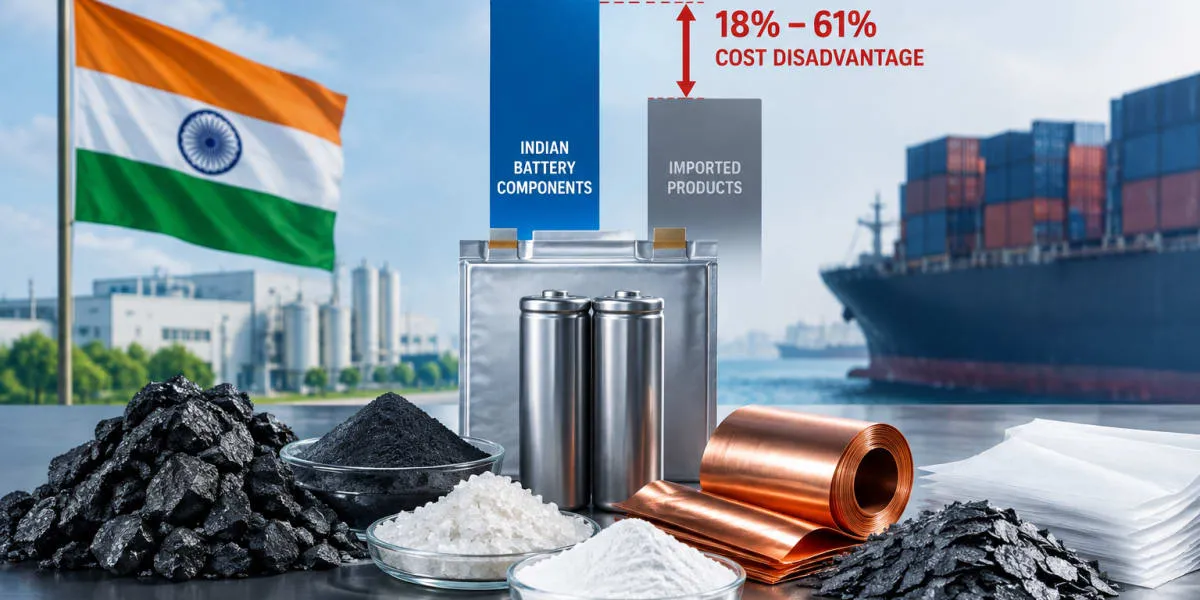
Indian battery component manufacturers face a cost disadvantage of 18% to 61% against imported products, according to a study on accelerating the country’s advanced chemistry cell (ACC) component manufacturing ecosystem. The report examined data from more than 20 Indian companies across cathode and anode materials, electrolytes, separators and copper foil.

Higher raw material prices are the main source of cost pressure for cathode materials, electrolytes and copper foil. For graphite anodes, conversion and energy costs, depreciation and financing increase the burden, while separators face challenges from high capital requirements, imported technology and low initial plant utilisation.

The study found that establishing cathode or anode plants in India costs more than twice as much as in China. Borrowing rates for Indian manufacturers range from 8.5% to 16%, compared with about 3.1% in China, while supplier qualification by cell makers generally takes 18 to 24 months and can keep new facilities underutilised during their early years.

China accounted for 99% of global LFP cathode material supply in 2025, alongside 90% of anode material, 93% of electrolyte, 85% of separators and 74% of copper foil, based on JP Morgan and Nomura data cited by the study. India’s battery demand is expected to rise from about 33 GWh in 2025 to 236 GWh by 2032 and nearly 600 GWh by 2037, while existing domestic capacity covers less than 3% of projected 2032 cathode, anode and electrolyte needs.

The report proposed three support options: a 25% capital subsidy with sales-linked incentives covering about 30% of the cost gap; operating incentives alone covering about 60% of the gap for five to seven years; or a 50% capital subsidy released alongside investor spending. It also recommended a national testing and certification network, support for battery-grade raw material processing, domestic plant and machinery production, and integrated battery-material clusters. The study was prepared by Netzero Energy Transition Alliance with ARCI, CSIR-NCL, IIT Madras and Deloitte.

Indian battery component manufacturers face a cost disadvantage of 18% to 61% against imported products, according to a study on accelerating the country’s advanced chemistry cell (ACC) component manufacturing ecosystem. The report examined data from more than 20 Indian companies across cathode and anode materials, electrolytes, separators and copper foil. Higher raw material prices are the main source of cost pressure for cathode materials, electrolytes and copper foil. For graphite anodes, conversion and energy costs, depreciation and financing increase the burden, while separators face challenges from high capital requirements, imported technology and low initial plant utilisation. The study found that establishing cathode or anode plants in India costs more than twice as much as in China. Borrowing rates for Indian manufacturers range from 8.5% to 16%, compared with about 3.1% in China, while supplier qualification by cell makers generally takes 18 to 24 months and can keep new facilities underutilised during their early years. China accounted for 99% of global LFP cathode material supply in 2025, alongside 90% of anode material, 93% of electrolyte, 85% of separators and 74% of copper foil, based on JP Morgan and Nomura data cited by the study. India’s battery demand is expected to rise from about 33 GWh in 2025 to 236 GWh by 2032 and nearly 600 GWh by 2037, while existing domestic capacity covers less than 3% of projected 2032 cathode, anode and electrolyte needs. The report proposed three support options: a 25% capital subsidy with sales-linked incentives covering about 30% of the cost gap; operating incentives alone covering about 60% of the gap for five to seven years; or a 50% capital subsidy released alongside investor spending. It also recommended a national testing and certification network, support for battery-grade raw material processing, domestic plant and machinery production, and integrated battery-material clusters. The study was prepared by Netzero Energy Transition Alliance with ARCI, CSIR-NCL, IIT Madras and Deloitte.

Related Stories

Gold Stories

Next Story
Equipment

BorgWarner secures three turbocharger contracts with global powertrain leader

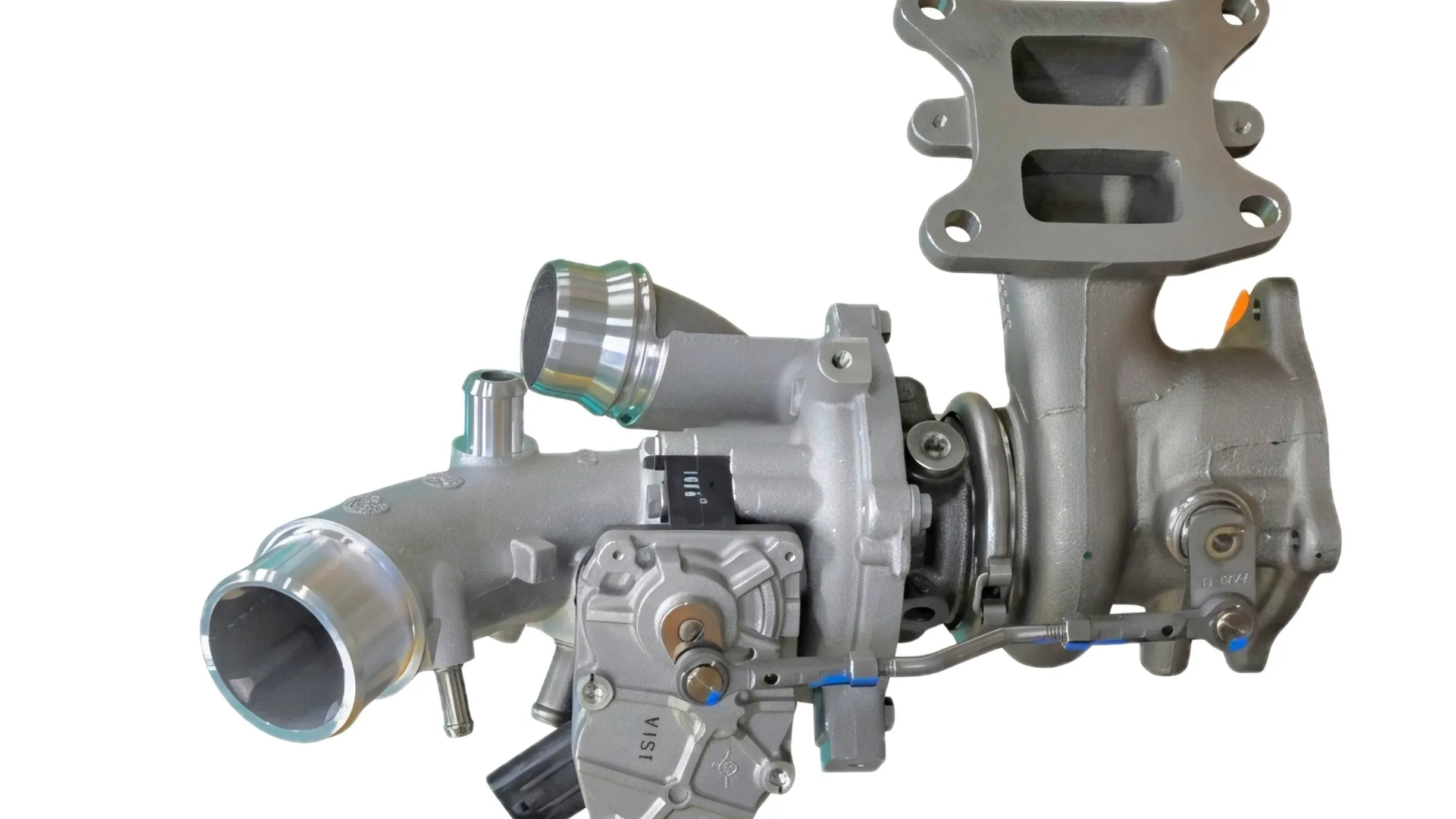
BorgWarner has secured three new turbocharger contracts with a global powertrain technology company. The wins comprise one contract for its variable turbine geometry (VTG) turbocharger and two for its wastegate turbocharger. The technologies will be deployed in the customer's light-vehicle gasoline platforms in South America and Europe, with production scheduled to begin in 2027.The VTG turbochargers are designed for gasoline engines operating under demanding conditions and high-boost pressure requirements. They are engineered to support Miller-cycle engines and withstand exhaust temperatures ..

Next Story
Infrastructure Transport

International Digi Yatra Trials Begin at Seven Airports

India has begun trials of Digi Yatra for international passengers at seven airports, allowing eligible Indian passport holders to use facial recognition at selected airport checkpoints. The facility is currently limited to Indian nationals with e-passports travelling on selected international flights operated by Air India and IndiGo. The Civil Aviation Ministry announced the trials on 1 November, with testing scheduled through December 2026. A wider rollout is expected in 2027 after the ministry assesses passenger feedback gathered during the trial period, according to PTI. The system is inten..

Next Story
Infrastructure Transport

Air India Plans More Wide-Body Jets, CEO Signals Profitability Soon

Air India is seeking to expand its order for wide-body aircraft as it works to increase international passenger traffic, chief executive Tewolde Gebremariam said on Tuesday. The Tata Group-owned carrier is also targeting a return to profitability in the near term, as its turnaround programme addresses fleet, network and service challenges. The comments came months after Gebremariam took charge of the airline. Gebremariam, who previously led Ethiopian Airlines, said the airline wanted more wide-body aircraft. Air India has held discussions with Boeing and Airbus while assessing the economics of..

Advertisement

Subscribe to Our Newsletter

Get daily newsletters around different themes from Construction world.

STAY CONNECTED

Advertisement

SPECIAL OFFER
QR Code