+
India’s Power Consumption Rises 11.35 Per Cent to 162.19 BU
POWER & RENEWABLE ENERGY

India’s Power Consumption Rises 11.35 Per Cent to 162.19 BU

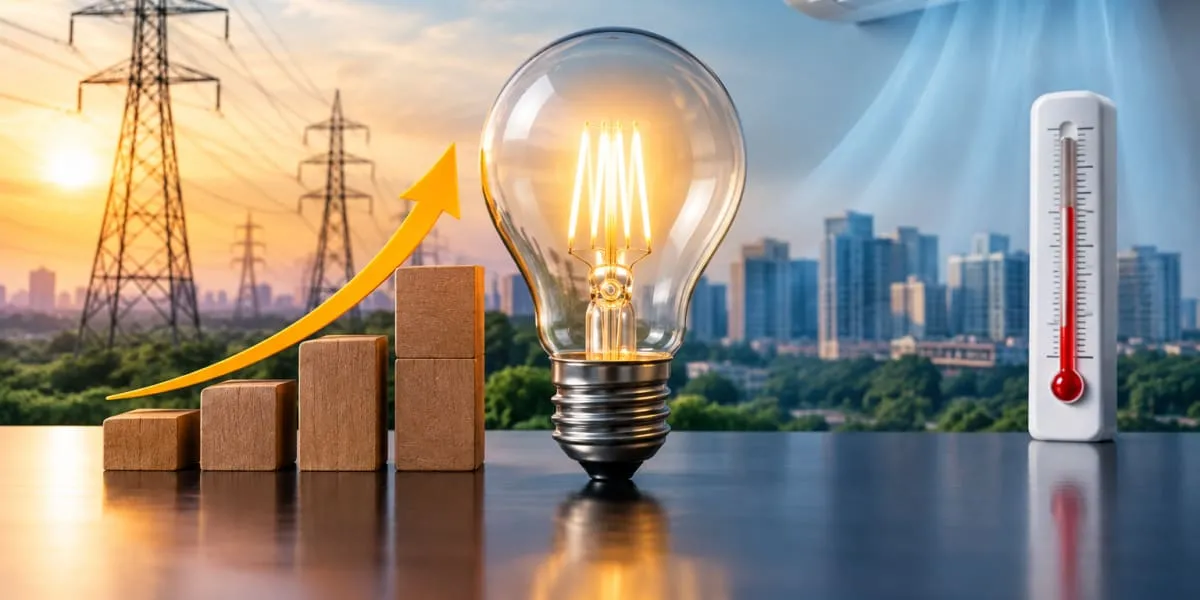
India’s power consumption rose 11.35 per cent year-on-year to 162.19 bn units (BU) in September, compared with 145.66 BU a year earlier. The increase was attributed mainly to greater cooling requirements amid humid weather across the country.

Experts said humid conditions in early September pushed feels-like temperatures above actual readings, encouraging greater use of air conditioners and lifting demand. However, both demand and consumption eased during the second fortnight of the month.

Peak power demand rose to 269.06 GW in September from 229.15 GW a year earlier. The latest level remained below the record 270.82 GW registered in May, while the Ministry of Power has projected peak demand of 270 GW during summer 2026.

Peak demand last summer reached 242.77 GW in June 2025, below the government’s estimate of 277 GW. Experts said demand would remain steady in October, with industrial and commercial requirements potentially strengthening as the festival season begins. This assessment remains subject to weather conditions and the pace of economic activity.

The India Meteorological Department has forecast October rainfall at 85 per cent of the long-period average, compared with an average of about 75.4 mm calculated from data for 1971-2020. Most parts of the country are expected to receive below-normal rainfall, although areas in northwest India, southern peninsular India and isolated parts of East India may record normal to above-normal rainfall. The department has also forecast above-normal maximum and minimum temperatures. Warmer conditions could increase the use of cooling appliances and support electricity consumption, even as lower rainfall and seasonal changes influence demand patterns.

India’s power consumption rose 11.35 per cent year-on-year to 162.19 bn units (BU) in September, compared with 145.66 BU a year earlier. The increase was attributed mainly to greater cooling requirements amid humid weather across the country. Experts said humid conditions in early September pushed feels-like temperatures above actual readings, encouraging greater use of air conditioners and lifting demand. However, both demand and consumption eased during the second fortnight of the month. Peak power demand rose to 269.06 GW in September from 229.15 GW a year earlier. The latest level remained below the record 270.82 GW registered in May, while the Ministry of Power has projected peak demand of 270 GW during summer 2026. Peak demand last summer reached 242.77 GW in June 2025, below the government’s estimate of 277 GW. Experts said demand would remain steady in October, with industrial and commercial requirements potentially strengthening as the festival season begins. This assessment remains subject to weather conditions and the pace of economic activity. The India Meteorological Department has forecast October rainfall at 85 per cent of the long-period average, compared with an average of about 75.4 mm calculated from data for 1971-2020. Most parts of the country are expected to receive below-normal rainfall, although areas in northwest India, southern peninsular India and isolated parts of East India may record normal to above-normal rainfall. The department has also forecast above-normal maximum and minimum temperatures. Warmer conditions could increase the use of cooling appliances and support electricity consumption, even as lower rainfall and seasonal changes influence demand patterns.

Related Stories

Gold Stories

Next Story
Technology

Bentley Systems announces 2026 Year in Infrastructure winners

Bentley Systems has announced the winners of its 2026 Year in Infrastructure Awards, recognising projects that use digital technologies and Bentley software across the infrastructure lifecycle. The awards were presented during the Bentley Systems 2026 Year in Infrastructure Event, held in Singapore on October 6 and 7.More than 300 projects from organisations in 53 countries were nominated this year. Winners were selected across 12 categories by an independent judging panel.The 2026 winners included AYESA Engineering’s Porto Metro 3.0 project in the Bridges and Tunnels category; Pinnacle Futu..

Next Story
Technology

We want to bring a real system of intelligence to construction

For EPC and infrastructure companies, fragmented project data can delay critical decisions. Srikar Chintalagiri, Co-Founder & CEO, AlfredWorks, explains how AlfredWorks connects contracts with project information to identify risks, improve traceability and support faster decision-making across complex construction projects.Where does AlfredWorks fit within the technology ecosystem of EPC and infrastructure companies, and what gap does it address beyond existing ERP, scheduling and document-management systems?AlfredWorks is a system of intelligence that sits on top of existing systems of re..

Next Story
Technology

We aim to become the single source of truth for project information

Every construction project depends on one critical element: the right drawing reaching the right person at the right time. But fragmented workflows often create costly delays. Rikunj Moradia, Founder, SyncDrawings, explains how digital drawing management can transform project execution.What gap in the construction ecosystem led to the creation of SyncDrawings?I come from a construction background and also run a BIM services firm. During our work, one recurring challenge was drawing accessibility. Construction is completely dependent on drawings, but the way they are managed remains fragmented ..

Advertisement

Subscribe to Our Newsletter

Get daily newsletters around different themes from Construction world.

STAY CONNECTED

Advertisement

SPECIAL OFFER
QR Code