India's Solar Component Market to Exceed US$7.8 bn by 2028
POWER & RENEWABLE ENERGY

India's Solar Component Market to Exceed US$7.8 bn by 2028

India's market for solar module components is forecast to more than double to US$7.8 bn by March 2028, from about US$3.6 bn in September 2026, according to a study by the Council on Energy, Environment and Water (CEEW). The expansion is linked to rising domestic solar manufacturing and demand for locally produced inputs.

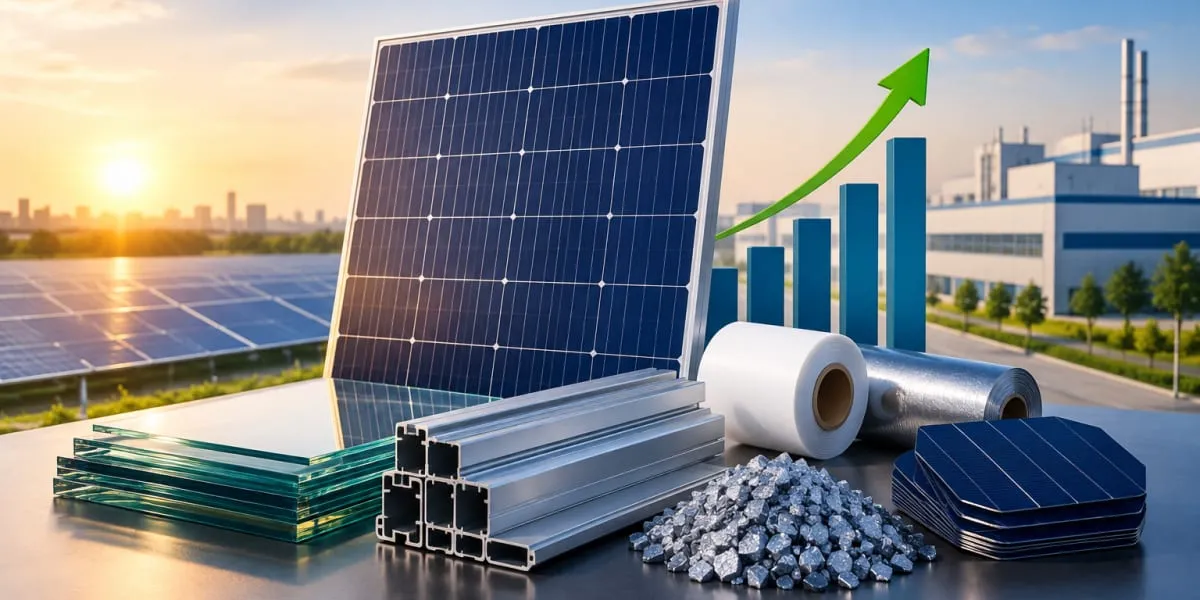
India's solar module manufacturing capacity reached 228.5 GW in September 2026, creating a larger market for ancillary suppliers. These include solar glass, aluminium frames, copper ribbons, encapsulant sheets, backsheets and junction boxes, collectively referred to as the bill of materials. Domestic capacity across these components ranged from 20 GW for solar glass to 153 GW for junction boxes.

CEEW estimated that planned additions could enable manufacturers of aluminium frames, copper ribbons and encapsulants to meet annual module demand of about 67 GW by March 2027, provided projects are commissioned on schedule. Solar glass capacity is forecast to meet demand by March 2028, while existing junction box capacity is already sufficient. No fresh backsheet capacity is planned amid the adoption of glass-glass modules.

Import dependence remains significant despite the expansion of domestic module production. Between FY2021 and FY2026, solar glass imports rose at an annual rate of 63 per cent, from US$129 mn to US$1.48 bn. Aluminium frame imports increased 88 per cent annually, while junction box imports grew 92 per cent. China supplied 66 per cent of India's solar glass imports and 70 per cent of aluminium frame imports in FY2026.

The study identified quality, testing infrastructure and reliable supplies as priorities for making domestic components competitive. CEEW recommended bringing all six components under the Approved List of Models and Manufacturers, with listings by January 2028 and implementation from January 2029. It also proposed extending the Domestic Content Requirement to the components, uniform testing standards and dedicated customs classifications to improve import tracking and enforcement.

India's market for solar module components is forecast to more than double to US$7.8 bn by March 2028, from about US$3.6 bn in September 2026, according to a study by the Council on Energy, Environment and Water (CEEW). The expansion is linked to rising domestic solar manufacturing and demand for locally produced inputs. India's solar module manufacturing capacity reached 228.5 GW in September 2026, creating a larger market for ancillary suppliers. These include solar glass, aluminium frames, copper ribbons, encapsulant sheets, backsheets and junction boxes, collectively referred to as the bill of materials. Domestic capacity across these components ranged from 20 GW for solar glass to 153 GW for junction boxes. CEEW estimated that planned additions could enable manufacturers of aluminium frames, copper ribbons and encapsulants to meet annual module demand of about 67 GW by March 2027, provided projects are commissioned on schedule. Solar glass capacity is forecast to meet demand by March 2028, while existing junction box capacity is already sufficient. No fresh backsheet capacity is planned amid the adoption of glass-glass modules. Import dependence remains significant despite the expansion of domestic module production. Between FY2021 and FY2026, solar glass imports rose at an annual rate of 63 per cent, from US$129 mn to US$1.48 bn. Aluminium frame imports increased 88 per cent annually, while junction box imports grew 92 per cent. China supplied 66 per cent of India's solar glass imports and 70 per cent of aluminium frame imports in FY2026. The study identified quality, testing infrastructure and reliable supplies as priorities for making domestic components competitive. CEEW recommended bringing all six components under the Approved List of Models and Manufacturers, with listings by January 2028 and implementation from January 2029. It also proposed extending the Domestic Content Requirement to the components, uniform testing standards and dedicated customs classifications to improve import tracking and enforcement.

Related Stories

Gold Stories

Next Story
Resources

Prateek Foundation Aakaar celebrates Diwali with children in Noida

Prateek Foundation Aakaar, the community initiative of Prateek Group, organised a Diwali celebration for children at Saikripa, Noida, on 4 November 2026. The one-hour programme brought together members of the foundation and children for an afternoon of creative and recreational activities.The celebration included diya painting, games and interactive sessions, with children designing and decorating diyas. The activities were aimed at encouraging creativity and providing an opportunity for the children to participate in the festive celebrations.Prateek Tiwari, Managing Director, Prateek Group, s..
Next Story
Equipment

Shakti Pumps signs MoU with ISA to expand solar water pumping

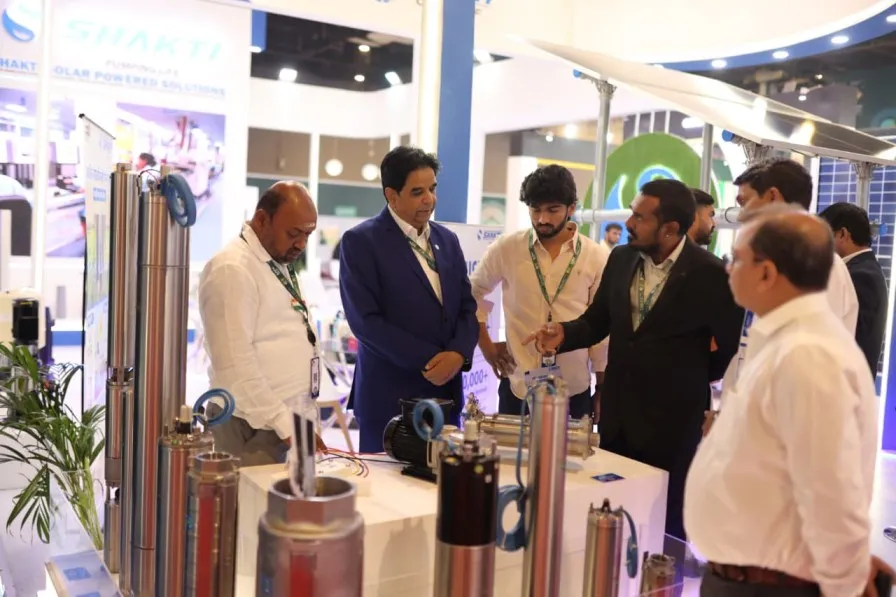
Shakti Pumps (India) signed a Memorandum of Understanding (MoU) with the International Solar Alliance (ISA) to strengthen international collaboration and accelerate the adoption of solar water pumping solutions. The agreement was signed by Ashish Khanna, Director General, ISA, and Ramesh Patidar, Managing Director, Shakti Pumps, alongside the ninth ISA Session at the Bharat Renewable Energy Summit and Expo (BRES) 2026, held at Bharat Mandapam, New Delhi.At the summit, Shakti Pumps showcased its integrated renewable energy portfolio, including solar pumping systems, rooftop solar solutions unde..
Next Story
Real Estate

Worli-Lower Parel gains ground as Mumbai’s commercial hub

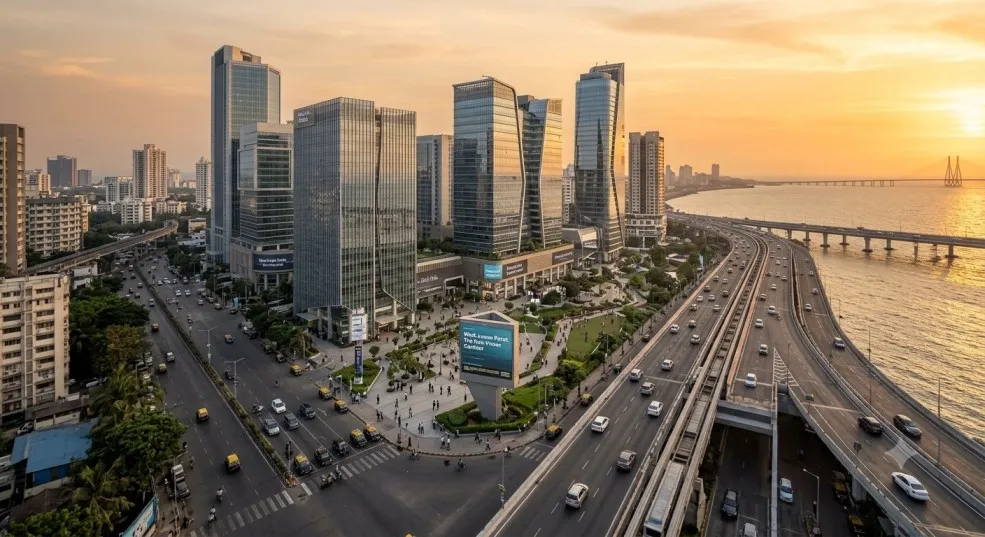
Mumbai’s Worli-Lower Parel corridor is gaining prominence as a commercial and luxury residential destination, attracting financial institutions, technology companies and high-net-worth individuals. Infrastructure upgrades, including the Coastal Road and improved transit connectivity, are contributing to the shift in occupier interest from established business districts such as Bandra-Kurla Complex (BKC) and Nariman Point.Recent leasing transactions underline the corridor’s growing commercial appeal. At Marathon Futurex in Lower Parel, three financial firms leased a combined 28,976 sq ft at..

Advertisement

Subscribe to Our Newsletter

Get daily newsletters around different themes from Construction world.

STAY CONNECTED

Advertisement

SPECIAL OFFER
QR Code