



Loom Solar Plans Rs 10 Billion IPO by FY27
POWER & RENEWABLE ENERGY

Loom Solar Plans Rs 10 Billion IPO by FY27

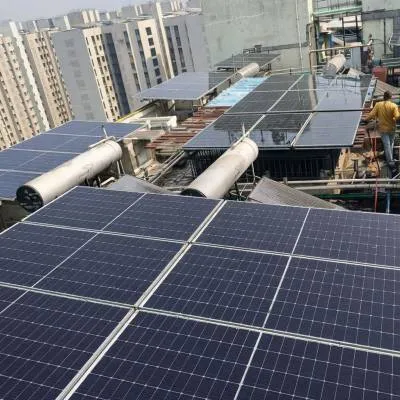
Loom Solar, a leading rooftop and distributed solar company, is preparing to file for an Initial Public Offering (IPO) by FY27, with an estimated issue size of around Rs 10 billion. Founded by brothers Amod and Amol Anand, the company plans to utilise the proceeds to expand its manufacturing capacity and foray into the battery energy storage segment.

Speaking to BW Businessworld, Co-founder and Director Amod Anand said, “We are preparing for a larger IPO size of about Rs 10 billion and are currently targeting FY27.”

Recounting the company’s modest beginnings, Anand shared that Loom Solar’s journey started in Sitamarhi, Bihar. “We had no capital when we began. For nearly a decade, we worked with companies such as Reliance and Airtel before deciding to start something of our own,” he said. The idea materialised in 2016–17, coinciding with the rise of India’s startup ecosystem.

The founders identified solar energy as a scalable sector with low entry barriers. “At that time, solar was largely government-driven and not accessible to retail customers. We began with small solar panels of 10W, 20W, and 50W for street vendors and households — products that were unavailable to retail buyers,” Anand explained.

Loom Solar initially operated entirely online through e-commerce platforms such as Amazon. Its focus on rural and semi-urban markets, coupled with tailored product offerings, helped it establish an early foothold. “We started from Bihar and Uttar Pradesh because we understood the people, their needs, and their language. Even today, around 50 per cent of our business comes from UP and Bihar,” Anand noted.

The company began by outsourcing its manufacturing but later set up its own facility after building a strong customer base. Loom Solar now produces solar panels and inverters and is expanding its Mathura-based plant in Uttar Pradesh to a capacity of 1.2 gigawatts (GW). “We started with monocrystalline technology, upgraded to TOPCon, and are now moving towards heterojunction (HJT) technology,” Anand said.

The company’s planned IPO and upcoming technological upgrades mark a significant milestone in its journey from a small startup in Bihar to one of India’s most promising solar innovators.

Loom Solar, a leading rooftop and distributed solar company, is preparing to file for an Initial Public Offering (IPO) by FY27, with an estimated issue size of around Rs 10 billion. Founded by brothers Amod and Amol Anand, the company plans to utilise the proceeds to expand its manufacturing capacity and foray into the battery energy storage segment. Speaking to BW Businessworld, Co-founder and Director Amod Anand said, “We are preparing for a larger IPO size of about Rs 10 billion and are currently targeting FY27.” Recounting the company’s modest beginnings, Anand shared that Loom Solar’s journey started in Sitamarhi, Bihar. “We had no capital when we began. For nearly a decade, we worked with companies such as Reliance and Airtel before deciding to start something of our own,” he said. The idea materialised in 2016–17, coinciding with the rise of India’s startup ecosystem. The founders identified solar energy as a scalable sector with low entry barriers. “At that time, solar was largely government-driven and not accessible to retail customers. We began with small solar panels of 10W, 20W, and 50W for street vendors and households — products that were unavailable to retail buyers,” Anand explained. Loom Solar initially operated entirely online through e-commerce platforms such as Amazon. Its focus on rural and semi-urban markets, coupled with tailored product offerings, helped it establish an early foothold. “We started from Bihar and Uttar Pradesh because we understood the people, their needs, and their language. Even today, around 50 per cent of our business comes from UP and Bihar,” Anand noted. The company began by outsourcing its manufacturing but later set up its own facility after building a strong customer base. Loom Solar now produces solar panels and inverters and is expanding its Mathura-based plant in Uttar Pradesh to a capacity of 1.2 gigawatts (GW). “We started with monocrystalline technology, upgraded to TOPCon, and are now moving towards heterojunction (HJT) technology,” Anand said. The company’s planned IPO and upcoming technological upgrades mark a significant milestone in its journey from a small startup in Bihar to one of India’s most promising solar innovators.

Next Story
Infrastructure Urban

Mount Expands Tumkur Facility with New Automated Panel, PEB Lines

Mount Roofing & Structures Private Limited, one of India's fastest-growing manufacturers in PUF and a leading solutions provider across pre-engineered building (PEB) and polycarbonate sheets, simultaneously inaugurated its second fully automated continuous sandwich panel manufacturing line and a new PEB manufacturing plant at its integrated campus in Tumkur.The milestone expansion, part of a total investment of Rs 250 crore, marks a significant advancement in the company's commitment to engineered performance, manufacturing scale, and industrial growth. The integrated facility spans approx..

Next Story
Infrastructure Transport

India Becomes First to Produce Bio-Bitumen for Roads

India has become the first country in the world to commercially produce bio-bitumen for use in road construction, according to Road, Transport and Highways Minister Nitin Gadkari. Bitumen, a black and viscous hydrocarbon derived from crude oil, is a key binding material in road building, and the bio-based alternative is expected to significantly improve the sector’s environmental footprint.Addressing the CSIR Technology Transfer Ceremony in New Delhi, Mr Gadkari congratulated Council of Scientific and Industrial Research on achieving the milestone, noting that the initiative would help curb ..

Next Story
Infrastructure Urban

HILT Policy Seen Boosting Telangana Revenue Sharply

The Hyderabad Industrial Land Transformation (HILT) Policy is expected to generate around Rs 1.08 billion in revenue for the Telangana state exchequer, according to Deputy Chief Minister Bhatti Vikramarka Mallu. Speaking in the Telangana Legislative Assembly, he said the policy would be implemented within a six-month timeframe in a transparent manner, with uniform rules applicable to all stakeholders. Mr Vikramarka noted that without the HILT Policy, the state would have earned only about Rs 1.2 million per acre. Under the new framework, however, revenue is projected to rise sharply to Rs 70 ..

Advertisement

Subscribe to Our Newsletter

Get daily newsletters around different themes from Construction world.

STAY CONNECTED

Advertisement

Advertisement

Advertisement

Advertisement

Open In App