Metro Water Workers Raise Alarm Over Crumbling Pump Stations
POWER & RENEWABLE ENERGY

Metro Water Workers Raise Alarm Over Crumbling Pump Stations

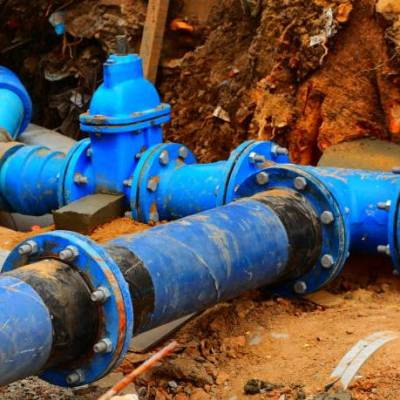
North Chennai, earmarked for development under the Rs 69 billion Vada Chennai Valarchi Thittam, continues to suffer from neglect, with Metro Water workers highlighting dire conditions at several pumping stations. As the monsoon intensifies operational pressure, employees hope the State will release funds to rebuild ageing infrastructure and address severe staff shortages.

At pumping stations in Kodungaiyur, Kadumbadi Amman Koil, and Nehru Nagar (Tondiarpet zone), workers told DT Next they lack basic facilities such as drinking water and toilets. Many are forced to defecate in the open or use nearby public restrooms, while key operational areas like the collection chamber and control rooms remain in disrepair.

“Pumping stations are critical to draining sewage lines, but during rains, the 25-year-old Kodungaiyur facility floods up to the waist,” said one employee. “The operating room collapsed after the 2024 monsoon, and steps are broken. We also deal with trespassers consuming alcohol inside the station.”

Local civic activist Jaiganesh LM added, “These stations serve over 300 streets but are under-equipped. That’s why sewage overflows every monsoon.”

A senior Metro Water official confirmed that the Tondiarpet zone stations are set to receive new buildings under the Vada Chennai scheme. Tenders have been floated and work has started at Nehru Nagar, though completion will take about a year.

North Chennai, earmarked for development under the Rs 69 billion Vada Chennai Valarchi Thittam, continues to suffer from neglect, with Metro Water workers highlighting dire conditions at several pumping stations. As the monsoon intensifies operational pressure, employees hope the State will release funds to rebuild ageing infrastructure and address severe staff shortages.At pumping stations in Kodungaiyur, Kadumbadi Amman Koil, and Nehru Nagar (Tondiarpet zone), workers told DT Next they lack basic facilities such as drinking water and toilets. Many are forced to defecate in the open or use nearby public restrooms, while key operational areas like the collection chamber and control rooms remain in disrepair.“Pumping stations are critical to draining sewage lines, but during rains, the 25-year-old Kodungaiyur facility floods up to the waist,” said one employee. “The operating room collapsed after the 2024 monsoon, and steps are broken. We also deal with trespassers consuming alcohol inside the station.”Local civic activist Jaiganesh LM added, “These stations serve over 300 streets but are under-equipped. That’s why sewage overflows every monsoon.”A senior Metro Water official confirmed that the Tondiarpet zone stations are set to receive new buildings under the Vada Chennai scheme. Tenders have been floated and work has started at Nehru Nagar, though completion will take about a year.

Related Stories

Gold Stories

Next Story
Infrastructure Urban

KONE Opens India's First Digital Experience Centre in Pune

KONE, a global elevator and escalator manufacturer, has inaugurated its first Digital Experience Centre (DEC) in India, located in Pune. The facility aims to showcase how artificial intelligence (AI), connectivity and data-driven technologies can enhance customer experiences and improve building operations.The centre was inaugurated by Jussi Herlin, Executive Vice Chair, KONE Corporation; Philippe Delorme, President and CEO, KONE; and Nandan Nilekani, Co-founder and Chairman of the Board, Infosys.Designed as an interactive customer environment, the facility demonstrates digital solutions cover..

Next Story
Infrastructure Urban

CII GreenCo Launches Circularity Guidelines for Indian Industry

The Confederation of Indian Industry (CII) GreenCo Council has launched the CII GreenCo Circularity Guidelines – Pilot Version at the 17th CII GreenCo Waste & Resource Management Summit 2026 in Chennai. The initiative aims to strengthen resource efficiency, waste reduction and circular economy practices across Indian manufacturing and process industries.The guidelines introduce a structured framework with circularity indices covering raw materials, consumables, packaging and other resource inputs. These indicators will help industries assess existing practices, identify opportunities to ..

Next Story
Infrastructure Energy

Global Electronics Association Launches IPC-1783-CO2E Standard

The Global Electronics Association has introduced IPC-1783-CO2E, a new international standard aimed at improving consistency, transparency and comparability in product carbon footprint reporting across the electronics manufacturing industry.The standard, titled International Standard for Data Collection and Reporting of CO2 Equivalent (CO2e) Emissions for the Electronics Manufacturing Supply Chain, provides industry-specific guidance for collecting, estimating and reporting carbon emissions data.With increasing regulatory requirements and customer expectations, electronics manufacturers face c..

Advertisement

Subscribe to Our Newsletter

Get daily newsletters around different themes from Construction world.

STAY CONNECTED

Advertisement

SPECIAL OFFER
QR Code