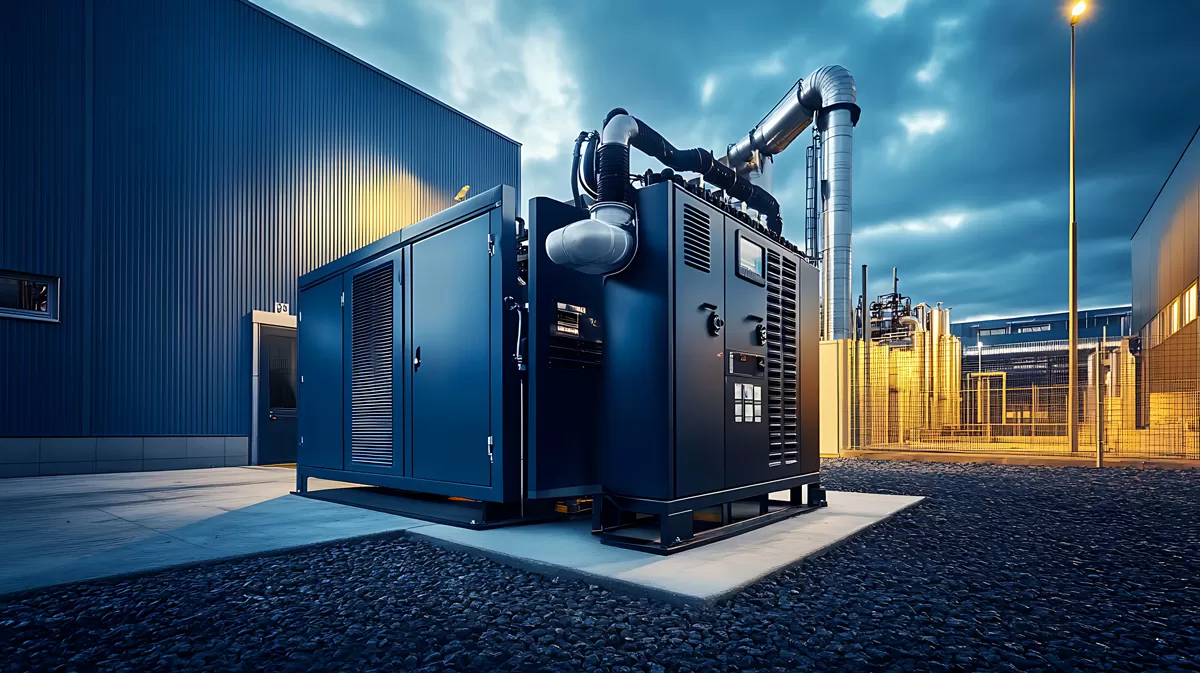
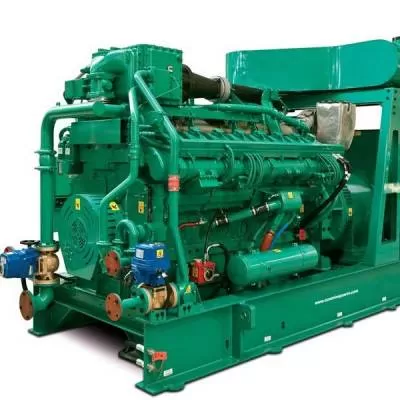
Uninterrupted power supply is vital for modern living and, in urban settings, infrastructure is increasingly energy-sensitive. So, generator sets (gensets), a backbone of power continuity, are essential to ensure that human activity continues during grid outages or load-intensive phases of construction. However, TV Ganesh, Executive Director - Technical, Shriram Properties, recommends viewing genset technology not in isolation but as part of a broader ecosystem of intelligent, sustainable infrastructure. Choices about gensets are made after carefully considering core technological features as well as other desirables. CW explores how these features add value to properties and, consequently, which brands are leading in the market. As energy-efficiency and cost-cutting are of interest, we also look at the link between solar energy systems and gensets. Core technologies“We have a comprehensive set of technical criteria to ensure the reliability, efficiency and cost-effectiveness of gensets installed in our properties, says VV Rao, Head MEP, Kalyani Developers.He lists these: compliance with ISO8528-G3 standards, to ensure high-performance reliability under varying load conditions; compact unit design, which is ideal for urban real-estate projects with space constraints; voltage stability, with fluctuations contained within 0.2 per cent to safeguard sensitive equipment; fuel-efficiency, targeting 3.4-4 units of power generated per hour; 100 per cent load availability, ensuring full capacity support during outages; and quick startup time, where the genset kicks in within 12-15 seconds of a power failure.“Fuel-efficiency is a key criterion, especially under varying load conditions, as it directly impacts operational costs for both construction and end-use scenarios,” says Ganesh. “Low-emission and noise-compliant models that meet or exceed CPCB II norms are an important consideration for premium residential offerings in densely populated urban zones.Consultants have developed their own set of criteria. According to Roopa V, Director, Etechnology Service Consultants, “The genset’s rating in kVA must match the building’s load and the type of fuel available in the area; it should have automatic voltage regulation and auto mains failure; and it should comply with the norms of the Central Pollution Control Board. If needed, it should have an acoustic enclosure.” First up, Altaf Abdul, Principal Consultants, A-Square MEP Consultants, looks at the rated capacity – whether it matches the actual electrical load of the building during power outages. “Next, fuel efficiency, engine capacity and compatibility with automatic transfer systems are equally important, as they directly affect running costs,” he says. “We also check the alternator’s insulation class, since it plays a key role in ensuring stable voltage and frequency, which protects sensitive equipment. Another key factor is the cooling system, especially for larger gensets or installations in hot climates, to avoid overheating. Sound levels matter too – especially in residential or hospital projects – so we look for acoustic enclosures or silent gensets that meet local norms. We also make sure that all the equipment is protected with safety devices and control systems are set up to prevent any faults or overloads.”“Buildings using gensets have multiple loads but it is important that the genset has a discharging capacity to take the single block load equivalent to about 70 per cent of the total load it is designed for,” says Prabhash Gopalan, Consultant, Epsilon Engineering.Additional featuresApart from core performance factors, Abdul evaluates some additional features that help ensure long-term reliability, safety and cost-effectiveness for the building, such as auto-start/stop controls, AMF panels and, if multiple gensets are to be used, synchronisation features. “We prefer gensets with easy maintenance access, digital monitoring and remote diagnostics,” he says. So, features like IoT-enabled remote monitoring, BMS integration, paralleling capability for load sharing and ease of service access significantly influence decision-making. Environmental adaptability, space constraints and long-term operational efficiency also play a critical role.Intelligent automation is becoming a gamechanger, agrees Ganesh. “Gensets equipped with digital control panels and IoT-based remote monitoring capabilities are increasingly preferred, as they enable predictive maintenance, real-time load sharing and operational transparency. Ease of serviceability, reliable after-sales support and the availability of spare parts also weigh heavily in our decision-making process, ensuring that the lifecycle cost remains optimised.”Rao looks for extended lube oil change intervals to reduce maintenance frequency and costs, reduced maintenance and overhauling hours to support long-term operational efficiency, low annual maintenance costs, affordable and readily available spare parts, robust after-sales service and quick service turnaround time from OEM support teams.“Remote monitoring, the ability to synchronise data and the availability of after-sales services are essential,” adds Roopa. According to Gopalan, “Serviceability, efficient fuel consumption and a one-hour continuous rating for under-loading and overloading are essential.”Preferred brandsOver the past year, Shriram Properties has deployed a number of trusted genset models across its residential projects. “Cummins’ C Series, particularly in the 250 to 625 kVA range, has proven highly effective for high-rise developments due to its consistent performance and advanced diagnostics,” says Ganesh. “We often select KOEL Green gensets, ranging from 160 to 500 kVA, for their excellent acoustic insulation, especially in projects where noise control is a top priority. We’ve also used Greaves Power and Mahindra Powerol units in the 82.5 to 160 kVA segment for common area backup and clubhouse utilities, where compactness and ease of maintenance are critical.”“We prefer market leaders such as Kirloskar and Cummins for gensets up to 250kVA and Rolls Royce MTU, Volvo, and Caterpillar for gensets of 250 kVA and above capacity,” says Gopalan.Abdul recommends the KOEL genset primarily due to its strong brand legacy, proven engineering excellence and reliable after-sales support. “KOEL performs consistently, complies with CPCB norms and adapts to demanding site conditions,” he says. “We prioritise long-term value, operational efficiency, and service accessibility – and KOEL delivers on all fronts.”In gensets, Roopa prefers those with reputed engines such as Cummins, Perkins, Volvo Penta and KOEL; and in alternators, she cites Stamford or Leroy Somer as preferred options.Hybrid energyMany of Shriram Properties’ newer residential communities feature hybrid energy models where rooftop solar installations are used to power common areas during the day with gensets serving as a secondary backup in the event of both grid and solar unavailability. Kalyani Developers’ Rao has seen a growing adoption of solar energy across properties, particularly for powering common area lighting, landscaped zones and fire evacuation pathways and staircases, especially during instances where UPS backup is unavailable. “Solar energy reduces the carbon footprint as well as the power cost, as solar energy is significantly more economical than diesel generator power or BESCOM power,” he says. A solar energy system is integrated with the battery system and grid instead of gensets through automated electrical interlocks, where solar is always prioritised as the primary source, continues Rao. Where solar systems work with both gensets and grid energy, solar works as the primary source during sunny days, while the grid and genset remain off, explains Roopa. “During the evening and night, and on cloudy days, the grid supply becomes the primary source. When the grid fails, the system checks for the availability of solar. If there is no incoming solar supply, the genset kickstarts.”If batteries are part of the system and extra energy is generated, it is stored for later use, adds Abdul. “Since smart control panels and energy management systems handle this automatically, there’s no need for manual switching.”Using solar energy to power buildings cuts costs and shows a commitment to sustainability, continues Abdul. “Installing a 100 kWp rooftop solar system along with a 250 kVA KOEL diesel genset in a commercial building of 15,000 sq ft helped the client achieve an 18-20 per cent drop in diesel usage and reduce their electricity bills.”According to Roopa, “Integrating solar power with a diesel generator is a smart and increasingly common approach to optimise energy costs, reduce diesel consumption and ensure 24/7 power availability, especially in areas with unreliable grid supply and locations with peak sun availability.”More power to such integration!
Choose right: Prime vs. standby rated
A correct selection must be made between prime-rated gensets, which are more expensive, and standby-rated gensets, says Roopa V, Director, Etechnology Service Consultants. “Prime-rated gensets are suitable for continuous or variable load applications having unlimited operating hours. These can withstand 10 per cent overload for one hour and can run continuously at variable loads. Standby-rated machines are suitable for emergency backup where a genset is only needed for limited operating hours when the power fails, and where overloading is not an issue.”
Quick bytes
Gensets with ISO compliance, fast startup, fuel efficiency, low emissions and voltage stability are preferred by builders.
IoT-enabled remote monitoring, predictive maintenance and integration with BMS are increasingly influencing genset choices.
Hybrid models use solar energy as the primary source.
Acoustic enclosures, auto mains failure, efficient cooling systems and rated load compatibility are must-haves.
Integrating rooftop solar with gensets slashes diesel use by up to 20 per cent.
Proposed quotes:
Solar energy is significantly more economical than DG power or BESCOM power. - VV Rao, Head MEP, Kalyani Developers
Intelligent automation is becoming a game-changer. - TV Ganesh, Executive Director - Technical, Shriram Properties
Fuel efficiency, engine capacity and compatibility with automatic transfer systems directly affect running costs. - Altaf Abdul, Principal Consultants, A-Square MEP Consultants
We prefer market leaders such as Kirloskar and Cummins for gensets upto 250kVA. - Prabhash Gopalan, Consultant, Epsilon Engineering
In alternators, Stamford or Leroy Somer are preferred options. - Roopa V, Director, Etechnology Service Consultants