NTPC, Adani Power Get Nod for Nuclear Studies in Odisha
POWER & RENEWABLE ENERGY

NTPC, Adani Power Get Nod for Nuclear Studies in Odisha

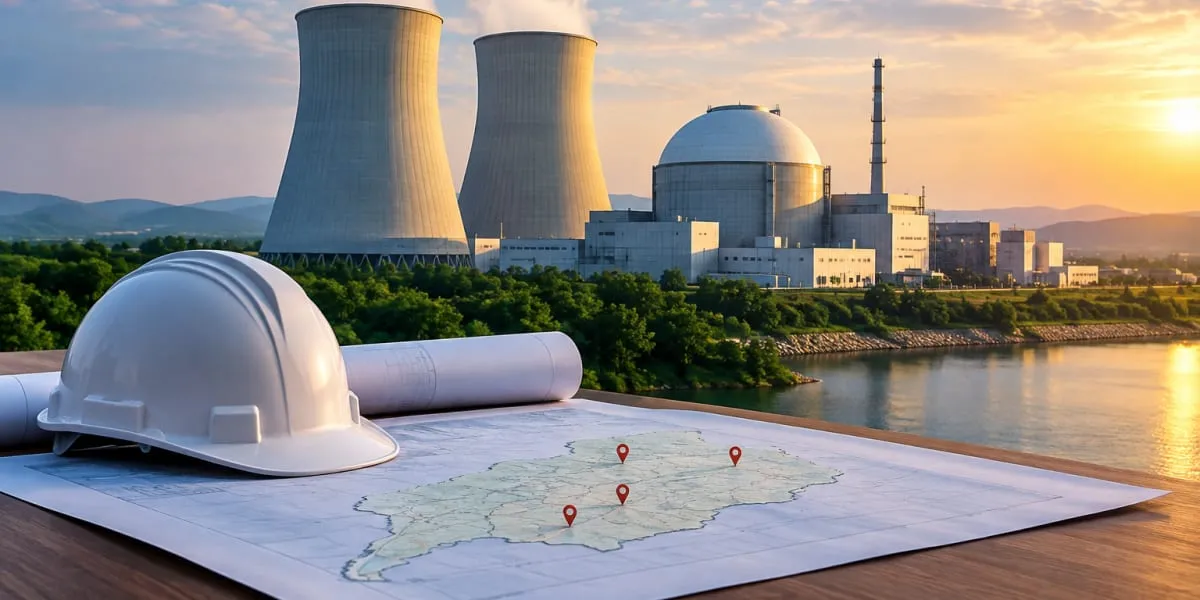
Odisha has granted in-principle approval to NTPC and Adani Power to conduct feasibility studies for nuclear power projects at multiple locations, marking the state’s first substantive move towards adding nuclear generation to its energy mix. Deputy Chief Minister and Energy Minister Kanak Vardhan Singh Deo informed the state Assembly that NTPC had received permission to assess four sites.

NTPC has selected a site near Deogarh for further action. Its approved locations also include Nayagada and Nabarangpur. Adani Power has received approval to examine sites near the Balimela Dam in Malkangiri district and the Manjore Dam in Angul district. No project has yet been sanctioned, and site surveys and feasibility assessments are still pending.

The state had received proposals from NTPC, Adani Power and Tata Power. Tata Power had expressed interest in a nuclear plant in Malkangiri and identified Odisha, Madhya Pradesh and Gujarat for projects with capacities of 2 × 220 MW or 2 × 700 MW, depending on reactor size. The capacity, technology and investment requirement for NTPC’s proposed Odisha project have not been finalised.

Adani Power has proposed two nuclear plants of 2,800 MW each, involving an investment of around Rs. 1.5 tn. It has also proposed an ultra-supercritical thermal power plant and pumped storage projects. Balimela has an existing 510 MW hydroelectric station operated by Odisha Hydro Power Corporation, while the reservoir is shared by Odisha and Andhra Pradesh.

Water availability is an important consideration for conventional nuclear plants because reactors require substantial cooling water. The final assessment will also cover geology, seismicity, hydrology, environmental conditions, population density, emergency planning and safety parameters. India has 24 nuclear power plants in commercial operation, excluding the 100 MW RAPS-1, with installed capacity of 8.78 GW. Nuclear generation accounted for about 3.1 per cent of electricity production in 2025-26. The Union government is targeting 100 GW of nuclear capacity by 2047, with capacity expected to reach about 22 GW by 2031-32 through projects under implementation.

Odisha has granted in-principle approval to NTPC and Adani Power to conduct feasibility studies for nuclear power projects at multiple locations, marking the state’s first substantive move towards adding nuclear generation to its energy mix. Deputy Chief Minister and Energy Minister Kanak Vardhan Singh Deo informed the state Assembly that NTPC had received permission to assess four sites. NTPC has selected a site near Deogarh for further action. Its approved locations also include Nayagada and Nabarangpur. Adani Power has received approval to examine sites near the Balimela Dam in Malkangiri district and the Manjore Dam in Angul district. No project has yet been sanctioned, and site surveys and feasibility assessments are still pending. The state had received proposals from NTPC, Adani Power and Tata Power. Tata Power had expressed interest in a nuclear plant in Malkangiri and identified Odisha, Madhya Pradesh and Gujarat for projects with capacities of 2 × 220 MW or 2 × 700 MW, depending on reactor size. The capacity, technology and investment requirement for NTPC’s proposed Odisha project have not been finalised. Adani Power has proposed two nuclear plants of 2,800 MW each, involving an investment of around Rs. 1.5 tn. It has also proposed an ultra-supercritical thermal power plant and pumped storage projects. Balimela has an existing 510 MW hydroelectric station operated by Odisha Hydro Power Corporation, while the reservoir is shared by Odisha and Andhra Pradesh. Water availability is an important consideration for conventional nuclear plants because reactors require substantial cooling water. The final assessment will also cover geology, seismicity, hydrology, environmental conditions, population density, emergency planning and safety parameters. India has 24 nuclear power plants in commercial operation, excluding the 100 MW RAPS-1, with installed capacity of 8.78 GW. Nuclear generation accounted for about 3.1 per cent of electricity production in 2025-26. The Union government is targeting 100 GW of nuclear capacity by 2047, with capacity expected to reach about 22 GW by 2031-32 through projects under implementation.

Related Stories

Gold Stories

Next Story
Resources

Kalpataru Projects International elevates Amit Uplenchwar as Joint MD and CEO

Kalpataru Projects International (KPIL) has elevated Amit Uplenchwar as Joint Managing Director and CEO (designate), following approval by its board on 5 November 2026. He will take charge as Additional Director, Joint Managing Director and CEO from 1 January 2027 for a five-year term ending 31 December 2031, subject to shareholders' approval.Uplenchwar brings over three decades of experience in corporate strategy, business operations, business development, mergers and acquisitions, and international business management. His experience spans transportation, power, water, oil and gas, aerospace..

Next Story
Resources

HCC appoints Vivek Singhal as CEO

Hindustan Construction Company (HCC) has appointed Vivek Singhal as Chief Executive Officer, effective 5 November 2026. He brings over four decades of experience in infrastructure and engineering, procurement and construction (EPC), covering project execution, business leadership, business development and profit and loss management.Singhal has spent 16 years in international markets, delivering projects and managing assets worth approximately Rs 285 billion across five countries. His experience spans airports, metro rail, urban transport, hydropower, bridges and other infrastructure sectors.He..
Next Story
Infrastructure Energy

Essar Signs PPA for 300 MW Hybrid Renewable Energy Project

Essar Renewables, the renewable energy arm of Essar Power, has signed a Power Purchase Agreement (PPA) with NHPC for a 300 MW renewable energy project in Andhra Pradesh. The agreement follows the company’s successful bid for the project two years ago. Essar Power will invest approximately Rs. 45 bn in the development. The project will combine solar and wind generation with Battery Energy Storage Systems (BESS), enabling the supply of reliable and dispatchable renewable power. It forms part of Essar Power’s plan to build a diversified energy portfolio of approximately 5 GW across renewable,..

Advertisement

Subscribe to Our Newsletter

Get daily newsletters around different themes from Construction world.

STAY CONNECTED

Advertisement

SPECIAL OFFER
QR Code