+
PM Surya Ghar: PSBs Approve Rs 109 billion for Rooftop Solar Loans
POWER & RENEWABLE ENERGY

PM Surya Ghar: PSBs Approve Rs 109 billion for Rooftop Solar Loans

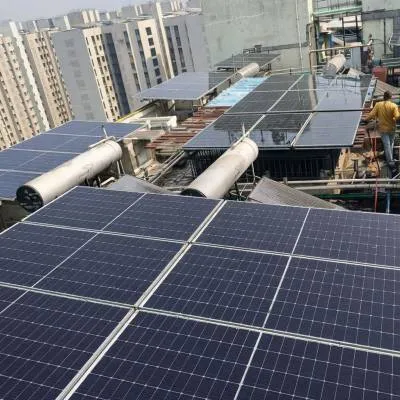
In a major boost to India’s renewable energy transition, Public Sector Banks (PSBs) have sanctioned loans worth Rs 109 billion under the PM Surya Ghar: Muft Bijli Yojana (PMSGMBY), aimed at expanding household-level rooftop solar adoption.
As of September 2025, more half million beneficiaries have secured approvals for rooftop solar loans through participating banks. The lending framework has been designed to make access to credit simpler and faster, with no collateral requirements and low interest rates, encouraging more households to shift to clean power generation.
The application process is fully digital, conducted via the JanSamarth Portal, which links directly with the national rooftop solar portal (pmsuryaghar.gov.in). This integration enables citizens to apply, track, and receive loan approvals without manual paperwork — a step intended to enhance transparency and ease of adoption.
Coordination between the Department of Financial Services and the Ministry of New and Renewable Energy (MNRE) ensures oversight of the scheme’s financial and operational progress. Implementation at the local level is being supported through State Level Bankers’ Committees and Lead District Managers, ensuring smooth rollout across districts.
The government views this milestone as an indicator of growing financial sector participation in renewable energy. The scale of approvals reflects not just institutional confidence but also rising household interest in self-generation of power — a key component of India’s strategy to decentralize clean energy production. 

In a major boost to India’s renewable energy transition, Public Sector Banks (PSBs) have sanctioned loans worth Rs 109 billion under the PM Surya Ghar: Muft Bijli Yojana (PMSGMBY), aimed at expanding household-level rooftop solar adoption.As of September 2025, more half million beneficiaries have secured approvals for rooftop solar loans through participating banks. The lending framework has been designed to make access to credit simpler and faster, with no collateral requirements and low interest rates, encouraging more households to shift to clean power generation.The application process is fully digital, conducted via the JanSamarth Portal, which links directly with the national rooftop solar portal (pmsuryaghar.gov.in). This integration enables citizens to apply, track, and receive loan approvals without manual paperwork — a step intended to enhance transparency and ease of adoption.Coordination between the Department of Financial Services and the Ministry of New and Renewable Energy (MNRE) ensures oversight of the scheme’s financial and operational progress. Implementation at the local level is being supported through State Level Bankers’ Committees and Lead District Managers, ensuring smooth rollout across districts.The government views this milestone as an indicator of growing financial sector participation in renewable energy. The scale of approvals reflects not just institutional confidence but also rising household interest in self-generation of power — a key component of India’s strategy to decentralize clean energy production. 

Related Stories

Gold Stories

Next Story
Products

Interio by Godrej launches modular workplace solutions

Interio by Godrej has launched Workscapes, a modular workplace solutions category designed to help organisations configure and adapt workspaces to changing requirements. The portfolio combines mobile and compatible furniture and support elements that can be rearranged across different work modes without changes to fixed layouts.Workscapes includes Collaboration Tables, Privacy Solutions, Mobile Markerboards and Space Dividers, Power Solutions, Storage and Support Elements, Meeting and Presentation Tools, and Seating Elements. The range is designed for focused work, collaboration, informal disc..

Next Story
Infrastructure Urban

CAFE-III Gives Auto Industry Investment Clarity

The government’s new Corporate Average Fuel Economy (CAFE-III) norms have provided the automobile industry with a clearer framework for technology investments, according to industry representatives. The framework seeks to balance environmental objectives with flexibility for manufacturers while encouraging the adoption of flex-fuel vehicles and biofuels. Society of Indian Automobile Manufacturers (SIAM) President Shenu Agarwal said the five-year framework would give automakers greater predictability to plan investments and accelerate innovation. He said the regulation established annual targ..

Next Story
Infrastructure Energy

Mines Ministry to Auction Two Offshore Mineral Blocks in Andaman Sea

The Ministry of Mines will launch an auction of two offshore mineral blocks in the Andaman Sea on Thursday, seeking to unlock India’s offshore mineral potential and strengthen long-term mineral resource security. The blocks will be offered under a composite licence, which permits exploration and development activities in accordance with the applicable regulatory framework. The ministry said the auction was intended to encourage systematic exploration, attract investment and promote the use of advanced technologies for offshore mineral exploration and development. The initiative is also aimed..

Advertisement

Subscribe to Our Newsletter

Get daily newsletters around different themes from Construction world.

STAY CONNECTED

Advertisement

SPECIAL OFFER
QR Code