Power Ministry Orders Unified Digital Process for Rooftop Solar
POWER & RENEWABLE ENERGY

Power Ministry Orders Unified Digital Process for Rooftop Solar

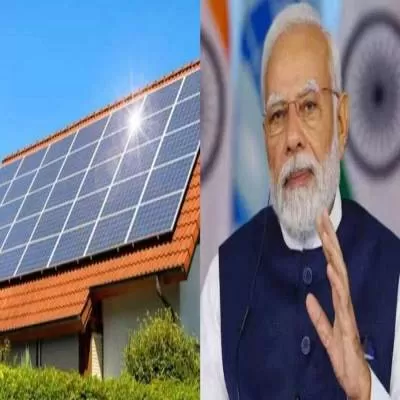
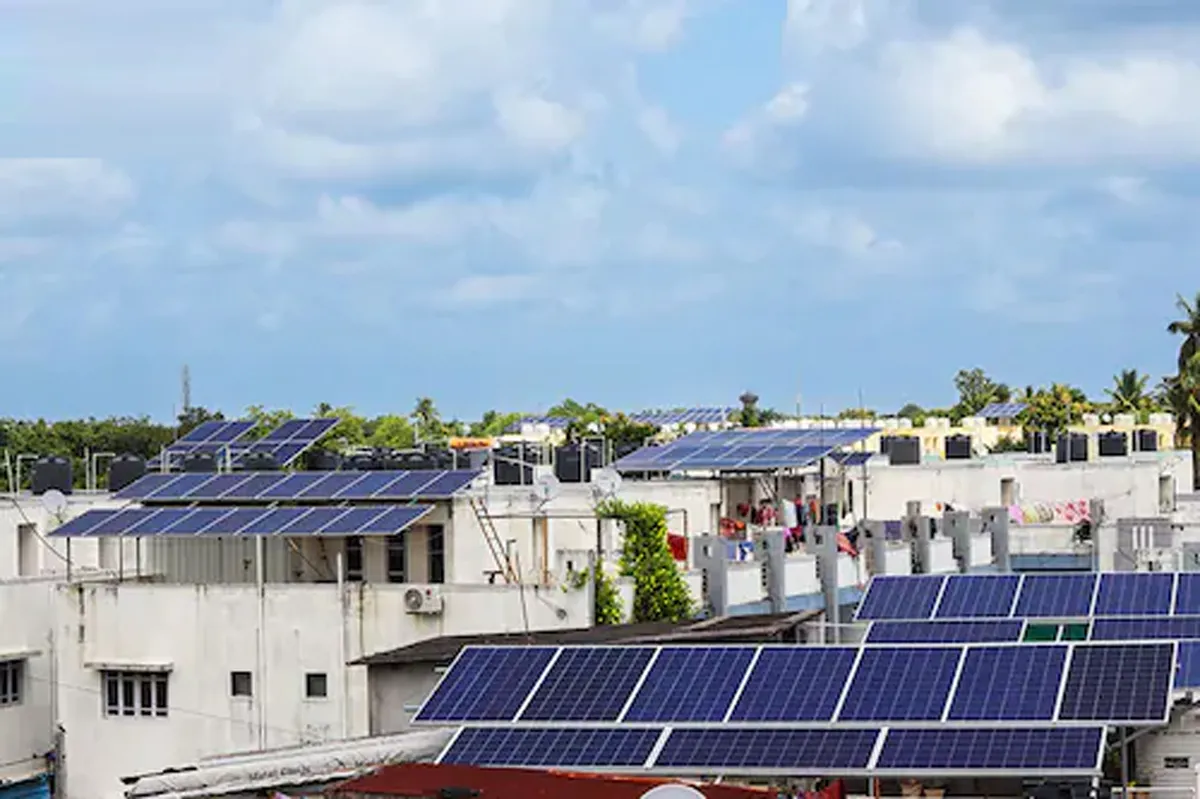
The Ministry of Power has directed all States and Union Territories to streamline the approval process for rooftop solar systems by eliminating separate net-metering agreements and removing associated fees such as application, registration, and testing charges. The directive applies to installations under the PM Surya Ghar: Muft Bijli Yojana (PMSGY), a flagship initiative aimed at expanding rooftop solar adoption among households across India.
Citing Sub-rule 10 of Rule 4 of the Electricity (Rights of Consumers) Rules, 2020, the Ministry emphasised that any agreement between consumers and distribution licensees should be integrated within the online application form rather than issued as a standalone document. States have been instructed to implement a fully digital process that allows consumers to complete all formalities through the PMSGY portal itself, thereby reducing physical interactions with local distribution companies.
The move seeks to address one of the major deterrents to residential solar adoption—complex and time-consuming paperwork. By simplifying procedures, the government expects a faster rollout of rooftop solar systems and improved participation from urban and rural households alike.
Several states, including Gujarat, Rajasthan, Karnataka, Jharkhand, Haryana, and Puducherry, already employ digital net-metering processes that comply with this directive. So far, 17 states and Union Territories have waived related charges, reflecting growing alignment with the national policy.
The PM Surya Ghar scheme aims to equip 10 million households with rooftop solar installations, targeting a cumulative capacity of 30 GW by 2027. Nearly 2 million systems have already been commissioned, enabling households to significantly reduce or even eliminate electricity bills—while some earn credits by supplying surplus power back to the grid. 

The Ministry of Power has directed all States and Union Territories to streamline the approval process for rooftop solar systems by eliminating separate net-metering agreements and removing associated fees such as application, registration, and testing charges. The directive applies to installations under the PM Surya Ghar: Muft Bijli Yojana (PMSGY), a flagship initiative aimed at expanding rooftop solar adoption among households across India.Citing Sub-rule 10 of Rule 4 of the Electricity (Rights of Consumers) Rules, 2020, the Ministry emphasised that any agreement between consumers and distribution licensees should be integrated within the online application form rather than issued as a standalone document. States have been instructed to implement a fully digital process that allows consumers to complete all formalities through the PMSGY portal itself, thereby reducing physical interactions with local distribution companies.The move seeks to address one of the major deterrents to residential solar adoption—complex and time-consuming paperwork. By simplifying procedures, the government expects a faster rollout of rooftop solar systems and improved participation from urban and rural households alike.Several states, including Gujarat, Rajasthan, Karnataka, Jharkhand, Haryana, and Puducherry, already employ digital net-metering processes that comply with this directive. So far, 17 states and Union Territories have waived related charges, reflecting growing alignment with the national policy.The PM Surya Ghar scheme aims to equip 10 million households with rooftop solar installations, targeting a cumulative capacity of 30 GW by 2027. Nearly 2 million systems have already been commissioned, enabling households to significantly reduce or even eliminate electricity bills—while some earn credits by supplying surplus power back to the grid. 

Next Story
Infrastructure Urban

India Expands Semiconductor Training To 500 Institutions

Under the Chips to Startups programme of the India Semiconductor Mission, the Union minister responsible for Railways, Information and Broadcasting, and Electronics and IT reported notable progress in talent development. He indicated that over the past four years substantial steps have been taken towards a 10-year target of training 85,000 engineers in semiconductor design. World-class EDA tools have been deployed in 315 academic institutions across the country to provide students with practical exposure to chip design. These EDA tools are supported by leading global firms and are accessible t..

Next Story
Infrastructure Urban

Delhi Institutions Support India Semiconductor Mission

The Government of India has prioritised talent development through training, upskilling and workforce development under the Chips to Startups initiative of the India Semiconductor Mission, with officials noting progress in four years towards a 10-year target of training 85,000 engineers in semiconductor design. Electronic design automation tools provided by Synopsys, Cadence, Siemens, Renesas, Ansys and AMD have been deployed in 315 academic institutions, enabling students to gain practical chip design experience. Chips have been fabricated and tested at the Semiconductor Laboratory, Mohali, a..

Next Story
Infrastructure Urban

NHA Announces Winners Of NHCX Hackathon At IIT Hyderabad

The National Health Authority (NHA) has concluded the NHCX Hackathon under the Ayushman Bharat Digital Mission (ABDM) to stimulate innovation around the National Health Claims Exchange (NHCX). The winning teams presented their solutions at the NHCX Innovation Meet held at IIT Hyderabad during a two-day event in March 2026 that also served as the hackathon grand finale. The hackathon itself ran from 22 to 28 February 2026 and aimed to accelerate paperless, transparent claims processing across India. The event was organised with a range of ecosystem partners, including the Insurance Regulatory a..

Advertisement

Subscribe to Our Newsletter

Get daily newsletters around different themes from Construction world.

STAY CONNECTED

Advertisement

Advertisement

Advertisement