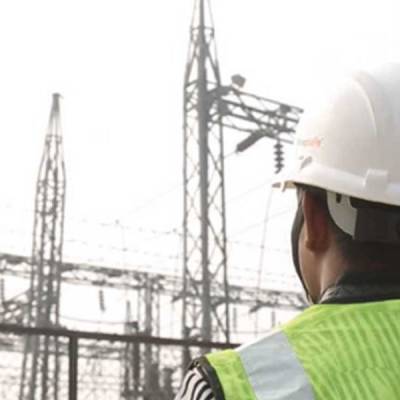
Tata Power Eyes Rs. 25 bn Solar Investment in Bengal, Seeks Subsidy
POWER & RENEWABLE ENERGY

Tata Power Eyes Rs. 25 bn Solar Investment in Bengal, Seeks Subsidy

Tata Power is exploring solar power projects worth around Rs. 25 bn in West Bengal and has urged the state government to provide additional subsidies for rooftop installations. The company is also targeting rooftop solar systems in 300,000 homes across the state over the next three years, citing significant potential for higher adoption.

Sanjay Banga, chief executive officer and managing director of Tata Power Renewable Energy, said a state incentive modelled on schemes in Odisha, Bihar and Assam could make rooftop systems more affordable for low-income households. The proposed support could range from Rs. 15,000 to Rs. 25,000 per project, in addition to assistance available under the Centre’s PM Surya Ghar Muft Bijli Yojana.

Tata Power has installed about 6,000 rooftop solar systems in West Bengal, out of nearly 22,000 households covered under the national programme in the state. The company said the upfront cost remained a key barrier despite central assistance, which provides Rs. 30,000 for a 1-kW system and up to Rs. 78,000 for a 3-kW installation.

The company is promoting a zero-down-payment financing scheme for residential solar projects through a panel of banks. It is also examining several solar power plants with a combined capacity of about 500 MW, involving an investment of around Rs. 25 bn. Land availability remains a challenge, and the company has approached the state government regarding possible locations.

The projects could be distributed across multiple sites depending on land availability. Banga proposed that the state identify non-agricultural land, develop infrastructure and invite renewable energy developers to establish solar parks. Under the suggested model, private companies would install generation facilities and supply power to the West Bengal State Electricity Distribution Company (WBSEDCL) under long-term agreements.

Tata Power estimated that electricity from such projects could be supplied at about Rs. 3 per unit, compared with WBSEDCL’s average procurement cost of Rs. 4 to Rs. 5 per unit. The company said it would be interested in participating if the state provided suitable land and grid connectivity, citing similar approaches in Rajasthan and Karnataka.

Tata Power is exploring solar power projects worth around Rs. 25 bn in West Bengal and has urged the state government to provide additional subsidies for rooftop installations. The company is also targeting rooftop solar systems in 300,000 homes across the state over the next three years, citing significant potential for higher adoption. Sanjay Banga, chief executive officer and managing director of Tata Power Renewable Energy, said a state incentive modelled on schemes in Odisha, Bihar and Assam could make rooftop systems more affordable for low-income households. The proposed support could range from Rs. 15,000 to Rs. 25,000 per project, in addition to assistance available under the Centre’s PM Surya Ghar Muft Bijli Yojana. Tata Power has installed about 6,000 rooftop solar systems in West Bengal, out of nearly 22,000 households covered under the national programme in the state. The company said the upfront cost remained a key barrier despite central assistance, which provides Rs. 30,000 for a 1-kW system and up to Rs. 78,000 for a 3-kW installation. The company is promoting a zero-down-payment financing scheme for residential solar projects through a panel of banks. It is also examining several solar power plants with a combined capacity of about 500 MW, involving an investment of around Rs. 25 bn. Land availability remains a challenge, and the company has approached the state government regarding possible locations. The projects could be distributed across multiple sites depending on land availability. Banga proposed that the state identify non-agricultural land, develop infrastructure and invite renewable energy developers to establish solar parks. Under the suggested model, private companies would install generation facilities and supply power to the West Bengal State Electricity Distribution Company (WBSEDCL) under long-term agreements. Tata Power estimated that electricity from such projects could be supplied at about Rs. 3 per unit, compared with WBSEDCL’s average procurement cost of Rs. 4 to Rs. 5 per unit. The company said it would be interested in participating if the state provided suitable land and grid connectivity, citing similar approaches in Rajasthan and Karnataka.

Related Stories

Gold Stories

Next Story
Real Estate

Landmark Group plans Rs 150 billion NCR expansion

Landmark Group has announced expansion plans across two real estate projects in the National Capital Region (NCR), with a combined estimated sales potential of Rs 150 billion. The projects include Landmark One, a 2.1 million sq ft corporate office development on Golf Course Extension Road in Gurugram, and a proposed integrated hospitality, commercial and residential development on Dwarka Expressway.Landmark One has an estimated sales value of Rs 40 billion. The project involves an estimated construction investment of Rs 10 billion, apart from the underlying land, currently valued at around Rs ..
Next Story
Real Estate

RMZ entities secure 5-Star ratings in GRESB 2026

RMZ has been recognised as a Global and Regional Sector Leader in the 2026 Global Real Estate Sustainability Benchmark (GRESB) Real Estate Development Assessment, with three of its entities scoring 99.6 out of 100. RMZ Nexus LLP, Millenia Realtors Private Limited and Infralogix LLP secured 5-Star ratings in their respective categories across the Office and Industrial sectors.In the 2026 Development Benchmark, RMZ Nexus LLP and Millenia Realtors Private Limited were named Sector Leaders in the Office and Office Non-Listed categories in Asia. Infralogix LLP received the distinction in the Indust..

Next Story
Products

Schneider Electric deploys smart building systems at Jupiter Hospitals

Schneider Electric has partnered with Jupiter Hospitals to deploy connected building technologies aimed at improving energy efficiency, patient comfort and operational performance across its hospital campus. The deployment of its EcoStruxure Building Operation platform and SpaceLogic thermostats is helping the hospital achieve energy savings of up to 28 per cent, according to the company.With heating, ventilation and air-conditioning (HVAC) systems accounting for nearly 60 per cent of the hospital's total energy consumption, improving efficiency while maintaining the conditions required for pa..

Advertisement

Subscribe to Our Newsletter

Get daily newsletters around different themes from Construction world.

STAY CONNECTED

Advertisement

SPECIAL OFFER
QR Code