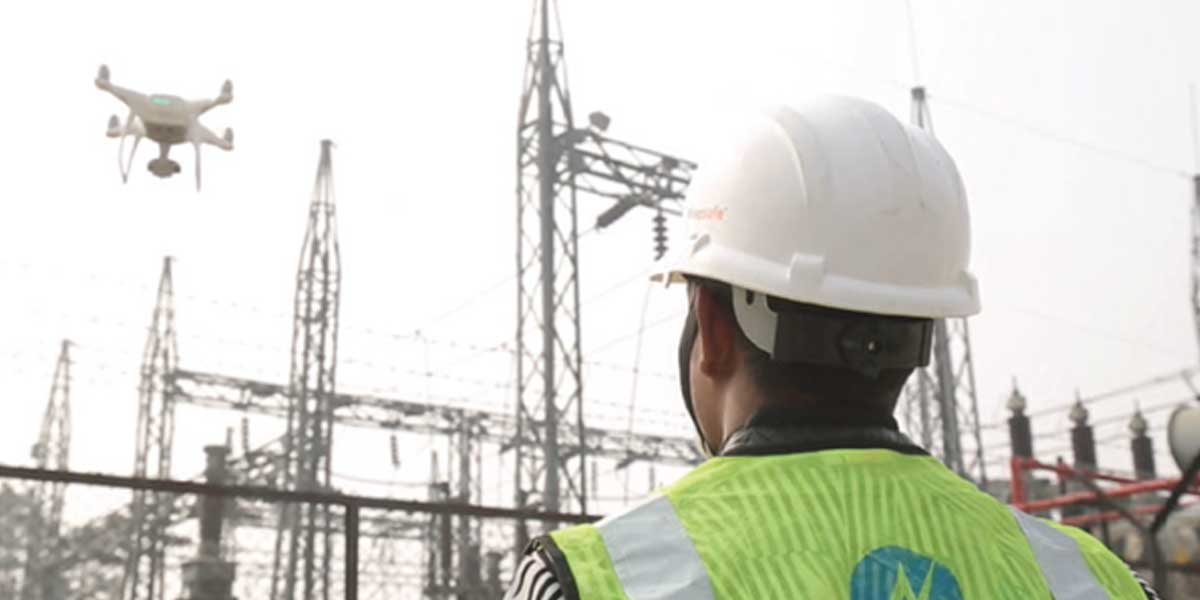
Even as the Centre puts in place a strategy to bring in efficiencies, energy sector observers believe that states will play hardball because electricity comes under concurrent list and state governments play an active role. Experts feel that smart metering, along with SCADA and energy audit systems could play a key role in reducing electricity theft.
In the backdrop of distribution companies’ dues having touched an all-time high and showing no signs of abating, the government has set in motion the much-needed reforms in the power sector as reflected in Budget 2021. In her budget speech, Finance Minister Nirmala Sitharaman said, “The viability of distribution companies is a serious concern. A revamped reforms-based result-linked power distribution sector scheme will be launched with an outlay of Rs 3.05 trillion over five years. The scheme will provide assistance to distribution companies for infrastructure creation, including pre-paid smart meter and feeder separation, upgrading of systems, etc., tied to financial improvements.” With this move, the Central Government is trying to improve the operations and finances of state-owned distribution companies, the weakest link in India’s power supply chain. The government’s moves will, over time, help mitigate cash-flow stress observed in rated power generation companies, rating agency Fitch said. The Rs 3-trillion plan intends to trim electricity losses, gradually narrow distribution companies’ cost-revenue gap, improve reliability and quality of power supply, and promote more sustainable competition in the sector over 2022-2025.
Liquidity Support
The pandemic aggravated the distribution companies’ difficulties due to the initial fall in electricity demand from higher-paying commercial & industrial (C&I) customers, payment concessions and delay in cash collections. The government’s liquidity support through Rs 1.2 trillion of conditional concessionary loans alleviated the situation. However, adequate tariff hikes and reduction of losses are essential for a sustainable structural improvement of the state distribution companies. Power distribution remains the most crippled part of the electricity value chain, and the Covid-19 pandemic only further exposed the need for serious structural reforms in the sector. By some estimates, India’s distribution companies owed dues amounting to a staggering Rs 1 trillion to power generators. The government in 2015 introduced a voluntary rehabilitation scheme, Ujjwal Discom Assurance Yojana (UDAY), to turn around distressed distribution companies. While UDAY was more comprehensive than previous packages, it primarily drove debt restructuring of distribution companies without significant sustained reduction in technical and commercial losses, and the cost-revenue gap. To this end, a holistic approach that includes infrastructure updates, smart metering, demand-side management and regular tariff revisions will go further, said Fitch. So, how much will this help? Sanjay Banga, CEO of Tata Power Delhi Distribution Ltd was of the view that this was a step in the right direction. “This infusion can be used for institutional reforms and can be subject to privatisation, as a condition,” he said.
Competition in Retail Supply
According to Pankaj Batra, Project Director of the United States Agency for International Development (USAID) funded project on South Asia Regional Initiative for Energy Integration (SARI/EI) at Integrated Research and Action for Development (IRADe), “This effectively implies separation of carriage (lines business) and content (supply business) in the Distribution business, with competition in the retail supply business.” This was discussed in the earlier amendments of the Electricity Act 2003, but could not materialise because of opposition by some of the states. But including this in the Budget speech for 2021-22 means raising the issue to another level. Energy – in this case, electricity – reliability is the key to the progress of a nation. The UDAY scheme, which is a performance-based financial assistance scheme by the Central Government, has resulted in a reduction in transmission & distribution (T&D) losses in most states as well as a reduction in the gap between the average cost of supply (ACS) and average revenue realisation (ARR), to make the distribution companies more financially viable. However, financial losses persist.
Distribution Reforms
“However, by again bringing this to the forefront, it appears that the government is serious about distribution reforms. If there is competition in retail supply, the state-owned distribution companies would be incentivised to perform better,” averred Batra. Rating agency Fitch said distribution companies were saddled with huge accumulated losses due to a combination of crippling debt, expensive power, technical & commercial (T&C) losses, and less-than-commensurate increases in tariffs. The scheme is expected to result in the upgrading of distribution companies’ infrastructure. Investment in network upgrades is likely to improve collections and aggregate technical and commercial (AT&C) loss levels of distribution companies, which in turn shall benefit generation companies by way of timely receipt of energy bills, noted another rating agency CARE.
Choice for Consumers
Anil Chaudhry, CEO, Schneider Electric India, was of the view that the proposal to offer more choice to consumers by introducing competition in the power distribution space by kick-starting Rs 3-trillion reforms-based result linked power distribution sector scheme for state power distribution companies would likely address the long hanging T&D issues and give relief to power producers, thereby ensuring the health of the entire value chain. During the Covid-19 lockdown, industrial and commercial establishments closed down, with employees working from home over an extended period. Industrial and commercial consumption, therefore, reduced and residential consumption increased. As a policy of most states, the tariffs of industries and commercial are higher than that of residential tariff, which adversely affected the revenues of distribution companies. In effect, it means that the industrial and commercial sectors are cross-subsidising the residential and agricultural consumers. “Distribution companies with high AT&C losses (Uttar Pradesh, Bihar, Madhya Pradesh and Jharkhand) could require high funding,” analysts at India Ratings and Research noted.
Need for More Alternatives
Also, in the budget Finance Minister Sitharaman touched upon the need to increase alternatives to consumers so that they can choose their own distribution companies. In line with this, the Ministry of Power has tabled the latest Electricity Amendment Bill in Parliament, aiming to delicense the power distribution business and bringing in competition. It will propose new amendments to the Electricity Act that seek to remove the wording ‘distribution licensee’. What this will effectively do is assist distribution companies for infrastructure creation including pre-paid smart metering and feeder separation and upgrading of systems, tied to financial improvements. “The provision is already there in the latest Tariff Policy, 2016. The Central Government has now provided funds for the same,” stated Batra. Additionally, pre-paid meters would ensure that people pay in advance for electricity, rather than after consumption, as is the case of telephone rentals. This would help in liquidity for distribution companies.
Greater Variety to Consumers
The overall effect of the move will be to increase competition within the power distribution sector and provide greater variety to consumers who, for years, have struggled with increasing electricity prices and persistent power cuts, according to Rupesh Sankhe, Vice President at Elara Securities. In December, the power situation returned to normalcy after witnessing a spate of declines in October and November. Power consumption and consequently generation bounced back in December, reversing the decline of the previous two months and some months before. The improvement in electricity consumption and generation points to the expansion in economic activity during the month. However, the rate of addition to domestic power generation capacity in FY2020-21 was the lowest in five years. New capacity addition of conventional, as well as renewable energy, slowed down, with the decline in the former being higher. The addition to capacity during the year was led by solar power. With power being classified as “essential”, distribution companies’ dues to generators have been mounting. Outstanding dues amounted to Rs1.2 trillion, a 28 per cent increase from April 2020. The new scheme is slated to reduce AT&C losses. The UDAY initiative failed to achieve its target to bring down these losses to 15 per cent by FY2019 end. AT&C losses now are estimated to be at 26 per cent.
Direct Subsidy
“To avoid this, it would be better the tariffs are reflective of the cost and all consumers are charged tariffs reflective of the cost of supply. Underprivileged consumers, however, do need subsidies to be provided by the government. Therefore, the subsidy, if the government feels, can be deposited directly to the consumer’s bank account, after they have paid the full tariff, instead of the aggregate technical and commercial revenue getting affected due to pandemics like this. That is, there could be a direct subsidy, instead of cross-subsidy,” suggested Batra. The weak financial profile of state-owned aggregate technical and commercial continues to be of concern for the power sector, given the limited improvement in the operating and financial performance of these utilities. While a liquidity relief scheme was announced in May 2020 for state aggregate technical and commercial through state government guarantee-backed loans, it remains a short-term measure. So far, this scheme has been only partially implemented, ICRA had said in a note before the Budget. Efficient procurement of electricity is, therefore, the need of the hour.
Reducing Power Theft
“Smart metering, along with distribution supervisory control and data acquisition (SCADA) and energy audit systems, is key to reducing theft of electricity, as that gives in real-time when theft of electricity is taking place, besides providing invaluable data for optimal procurement of power and optimal design of the distribution system by the DISCOM,” stated Batra. “It is also good to see the government’s focus on ensuring smart metering, which will help cut the commercial losses in power distribution,” said Schneider’s Chaudhry. Even as the centre puts in place a strategy to bring in efficiencies, industry watchers believe that states will play hardball. “Government can put in place a policy framework but as electricity comes under concurrent list, state governments play an active role. So, no state governments will go for privatisation as the power sector is driven by vote-bank politics, such as free power to agriculture, subsidies, amongst others,” opined Sankhe. Though the details of the new scheme for distribution companies are yet to be announced, industry watchers said the new initiative can replace the existing Central Government schemes such as the Integrated Power Development Scheme and the Deen Dayal Upadhyaya Gram Jyoti Yojana, which have similar targets to reduce losses through smart metering, feeder separation and general upgrade of distribution infrastructure.