Improving Structural Life
Concrete

Improving Structural Life

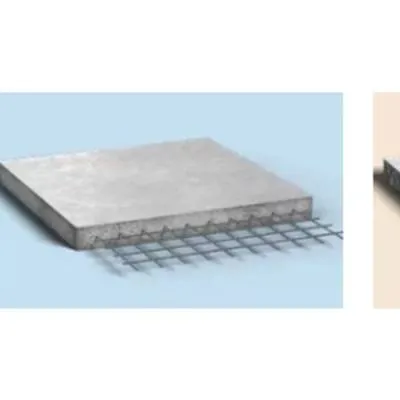
Dr Fixit’s Pidiproof LW+ provides multiple benefits such as improved dispersion mechanism, increase in compressive strength and micro structure refinement.

Primary waterproofing is usually provided through an elastic coating or membrane. However, general resistance to water penetration and improved durability of structures can also be achieved through secondary waterproofing. As over 85 per cent of the concrete produced in India is still made by volume batching, there is lack of control of W/C ratio at sites. The quality control of sand and aggregate is also limited with concrete having high permeability. Furthermore, there is ingress of salts and water in foundation concrete. This causes the concrete to detoriate raising the ground water in the walls through the capillaries in mortar and bricks. This also leads to dampness and peeling-of paints in walls at the ground level. Pollutants such as carbon dioxide along with water enter in the concrete leading to rebar corrosion and deterioration. To prevent this, site-mixed mortar and plaster are commonly used, unlike pre-mix mortars used in other countries. These site-mixed mortars lack adhesion and cohesive properties with cracks appearing in mortar and plaster surfaces.

The solution

Pidiproof LW+ is a unique cement additive with a judicious combination of various selective polymers that offer benefits such as improved dispersion mechanism leading to water reduction of 6-8 per cent and increase in compressive strength and micro structure re­fine­ment which reduces permeability and corrosion resistance.

The compressive strength of concrete specimen with this product displays an increase of 7 per cent in 28 days. The RCPT value (measure of chloride penetration), water permeability and drying shrinkage of the concrete specimen with it displays 27 per cent, 39 per cent and 30 per cent reduction, which is quite significant. Morever, the product displays improved impermeability over PPC concrete, which by itself is more impermeable than OPC concrete. Additionally, it conforms to IS 2645 and 9103, is corrosion resistant and acts against capillary water rising dampness, improving durability in foundations.

Multiple benefits

Narrow lanes known as capillaries are formed during hydration of cement, which enable ingress of chlorides, sulphates, etc. But this cement additive breaks these capillaries. Hydrophobic polymeric molecules present in the additive fill the pores and impart a hydrophobic environment, which repels the water molecule and increases the impermeability of the mortar or concrete. These polymeric and the cement particles have the same charge, which causes the particles to disperse and release locked water. This improves workability, hydration and increases the strength of concrete and mortar. Some selective polymeric particles also ingress into the pores and its impermeability delays corrosion and acts against rising dampness. These are fine micro-particles, which reach all the rear points and throughout the mortar or concrete matrix. There is improvement in cohesiveness. This reduces the rebound loss in trowelling, leading to higher mason productivity. An overall effect of reduced cracking is observed.

Accessories to operate

Accessories include photocell installation on fixed mounting, red reflective strips, fixed or moving mounting, vandal proof electrically operated lock, aluminum skirting and arm pivot pin kit at 90°. The product can be operated with batteries or light kit and comes with a display module for diagnostics and enhanced control.

(Communication by the management of the company)

Dr Fixit’s Pidiproof LW+ provides multiple benefits such as improved dispersion mechanism, increase in compressive strength and micro structure refinement.Primary waterproofing is usually provided through an elastic coating or membrane. However, general resistance to water penetration and improved durability of structures can also be achieved through secondary waterproofing. As over 85 per cent of the concrete produced in India is still made by volume batching, there is lack of control of W/C ratio at sites. The quality control of sand and aggregate is also limited with concrete having high permeability. Furthermore, there is ingress of salts and water in foundation concrete. This causes the concrete to detoriate raising the ground water in the walls through the capillaries in mortar and bricks. This also leads to dampness and peeling-of paints in walls at the ground level. Pollutants such as carbon dioxide along with water enter in the concrete leading to rebar corrosion and deterioration. To prevent this, site-mixed mortar and plaster are commonly used, unlike pre-mix mortars used in other countries. These site-mixed mortars lack adhesion and cohesive properties with cracks appearing in mortar and plaster surfaces.The solutionPidiproof LW+ is a unique cement additive with a judicious combination of various selective polymers that offer benefits such as improved dispersion mechanism leading to water reduction of 6-8 per cent and increase in compressive strength and micro structure re­fine­ment which reduces permeability and corrosion resistance.The compressive strength of concrete specimen with this product displays an increase of 7 per cent in 28 days. The RCPT value (measure of chloride penetration), water permeability and drying shrinkage of the concrete specimen with it displays 27 per cent, 39 per cent and 30 per cent reduction, which is quite significant. Morever, the product displays improved impermeability over PPC concrete, which by itself is more impermeable than OPC concrete. Additionally, it conforms to IS 2645 and 9103, is corrosion resistant and acts against capillary water rising dampness, improving durability in foundations.Multiple benefitsNarrow lanes known as capillaries are formed during hydration of cement, which enable ingress of chlorides, sulphates, etc. But this cement additive breaks these capillaries. Hydrophobic polymeric molecules present in the additive fill the pores and impart a hydrophobic environment, which repels the water molecule and increases the impermeability of the mortar or concrete. These polymeric and the cement particles have the same charge, which causes the particles to disperse and release locked water. This improves workability, hydration and increases the strength of concrete and mortar. Some selective polymeric particles also ingress into the pores and its impermeability delays corrosion and acts against rising dampness. These are fine micro-particles, which reach all the rear points and throughout the mortar or concrete matrix. There is improvement in cohesiveness. This reduces the rebound loss in trowelling, leading to higher mason productivity. An overall effect of reduced cracking is observed.Accessories to operateAccessories include photocell installation on fixed mounting, red reflective strips, fixed or moving mounting, vandal proof electrically operated lock, aluminum skirting and arm pivot pin kit at 90°. The product can be operated with batteries or light kit and comes with a display module for diagnostics and enhanced control.(Communication by the management of the company)

Related Stories

Gold Stories

Next Story
Equipment

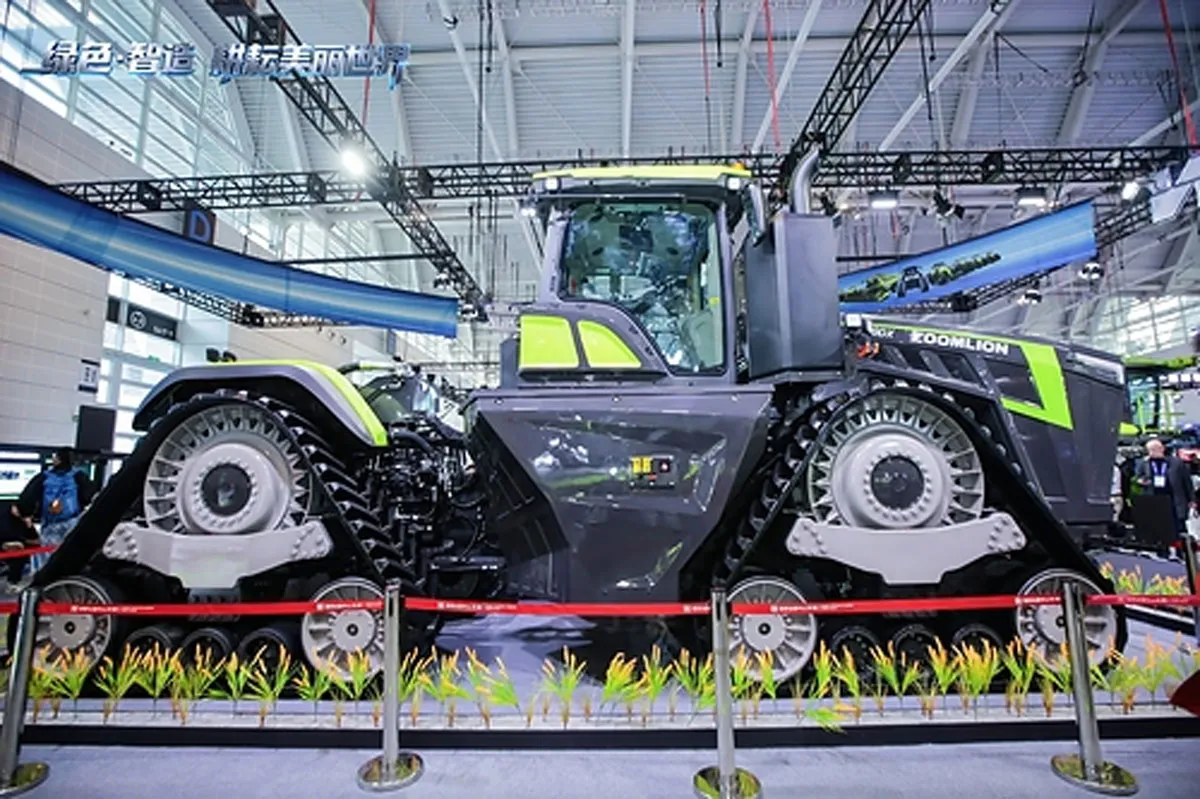
Zoomlion Unveils 1,600 HP Hybrid Tractor for Large Farms

Zoomlion Heavy Industry Science & Technology has recently unveiled its 9DX hybrid tractor at the 2026 China International Agricultural Machinery Exhibition in China. Delivering a peak output of 1,600 horsepower, the tractor is claimed by the company to be the world's most powerful and is designed for large-scale, heavy-duty agricultural operations.The 9DX incorporates an in-house-developed digital chassis, core components and intelligent control systems. Its hybrid continuously variable transmission technology and 800-volt dual-motor coupling system generate peak torque of 7,200 Nm, enabli..
Next Story
Infrastructure Urban

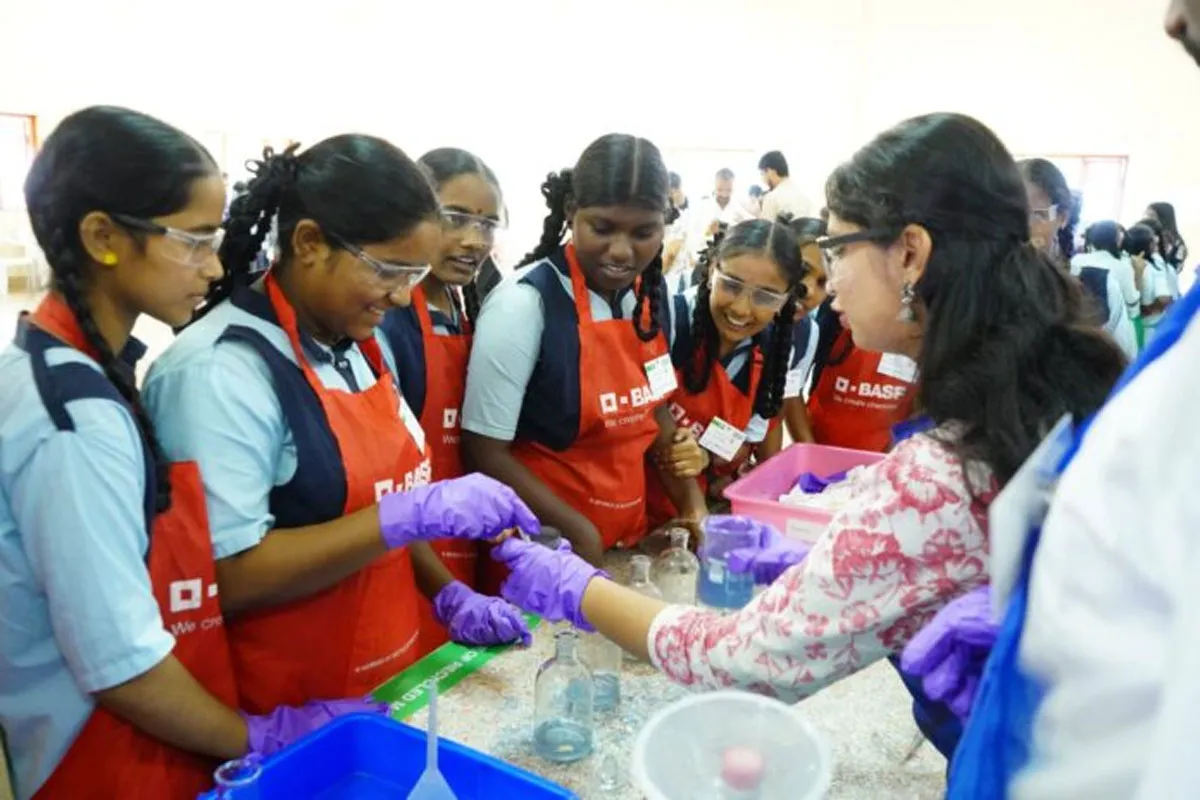
BASF Kids' Lab Brings Climate Education to 1,150 Hyderabad Students

BASF, in collaboration with the CSIR-Indian Institute of Chemical Technology (CSIR-IICT), Hyderabad, has recently organised its Kids' Lab programme from 26 to 31 October 2026, aiming to engage 1,150 municipal schoolchildren in hands-on chemistry experiments and climate action awareness.Designed for children aged eight to 12, the initiative encourages scientific curiosity through interactive experiments while introducing concepts related to sustainability, environmental protection and climate change.The BASF Kids' Lab programme operates in more than 30 countries and has reached over 62,000 scho..

Next Story
Building Material

JK Lakshmi Cement Begins Rs 110 Billion Assam Plant Project

JK Lakshmi Cement has recently laid the foundation stone for Project Kamakshi, its first integrated cement manufacturing facility in Assam, marking its entry into Northeast India. The groundbreaking ceremony was held at Umrangso village in Dima Hasao district in the presence of Assam Chief Minister Himanta Biswa Sarma.The project involves an investment of Rs 110 billion, including the mining lease, and will have an annual cement production capacity of 2.5 million tonnes, supported by a 1 million tonne clinkerisation unit. Scheduled for completion by FY2029, the facility is expected to generate..

Advertisement

Subscribe to Our Newsletter

Get daily newsletters around different themes from Construction world.

STAY CONNECTED

Advertisement

SPECIAL OFFER
QR Code