India needs to build a building health operating system
ECONOMY & POLICY

India needs to build a building health operating system

Cyond is bringing engineering-led diagnostics, AI-assisted data and standardised repair systems to building preservation, after screening nearly 1.5 lakh buildings and finding water-related deterioration in 67 per cent. In this interaction with Construction World, Sunil Gorle, Founder, Cyond...

"Join industry leaders at RAHSTA Expo, India's premier platform for roads, highways and traffic infrastructure. Register now to explore innovations, network with experts and shape the future of mobility."

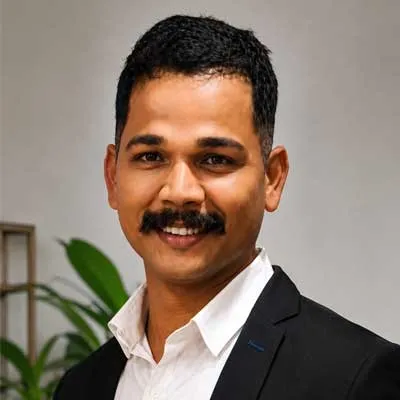
Cyond is bringing engineering-led diagnostics, AI-assisted data and standardised repair systems to building preservation, after screening nearly 1.5 lakh buildings and finding water-related deterioration in 67 per cent. In this interaction with Construction World, Sunil Gorle, Founder, Cyond, discusses how building health insights can make maintenance more predictive.What business opportunity did Cyond identify in structural diagnostics and waterproofing?India has invested trillions of rupees in creating its built environment. Yet, many assets expected to last 70-100 years begin showing deterioration within 10-20 years. We identified a major gap in building preservation and maintenance. Through screening nearly 1.5 lakh buildings, we found that about 67 per cent showed signs of water seepage, dampness, leakage or related deterioration. Cyond was founded to bring engineering, technology, standardisation and trust to this space.How is Cyond building its AI-led diagnostics platform through service-led data collection?We are currently a service-led company because the construction sector does not have structured data. Through our services, we are collecting and organising that data.Every repair is diagnosed, digitised and mapped with metrics. When a customer uploads images, our system can identify 60-70 per cent of the likely problem before the engineer even reaches the site. Our engineers use the app for diagnosis, reporting, solution documents and cost sheets. The goal is to enable a customer to click a picture through the app and understand the probable source, solution, vendor and likely cost. Over time, we are also building a customer dashboard for asset maintenance, similar to how car owners receive service alerts.What was the first major project or client that validated Cyond’s business model?My Home Bhooja in Hyderabad became one of our early validation projects. The facility management team had been trying to solve persistent dampness issues for nearly a year. Our team diagnosed the root cause and resolved the issue within a few days. It reinforced our belief that customers are looking for certainty, accountability and permanent solutions.That became one of our customer success stories. Today, we have a 4.9-star rating from around 650 genuine Google reviews and are doing around 300 diagnoses per month in Hyderabad.How do you balance technology with human expertise when onsite engineering judgement remains critical?Technology enhances engineering judgement but does not replace it. AI can identify patterns and probable causes, but diagnosis still requires trained professionals who understand building behaviour, materials, moisture movement and structural systems. We see AI as an augmentation tool rather than a replacement for engineers.What barriers has Cyond faced in promoting predictive diagnostics?The biggest barrier is that many customers believe service visits should be free. Earlier, the unorganised sector would say, ‘I will come for free’, but the customer could later be overcharged. We initially charged nothing, then gradually moved to ₹ 499, ₹ 999 and now around ₹ 2,999 plus taxes. A professional diagnosis has costs: travel, customer acquisition, digital systems and trained engineers. More important, it can prevent customers from spending unnecessarily. There have been cases where a customer was advised to spend ₹ 3 lakh on redoing a bathroom while the actual issue was solved for ₹5,000.What role can Cyond play in broader B2B expansion, especially through products for developers and facility managers?We have applied for a patent for water leak-sensors that can be embedded during construction. Many customers told us that if they had known about the leakage earlier, they could have avoided damage to furniture and termite-related issues. In some cases, especially gravity pipes, problems cannot be detected by any equipment in the world after construction. That is why we started working on sensors that can be placed under the floor during construction. This is a global problem, whether in India, the Middle East or Europe.As Cyond scales, what are the company’s next strategic priorities?Our immediate focus is to strengthen Hyderabad and build systems that can scale nationally. We are investing in CDT training, AI-assisted diagnosis, engineer productivity tools, automated BOQ systems, smart leak detection sensors, preventive maintenance programmes and franchise enablement. Our long-term vision is to build India's building health operating system, where every building has a digital health record, predictive maintenance alerts and access to trusted repair ecosystems.-PRANJAL PATIL

Next Story
Infrastructure Urban

Tap Off: What BMC's Water Cut Means for Mumbai realty?

By a circular dated June 17, 2026 (‘BMC Circular/Circular’), the Brihanmumbai Municipal Corporation (BMC) introduced temporary water conservation measures across Mumbai, citing the depletion of reservoir reserves to 10.35 per cent following the delayed monsoon, reportedly affected by El Niño conditions. The restrictions include disconnecting existing construction-related water connections, suspending new construction-related water connections, temporarily cutting water supply to swimming pools, and reducing supply to industrial, commercial and sports establishments by 20 per cent. Wh..

Next Story
Infrastructure Transport

Tunnelling Towards Tomorrow

The Mumbai–Ahmedabad Bullet Train project is advancing rapidly through some of western India’s most demanding terrain and urban corridors. Recent achievements—from mountain tunnel breakthroughs and TBM deployment to complex steel bridge launches—demonstrate the scale, precision and engineering expertise driving India's first high-speed rail network towards reality.Mountain MilestoneThe breakthrough of the 417-metre-long MT-07 tunnel at Ambesari in Palghar marks the third mountain tunnel completed within five months...To read the full article Click Here ..

Next Story
Real Estate

HiLITE Group to Invest Rs 250 Billion Across Kerala

HiLITE Group has announced plans to invest Rs 250 billion over the next five years to develop 50 million sq ft of space across Kerala, spanning retail, information technology, healthcare, education, residential and commercial segments.The company said it will significantly expand its presence across Kerala's Tier 2 and Tier 3 cities through a network of HiLITE Centres, HiLITE Countryside projects and other mixed-use developments, aimed at bringing organised retail and lifestyle experiences to emerging markets.The expansion strategy is centred on two retail formats. While HiLITE Countryside tar..

Advertisement

Subscribe to Our Newsletter

Get daily newsletters around different themes from Construction world.

STAY CONNECTED

Advertisement

Advertisement

Advertisement