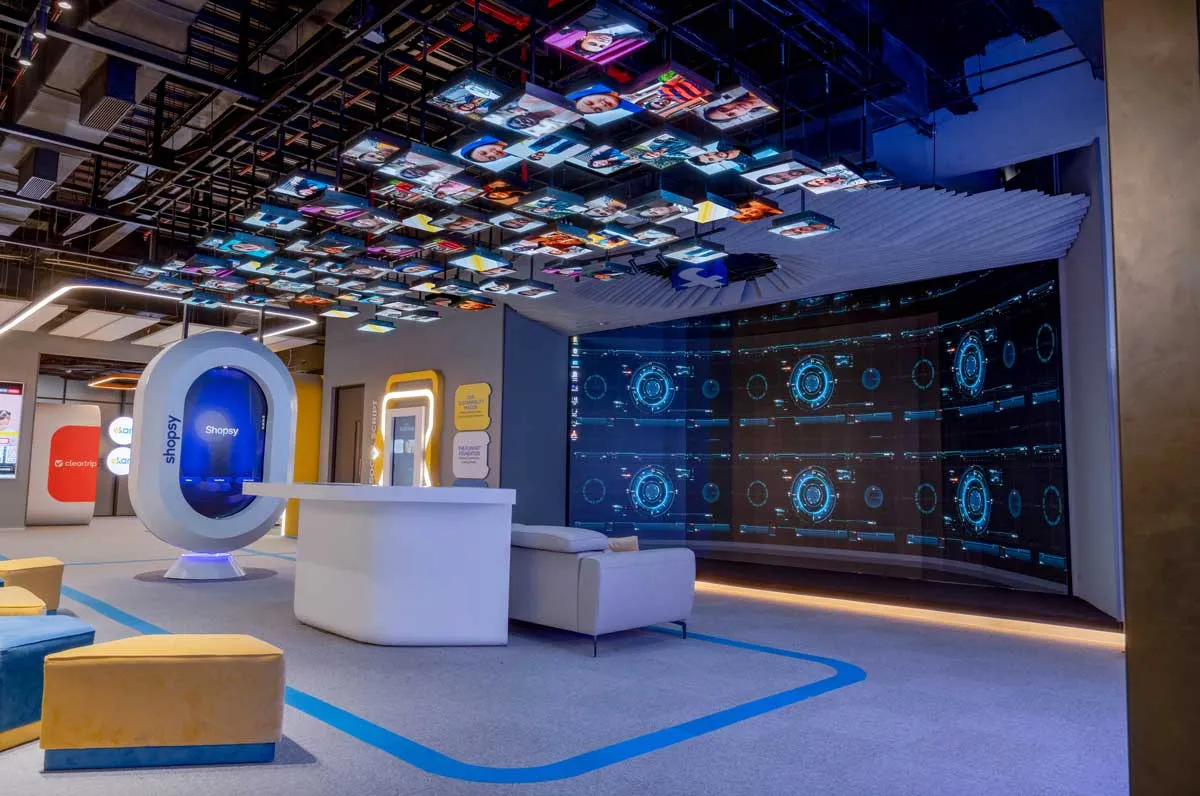
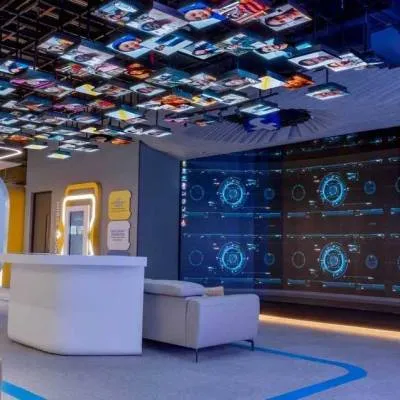
If the past few years have seen sustainability emerge as a buzzword in the design of commercial spaces, the next few years will see the focus shift to ‘experience’. Workplaces that prioritise superior employee experiences consistently report stronger talent attraction and higher retention rates and productivity, while using resources sustainably.First things first; what sort of experiences are expected from a workplace?As Vandana Dhawan Saxena, Founder and Design Principal, Studio IV Designs, explains, “Offices have grown into environments that need to support various kinds of experiences, from collaboration to adaptability, focus and employee wellbeing, often all at once.”Adaptability implies that the workplace can further collaboration as well as personal endeavour. The ability to meet both these needs puts “the flexibility of having multifunctional spaces at the forefront”, she explains.Well-designed social and collaborative spaces encourage teams to gather and exchange ideas more organically, while quieter, more private zones within or around these spaces enable individual endeavour. So, layouts that can accommodate changing team sizes, work modes and operational needs remain relevant over time rather than becoming rigid or restrictive.Employee wellbeing is a common thread running through these formats. No matter what the layout, the ambience must be health-promoting. CW explores how design and technology converge to achieve these aims.Workplace wellnessPhysical comfort underlies a good experience and also has a definite positive impact on bottom lines. To quote Anshuman Magazine, Chairman & CEO - India, South-East Asia, Middle East & Africa, CBRE, “There is a direct relationship between workplace wellness measures and business metrics, with such interventions, according to our research, improving employee productivity by an average of 10 per cent, and by as much as 45 per cent in certain cases.”Workplace wellness measures span both design and ambient conditions. A list of the World’s Happiest Workplaces for 2026 compiled by WorkL includes Tata Motors at the second position from India. Considering that a workplace’s interiors impact employee experience, morale, productivity and happiness levels, what are the key design elements at their facilities?“Several Tata Motors facilities, including those in Sanand and Panappakkam, feature design choices such as large windows that maximise natural daylight, green landscapes and canopied walkways, open workstations, centrally located collaboration areas, ergonomic furniture and accessible infrastructure that enhance the day-to-day employee experience, and create more engaging and inclusive workplaces that support both collaboration and individual productivity,” explains Sitaram Kandi, Chief Human Resources Officer, Tata Motors.In upcoming Tata Motors office projects in Worli, Mumbai and Chinchwad, Pune, hybrid work-enabled spaces will feature flexible workspaces, breakout areas, enhanced social spaces, biophilic design elements, natural light integration and ergonomic planning to create more engaging and human-centric environments.According to Kandi, the objective is “to create workplaces that function not only as offices but also as social destinations where employees can connect, collaborate and build a stronger sense of community.”So much for design. But how do these spaces work? Layouts must come alive to deliver experiences. “Spaces must actually perform to be experiential; spaces must be built for their users,” points out Rajesh Kumar Das, Founder & Managing Director, Rubenius Interior Wellbeing LLP. “An experiential workplace is not about expensive finishes, carefully chosen furniture, obvious technology and a feature wall with the company logo. In experiential workplaces, the brief is never about square footage.”Technology integration Technology plays a key role in enabling spaces to perform. Explaining how spaces that actually perform respond, Das says, “They adapt to what’s happening. They remember the people inside them. They learn usage patterns over time, including which zones are occupied and when, how light and temperature preferences shift across the day, where people naturally gather and where they avoid. That memory is what allows the environment to keep improving rather than staying frozen at the state it was in on opening day. They make visitors feel something they cannot immediately explain because the environment has been quietly, intelligently doing its job all along. That is what great technology integration looks like.”Well-integrated technology isn’t overt; it doesn’t stare at you in the face. But as Das explains from his Flipkart workplace project, an IoT layer running beneath the elements reads occupancy patterns, adjusting light and temperature in real time and removing the small environmental frictions that quietly drain energy across a working day.Tata Motors’ Kandi explains how digital systems work at its Panappakkam facility. “IoT-enabled Building Management Systems provide real-time visibility into HVAC performance, lighting efficiency, energy management and environmental conditions, while occupancy-based controls help optimise resource utilisation without compromising employee comfort,” he shares. “The facility also incorporates technologies such as digital-twin capabilities to support predictive maintenance, operational planning and long-term asset management, AI-enabled monitoring systems and immersive AR/VR-based training initiatives that contribute to a more connected and responsive workplace environment.”Planned office developments will bring these technologies together through a connected smart building ecosystem that integrates AI, IoT, automation and workplace analytics from the ground up. Based on the projected outcomes of these integrated technologies, Tata Motors expects to achieve up to 50 per cent greater operational effectiveness, reduce commissioning time by up to 50 per cent and lower lifecycle costs by up to 75 per cent while creating a smarter and more adaptable workplace. And one could add, a workplace that delivers better experiences. Technology integration also extends to allowing occupants to manage their immediate environment using mobile phones or tablets, adjusting conditions based on how they work throughout the day, says Vijay Dahiya, Partner, team3.“An intelligent building system’s ability to adapt to individual preferences like adjusting lighting levels, thermal comfort and air quality in real time creates personalised environments that reduce stress, support cognitive performance and elevate overall wellbeing,” according to Magazine.In the Hamdard Laboratories Corporate Office and the AU Office in New Delhi, team3 implemented Lutron-based automation to integrate lighting, blinds and HVAC controls, and enable such personalised management. “Our approach was to simplify building systems by bringing them onto a unified, easy-to-use platform,” explains Dahiya. Additionally, systems such as audiovisual setups, CCTV monitoring and electrical controls were integrated into a single interface to reduce fragmentation across building systems and make everyday use more straightforward for both occupants and facility teams.System selectionAs design and technology intertwine, selecting the right technologies has evolved into a science. At Rubenius, applying the Tech Integration Matrix from the Rubenius Experiential Design System framework (see box) at the start of every project, before a single system is specified, helps make the right choices. “At Flipkart and Schneider Electric, two of our most technology-intensive workspaces, this discipline was particularly critical,” says Das. At Flipkart, the space Rubenius built for engineers, product thinkers and the operators revolved around the governing idea that “a workplace must be somewhere people live, work, play andinnovate simultaneously”. A key feature of the project was projection mapping that transformed static walls into living communication surfaces that shifted character entirely depending on what the moment demanded. AR and VR environments gave teams the ability to prototype and collaborate in formats that a standard conference room cannot replicate.At Schneider Electric, every integrated system had to function as a single coherent operating layer, invisible to the occupant, measurable in its outcomes.In the EY office in Gurugram (Sector 44), technology and automation played a significant role in occupant comfort through the installation of sensor-based lighting and sensor-enabled microphone and speaker systems, and also became a medium to make the workplace more operationally efficient and responsive to user needs. “A smart booking system enables employees to reserve workstations and meeting rooms with ease, supporting greater flexibility in how the office is used,” explains Saxena. “Guest check-ins are also managed through an integrated automated system, creating a smoother arrival experience. A large digital video wall at the arrival area serves as both a design feature and a digital communication tool for branding and marketing content as well as important internal messages.”A step up from fundamental workplace experiences are premium experiences such as a prominent BFSI occupier’s new campuses in Mumbai and Bengaluru. Among the experiential features Magazine counts “experiential meeting spaces, including modern conference rooms, innovation labs, work cafes and game room; and dining areas offering diverse cuisines and outdoor seating”.Beyond sustainability, employee experience is rapidly emerging as a key consideration in workplace planning and design. Experience spans wellbeing, safety and inclusivity, and all these elements influence employee comfort, engagement and productivity.To be employee-experience-centric is increasingly aligned with being future-ready. And that is where every growing concern wants to be.Workplace experience levelsAnshuman Magazine, Chairman & CEO - India, South-East Asia, Middle East & Africa, CBRE, explains what makes a workplace experiential from the fundamental level to premium developments:Fundamental levelIoT-enabled air quality monitoring and advanced ventilation systems addressing occupant healthSensor-activated lighting that responds to natural light availability reducing eye strain while cutting energy use Biophilic design elements like green walls, natural materials, access to daylight and outdoor spaces, shown to reduce stress and enhance cognitive functionFlexible, activity-based layouts accommodating diverse work styles, from deep focus to collaborative ideationSmart desk-booking and space reservation systems eliminating frictionOccupancy analytics to help facilities teams ensure the environment is never overcrowded or under-resourced.Premium developmentsAcoustic treatmentMeditation and wellness roomsEV charging infrastructureHospitality-grade food and beverage offerings.Six pillars of the Rubenius Experiential Design System (REDS) frameworkRajesh Kumar Das, Founder & Managing Director, Rubenius Interior Wellbeing LLP, elucidates the six pillars of his framework, each addressing a dimension of human experience that the others cannot replace:Strategy comes first. If a design decision cannot be justified against the brief, it does not belong in the space. Without strategy, design becomes decoration. Every zone must connect to a business outcome.Storytelling gives the space a journey. People do not experience environments as a collection of rooms. They experience them as a sequence of moments. Arrival, exploration, peak experience, resolution. Each zone carries a chapter. Each material advances the narrative.Psychology is the most underused pillar in Indian commercial design. Ceiling height influences abstract thinking. Light and temperature are two distinct variables, and we design both with intent. Warm light slows people down and opens conversation. Cool light sharpens focus. Thermal comfort affects concentration in ways people feel but cannot name. We manage both automatically through occupancy sensors that read the space in real time, adjusting light and temperature based on how many people are present, how long they have been there, and which zone they occupy. The occupant never touches a control panel. The environment simply responds. That is the REDS Technology Pillar working exactly as designed. Material texture triggers associations below conscious awareness. These are not aesthetic choices – they are behavioural ones.Technology must function as invisible infrastructure. It is the operating layer of the experience, never a showpiece. Our Tech Integration Matrix ensures every system answers three questions: What behaviour does this enable? What friction does it remove? What insight does it generate? If the answers are unclear, the technology does not go in.Craft is where intent becomes tangible. The precision of how light meets material, how a threshold announces a zone transition; this is what separates a space that impresses once from one that rewards every return visit.Performance closes the loop. Every experiential office must be measured. Dwell time, engagement depth, recall index. A space that cannot be measured cannot improve.The way forwardSuperior employee experiences positively impact business metrics. So, it is worthwhile for every workplace to be designed to achieve this end. It is up to designers to explain this concept to clients to increase adoption.Adopting a solid framework can ensure every dimension of human experience is addressed. Design must be related to business outcomes. Designers must understand design psychology.Overt technology integration is not the aim; technology must enable desired behaviour and generate actionable insights. The dwell time, engagement depth and recall index of every experiential office must be measured. A space that cannot be measured cannot improve.Gensler Global Workplace Survey 2026: Key Findings Summary The Gensler Global Workplace Survey 2026 explores how workplaces are evolving in the age of AI, drawing insights from 16,459 full-time office workers across 16 countries. Based on more than 20 years of workplace research and over 120,000 respondents globally, the study reveals that while AI is transforming work, the physical workplace remains critically important for learning, collaboration, wellbeing and innovation.A major finding is the remarkable stability of workplace patterns. Employees spend 55 per cent of their work week in the office, unchanged from 2025 and up from 51 per cent in 2024. Working from home accounts for only 18 per cent of the week, continuing a gradual decline. Meanwhile, 26 per cent of working time occurs in other locations such as client sites (7 per cent), coworking spaces (8 per cent), business travel (6 per cent), and third places like cafés and libraries (5 per cent).How people work has also remained consistent. Workers spend 39 per cent of their time working alone, 27 per cent collaborating in person, 13 per cent collaborating virtually, 10 per cent learning or in professional development and 10 per cent socialising.However, stability does not mean satisfaction. Nearly two-thirds of workers use ‘DIY’ fixes to overcome workplace shortcomings. Common adjustments include improving ergonomics and comfort (24 per cent), temperature control (24 per cent), visual privacy (24 per cent), storage (23 per cent), lighting (22 per cent) and noise management (22 per cent). Meeting room shortages remain a significant challenge. Six in ten employees sometimes or often take meetings at their desks because meeting rooms are unavailable, while 43 per cent sometimes or often cancel meetings for the same reason. More than 60 per cent of workers are either taking calls at their desks, using hallways/staircases or cancelling meetings because appropriate meeting spaces are unavailable.The survey highlights growing expectations around wellbeing. Workers envision future workplaces that prioritise physical and mental wellness amenities (46 per cent), outdoor areas and nature views (43 per cent), quiet reflective spaces (40 per cent), and training, coaching and professional development spaces (40 per cent). When asked how they want future workplaces to feel, respondents most frequently selected productive (50 per cent), professional (45 per cent), creative (42 per cent) and inspired (42 per cent).AI adoption emerged as the report’s central theme – 30 per cent of respondents are ‘AI power users’ (employees who regularly use AI in both their professional and personal lives) while 36 per cent are late adopters. AI power users are more likely to work in the technology, media, science and energy sectors, hold leadership roles, and are three times more likely to describe their companies as innovative.Contrary to fears that AI would reduce human interaction, AI power users spend less time working alone (37 per cent vs. 42 per cent), and more time learning (12 per cent vs. 8 per cent) and socialising (11 per cent vs. 9 per cent) than late adopters. They are also more likely to cite access to workplace technology as a reason to come to the office (40 per cent vs. 29 per cent).Most significantly, AI power users report stronger workplace relationships – 85 per cent have meaningful friendships at work compared to 70 per cent of late adopters. Similarly, 86 per cent enjoy their team’s company, 85 per cent trust and rely on their team, and 86 per cent believe their teammates produce quality work, outperforming late adopters across every measure.The survey concludes that AI is not diminishing the need for workplaces; instead, it is increasing the value of environments that foster learning, trust, creativity and social connection. Organisations that combine technological advancement with human-centred workplace design will be best positioned to attract talent, drive innovation and thrive in an AI-enabled future.Source: Gensler Research Institute, Global Workplace Survey 2026