



SC Directs Pilot To Refuse Fuel For Uninsured Vehicles
OIL & GAS

SC Directs Pilot To Refuse Fuel For Uninsured Vehicles

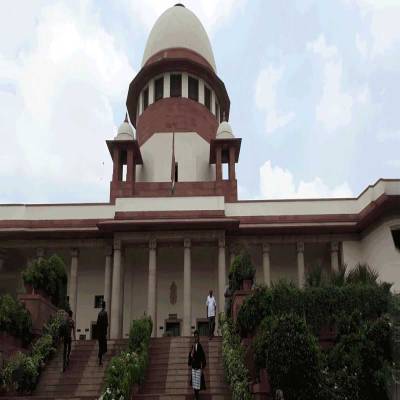
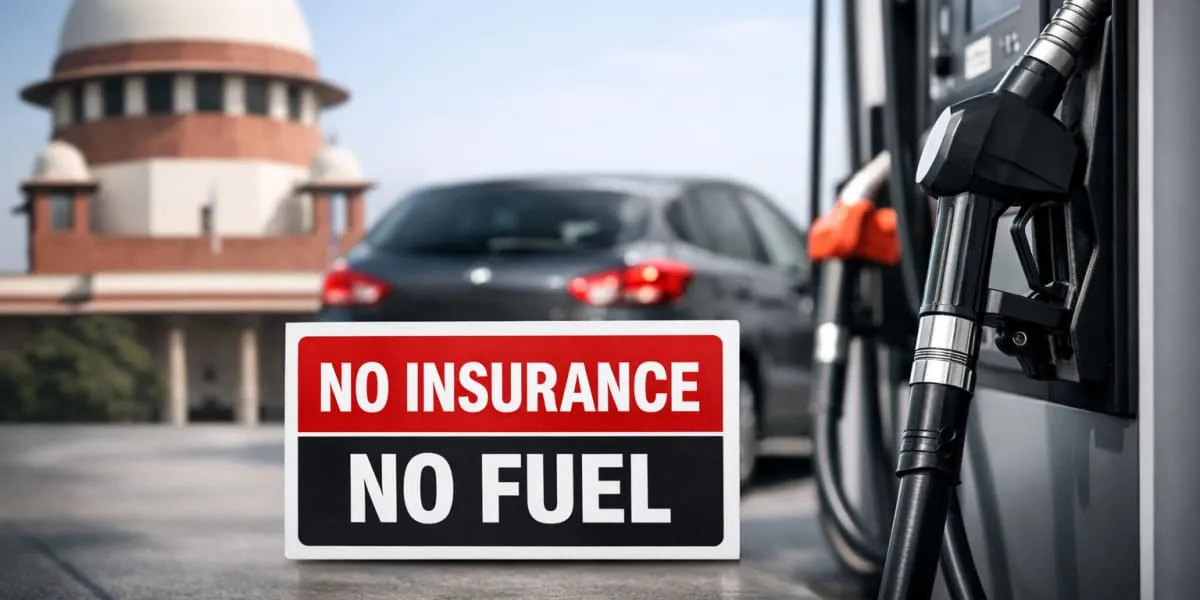
The Supreme Court has directed the central government to design and implement a pilot project to deny fuel to vehicles that do not have valid third-party insurance, after taking note of widespread non-compliance and road safety concerns. The bench observed that nearly 56 per cent of vehicles on the road lack third-party cover according to the Report of the Standing Committee on Finance 2024-25 and considered measures to improve compliance and victim compensation. The court asked the Insurance Regulatory and Development Authority (IRDA) to consult the Ministry of Road Transport and Highways (MoRTH) and other stakeholders to frame the pilot.

The proposed scheme is to link fuel dispensing at petrol pumps with a vehicle's insurance status, with fuel being refused until valid cover is obtained, and to use automatic detection on specified corridors to reduce toll plaza queues. The bench indicated that automatic number plate recognition (ANPR) cameras could be used to identify uninsured or unregistered vehicles and noted that the Ministry of Petroleum and Natural Gas had in principle no objection. It also asked for consideration of substituting manual toll stops with automatic detection to improve traffic flow.

The court directed an increase in the mandatory initial third-party insurance period by one year, noting earlier directions that required purchase for three years for new cars and five years for new two-wheelers at registration. Henceforth third-party insurance will be required for four years for new cars and six years for new two-wheelers and the IRDA was asked to issue necessary directions and offer various policy options including add-on covers and personal accident cover alongside a base policy. The bench highlighted that the stark figure of uninsured vehicles stands at 165.4 million out of 304.8 million, with adverse effects on timely compensation.

The court further directed deployment of ANPR integrated with the Insurance Information Bureau and the VAHAN portal to enable automatic e-challans for violations and real-time monitoring, and asked that handheld devices or downloadable applications linked to these databases be provided to state police. The measures are intended to ensure ground-level compliance with statutory mandates, reduce prolonged litigation for victims and strengthen statutory safeguards under the Motor Vehicles Act.

The Supreme Court has directed the central government to design and implement a pilot project to deny fuel to vehicles that do not have valid third-party insurance, after taking note of widespread non-compliance and road safety concerns. The bench observed that nearly 56 per cent of vehicles on the road lack third-party cover according to the Report of the Standing Committee on Finance 2024-25 and considered measures to improve compliance and victim compensation. The court asked the Insurance Regulatory and Development Authority (IRDA) to consult the Ministry of Road Transport and Highways (MoRTH) and other stakeholders to frame the pilot. The proposed scheme is to link fuel dispensing at petrol pumps with a vehicle's insurance status, with fuel being refused until valid cover is obtained, and to use automatic detection on specified corridors to reduce toll plaza queues. The bench indicated that automatic number plate recognition (ANPR) cameras could be used to identify uninsured or unregistered vehicles and noted that the Ministry of Petroleum and Natural Gas had in principle no objection. It also asked for consideration of substituting manual toll stops with automatic detection to improve traffic flow. The court directed an increase in the mandatory initial third-party insurance period by one year, noting earlier directions that required purchase for three years for new cars and five years for new two-wheelers at registration. Henceforth third-party insurance will be required for four years for new cars and six years for new two-wheelers and the IRDA was asked to issue necessary directions and offer various policy options including add-on covers and personal accident cover alongside a base policy. The bench highlighted that the stark figure of uninsured vehicles stands at 165.4 million out of 304.8 million, with adverse effects on timely compensation. The court further directed deployment of ANPR integrated with the Insurance Information Bureau and the VAHAN portal to enable automatic e-challans for violations and real-time monitoring, and asked that handheld devices or downloadable applications linked to these databases be provided to state police. The measures are intended to ensure ground-level compliance with statutory mandates, reduce prolonged litigation for victims and strengthen statutory safeguards under the Motor Vehicles Act.

Next Story
Infrastructure Transport

Fadnavis Urges Completion Of Metro Projects Within Three Years

Maharashtra Chief Minister Devendra Fadnavis has directed officials to ensure that all metro rail projects in the state are completed within three years from the start of construction as the government accelerates expansion of its urban rapid transit network. Chairing the state cabinet’s Infrastructure Committee, he said the expansion in Mumbai, Pune, Nagpur and the Mumbai Metropolitan Region will strengthen safe, fast and environment-friendly public transport and support future urban growth. An official statement said the state currently has 174 km of operational metro corridors, while 291 ..

Next Story
Infrastructure Urban

Vedanta Aluminium Raises Rs 135 bn Loan After Demerger

Vedanta Aluminium Metal Ltd has raised Rs 135 bn from a syndicate of banks, marking the first significant local currency loan for the business since the Vedanta Group split into separately listed firms. The financing was arranged with Axis Bank Ltd, HDFC Bank Ltd and ICICI Bank Ltd involved, and reflects efforts to establish independently financed entities following a court-approved demerger. Axis Bank signed a loan agreement supplying Rs 55 bn, while HDFC Bank and ICICI Bank will together provide about Rs 80 bn. Lenders are expected to syndicate portions of the facility with Axis Bank launchi..

Next Story
Infrastructure Transport

Airbus Selects Aerolloy To Supply Titanium Castings

Airbus has selected Aerolloy Technologies, a wholly owned subsidiary of PTC Industries (PTC), to develop, qualify and supply titanium castings for the A320neo, A330neo and A350 aircraft programmes. The agreement establishes the development, qualification and industrialisation pathway for Aerolloy to progress into production supply, subject to the successful completion of Airbus qualification and programme requirements. The selection marks a significant milestone for the Indian manufacturer in the global commercial aerospace supply chain and follows Airbus's evaluation process. Under the agreem..

Advertisement

Subscribe to Our Newsletter

Get daily newsletters around different themes from Construction world.

STAY CONNECTED

Advertisement

Advertisement

Advertisement