+
We aim to become the single source of truth for project information
Technology

We aim to become the single source of truth for project information

Every construction project depends on one critical element: the right drawing reaching the right person at the right time. But fragmented workflows often create costly delays. Rikunj Moradia, Founder, SyncDrawings, explains how digital drawing management can transform project execution....

Every construction project depends on one critical element: the right drawing reaching the right person at the right time. But fragmented workflows often create costly delays. Rikunj Moradia, Founder, SyncDrawings, explains how digital drawing management can transform project execution.What gap in the construction ecosystem led to the creation of SyncDrawings?I come from a construction background and also run a BIM services firm. During our work, one recurring challenge was drawing accessibility. Construction is completely dependent on drawings, but the way they are managed remains fragmented – through WhatsApp, emails, drives and local folders. Whenever teams need a particular drawing, they spend significant time searching for it. Sometimes it takes minutes, sometimes hours, to identify the correct version. This simple challenge has a major impact on project execution.SyncDrawings was created to solve this problem by providing a central platform where drawings can be stored with version history and coordination features. Whenever someone accesses a drawing, they can immediately identify whether it is the latest version.How does SyncDrawings improve drawing management and coordination?SyncDrawings works on four key principles: structured storage, easy accessibility, version management and consultant coordination. The platform enables teams to organise drawings based on project requirements such as floors, disciplines and layouts, making information easier to locate. It also allows users to track revisions and access previous versions whenever required.A key feature is QR-based accessibility. Once a drawing is uploaded, a QR code can be placed on the drawing printout. Engineers, foremen or vendors at the site can scan the code and access the relevant drawing information, including linked documents, sections, elevations or models, based on their permissions. The platform also simplifies coordination by allowing stakeholders to add mark-ups, comments and issues directly on the drawing instead of managing multiple email chains. Currently, SyncDrawings is being used across 56 projects, including IIM Indore, a university project in GIFT City, Gujarat’s tallest residential tower Rajesh Royce, as well as school and hospital projects. Design consultants, contractors and engineers are using the platform for managing drawings, resolving issues and improving coordination.What are the barriers preventing connected digital construction execution?The industry has already adopted digital design tools. The bigger challenge is transferring digital design information from the designer’s office to the people working onsite. Even today, drawings are shared through printouts, WhatsApp, emails and drive links. SyncDrawings addresses this gap through access control and simplicity. Consultants can define who can view, comment or access specific information, while site teams can access drawings easily through QR codes without complex installations.How will construction information management evolve with AI and digital technologies?AI, digital twins and connected project ecosystems will significantly transform construction but their success will depend on the quality and structure of the data available. Before advanced technologies can deliver meaningful outcomes, the industry needs a structured and authenticated information management system. This is where platforms like SyncDrawings play an important role. By creating a centralised repository for project drawings, revisions, comments and coordination data, the platform helps build the foundation required for future technologies. AI can provide accurate insights only when the underlying data is reliable. Therefore, the first step towards an intelligent construction ecosystem is ensuring that project information is organised, accessible and available to the right stakeholders at the right time.What is the future vision for SyncDrawings?The future of construction execution lies in reducing dependency on individuals for accessing project information. Every stakeholder should be able to access the required information within their scope without delays. SyncDrawings aims to become a single source of truth for construction projects. The platform is now moving towards a subscription-based model and currently has around 350 users, with 400-500 daily activities including drawing uploads, scans, markups and comments. Through its app and digital platform, SyncDrawings aims to make construction workflows more connected, efficient and transparent by ensuring that the right information reaches the right people at the right time.- PRANJAL PATIL

Related Stories

Gold Stories

Next Story
Infrastructure Urban

Infrastructure Opportunity Outlook by IMPACCT.Info

India’s infrastructure pipeline is witnessing dynamic activity across stages — from immediate bidding to future planning. IMPACCT segments these into three categories: Immediate, 3–6 Month, and Future Opportunities, enabling businesses to identify, prepare, and participate in high-value tenders and projects across sectors...To read the full story Click Here..
Next Story
Equipment

The Next-Gen Concrete Equipment

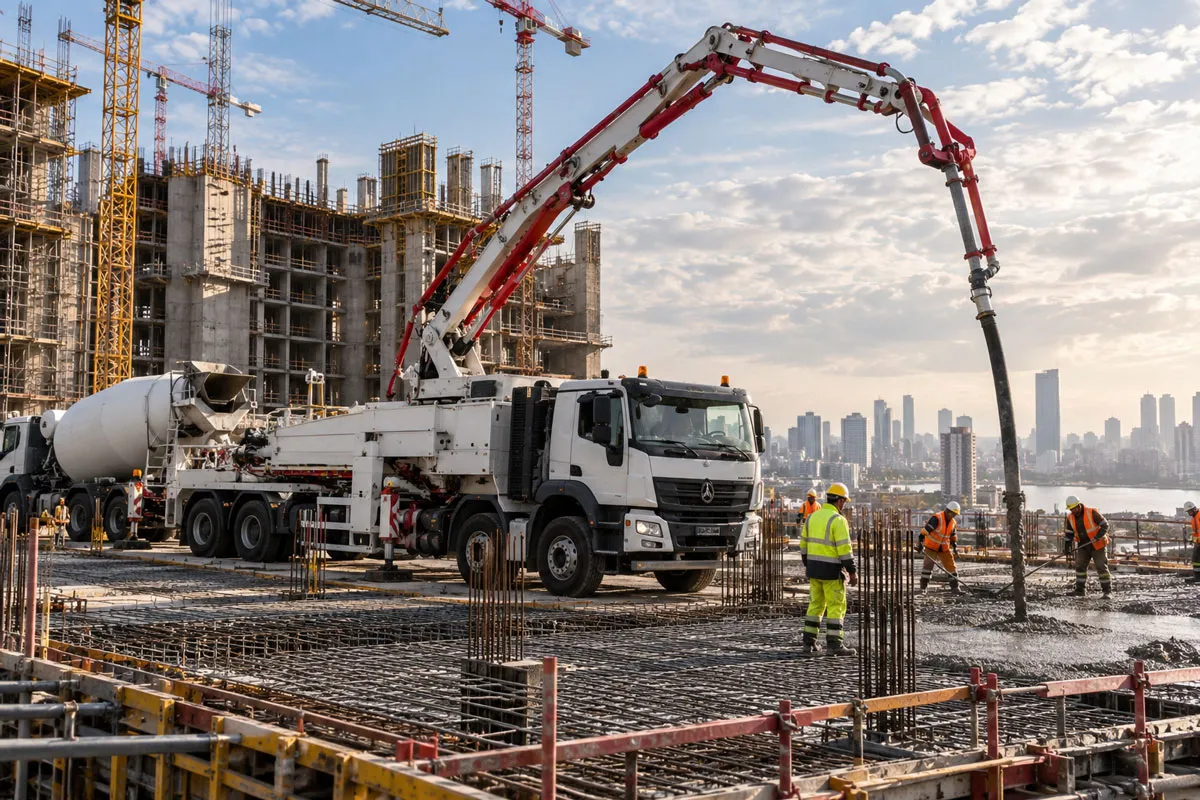
India has transitioned to higher Bharat Stage (BS) emission standards across vehicle types. Concrete equipment is no exception, with the latest engines generation in that category being CEV Stage IV and V models. This shift has fundamentally transformed how this critical equipment is operated and maintained.Fuel-efficiencyUpgrading to advanced BS-compliant engines has replaced older mechanical fuel systems with Electronic Control Units (ECUs) and Common Rail Direct Injection (CRDI). Rather than running at a constant high output, these new systems precisely meter fuel based on the immediate loa..

Next Story
Real Estate

The Energy-Smart Buildings

Passive design is an integral part of energy-efficient architecture. Sophisticated building systems also contribute to this end. But what role do materials play in enhancing a building’s energy-efficiency?“Material selection is one of the earliest opportunities to influence how a building performs,” says Tejbeer Singh, Principal Architect & Founder, Expressionist by Tejbeer Singh. “The objective is not simply to select materials that look appropriate but to understand how they behave within the climate and construction system.”To read the full story Click Here ..

Advertisement

Subscribe to Our Newsletter

Get daily newsletters around different themes from Construction world.

STAY CONNECTED

Advertisement

SPECIAL OFFER
QR Code