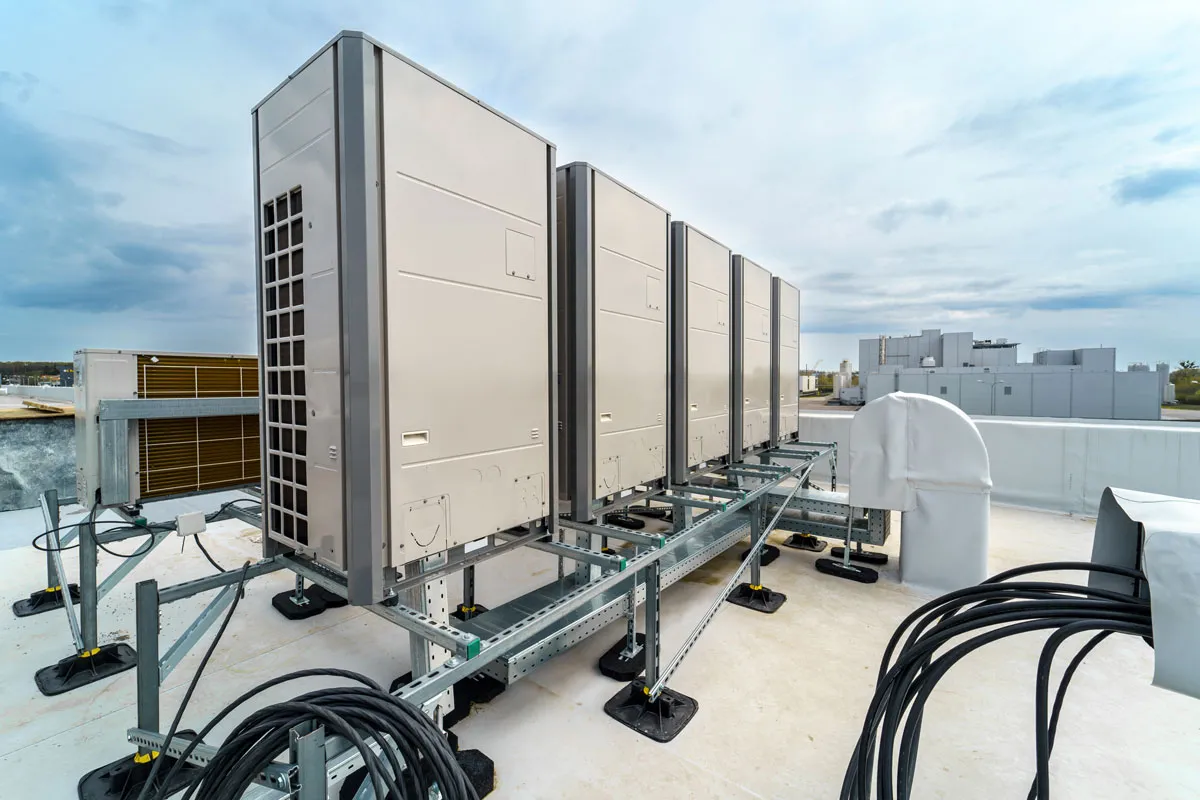
India’s Cooling Action Plan forecasts cooling demand to grow nearly eight times in the next 20 years. In light of the fact that cooling is no longer just a comfort product but lies at the intersection of national development, public health, climate action and energy security, this means the HVAC industry shoulders a very serious responsibility. Mihir Sanghavi, Managing Partner, Auro Engineering Company, Immediate Past President RATA, Secretary, ISHRAE, and Regional Representative, ASHRAE Region XV, describes that responsibility as “identifying a system that can serve for 15 to 20 years or more, with the ideal being a correctly engineered system that is energy-efficient across its lifecycle, while also being safe, maintainable, durable, reliable, aligned with current and future standards and recyclable.”“A good HVAC consultant acts as the technical bridge between how a building is designed and how it will finally perform,” says Hina Gupta, Operations Head, MG Cooling Solutions, and Technical Committee Advisor, ASHRAE India.Sound foundationOne of the most critical responsibilities of an HVAC consultant while recommending a central air-conditioning system is arriving at the “right cooling load” based on heat load calculations, as this forms the basis of system selection, according to Gupta.“Heat load calculations, while usually carried out in line with ASHRAE guidelines and other applicable building standards, take into account multiple building-specific parameters,” she explains. Gupta lists these as the climate zone, orientation of the building, extent and type of glass façade, wall and roof construction, insulation thickness, view factor, occupancy density, lighting load, equipment load and actual usage patterns. Even small variations like higher glass exposure on the west façade or extended operating hours can significantly impact the final cooling requirement.In the view of Ashu Gupta, Managing Partner, Design2Occupancy Services LLP, the parameters that consultants typically review to arrive at an optimal solution include the intended use of the building, occupancy patterns and operating schedules; local climate conditions and their impact on system performance; building envelope characteristics and internal heat loads; applicable energy codes and standards such as ECBC, NBC and green building guidelines; energy-efficiency goals and sustainability aspirations of the project; lifecycle cost considerations, in addition to initial capital cost; and compatibility with controls, BMS and provisions for future expansion.HVAC consultants source all this information from architectural drawings and space planning information; Owner Project Requirements, where available; utility tariff details and basic reliability inputs; and the owner’s expectations regarding operations and maintenance, adds Ashu Gupta. “While much of this information is usually available, it may evolve as the project progresses, which requires flexibility and close coordination among all stakeholders.”Also, assessing factors like capex, ease of installation, opex, space requirements and type of power supply is crucial to decide on the right HVAC system, adds Manoj Nair, CEO - Industrial EPC & MEP Business, Sterling & Wilson.Armed with all this information, the consultant focuses on optimising the cooling demand, allowing for diversity factors and reasonable buffers, Hina Gupta emphasises. “Under-designed systems cause occupant discomfort and operational stress on equipment. Over-designed systems increase the capital cost and long-term energy consumption without any real benefit.”Standards inputsKnowing the standards and structured design approaches that form the backbone of responsible engineering is key to making a good HVAC choice, says Sanghavi. In particular, he says that ASHRAE Standard 90.1, which sets minimum requirements for energy-efficiency in buildings and HVAC systems, and ASHRAE Standard 62.1, which governs ventilation and indoor air quality (IAQ) in commercial and institutional buildings, are globally respected because they balance comfort, safety, health and energy use.Additionally, AHRI standards ensure performance testing and rating discipline, particularly in the case of coils and heat exchangers, says Sanghavi. “In India, many ISHRAE standards now referenced and aligned with BEE include those covering VRF systems, chillers, AHUs and Energy Conservation Building Codes.”Timing is everythingIt is generally beneficial for an HVAC consultant to be engaged during the concept or early design stage, says Gupta, as this allows better system optimisation, appropriate equipment sizing and smoother integration with the overall building design.“We involve the advisor at the idea and design stage, as primary involvement ensures the HVAC strategy aligns with architecture, sustainability areas and space planning, avoiding overpriced retrofits later,” says Sandeep Jain, Director, Arkade Developers. “In redevelopment projects, this early involvement is even more critical to seamlessly upgrade legacy systems while working within existing structural constraints.”“An HVAC consultant should be engaged at the concept or pre-design stage, when architectural ideas are still flexible, and decisions cost the least and deliver the greatest long-term value,” adds Paurush M Ghadiali, CEO, Surat Refrigeration and Engineering Company. “Once floor plans, ceiling heights and service cores are frozen, HVAC design turns into damage control rather than optimisation.”Essentially, treating HVAC as an afterthought compromises performance, pushes up energy bills and can necessitate redesign, he says. “Early engagement is an investment that pays back over the building’s entire lifecycle.”Phase-wise deliverablesAt the concept stage, Ghadiali says the HVAC consultant helps shape the building – not just cool it – by selecting the right system philosophy (VRF, chiller-based, hybrid or packaged systems); estimating cooling load ranges and energy demand; identifying space requirements for plant rooms, shafts, terraces and outdoor units; defining ventilation and pressurisation strategies; flagging architectural constraints before they become costly mistakes; and ensuring that ceiling heights remain comfortable, shafts are adequate and the building is future-ready.At the schematic design stage when layouts begin to stabilise, he adds, “The HVAC consultant translates concepts into workable systems; performs preliminary heat load calculations; develops zoning and air distribution concepts; determines fresh air and exhaust requirements; and coordinates closely with architects and structural consultants to avoid clashes between ducts, beams and aesthetics – one of the most common issues in poorly coordinated projects.”At the detailed design stage, the HVAC consultant delivers the final heat load calculations, the equipment sizing and selection, detailed ducting and piping layouts, technical specifications and BOQs, and energy-efficiency and code compliance documentation, continues Ghadiali. And further, “during tendering and execution, the HVAC consultant prepares technical tender documents, evaluates contractor submissions, reviews shop drawings, conducts site inspections and resolves coordination challenges onsite, eventually ensuring that only what was designed is installed.”“At handover, the HVAC consultant verifies that the system performs as intended by witnessing testing and balancing, checking comfort parameters, reviewing operation and maintenance documentation and supporting smooth system handover,” he concludes. Contractor in lieuSometimes, developers engage an HVAC contractor, bypassing an HVAC consultant. Even then, “the contractor’s role is to identify and detail design the HVAC system,” explains Nair. “It’s important to engage this specialist in the initial planning stages itself as a lot of other utilities like electricity, plumbing and even building envelopes are designed and optimised based on the inputs from the HVAC consultant/contractor.”Consultant challengesBudget constraints that may limit system choices; late engagement in the project lifecycle, reducing opportunities for optimisation; and gaps in coordination between architectural, structural and services teams are common challenges faced by HVAC consultants, according to Gupta.Sanghavi recommends caution in the face of these limitations, underscoring the need to not select only based on price, to avoid penalties such as high energy bills over a lifetime, frequent breakdowns, poor comfort, health issues related to IAQ, early corrosion failure, expensive repairs and replacements and unnecessary environmental impact.