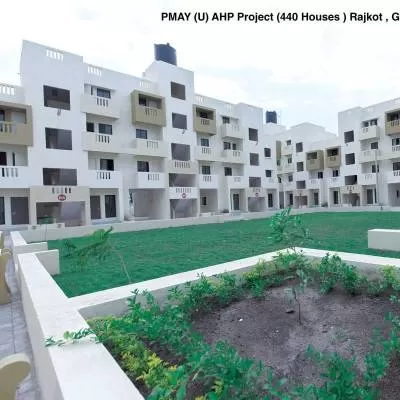
Jammu And Kashmir Reaches 97 Per Cent Of PMAY-G Target
ECONOMY & POLICY

Jammu And Kashmir Reaches 97 Per Cent Of PMAY-G Target

Jammu and Kashmir has completed 323,299 houses under the Pradhan Mantri Awas Yojana-Gramin, achieving 97 per cent of the target, officials said. The current phase of the scheme is nearing completion and work continues on the remaining 11,340 houses. The Rural Development and Panchayati Raj Department has been instructed to speed up construction to ensure timely delivery.

Rural Development and Panchayati Raj Department Secretary Mohammad Aijaz Asad directed assistant commissioners of development and block development officers to track each case and ensure no sanctioned house remains incomplete. He ordered that any technical or administrative bottlenecks hindering progress be resolved immediately and asked directors to hold weekly review meetings and report progress. The secretary also emphasised early release of pending instalments to beneficiaries to keep work on schedule.

All pending works must be completed by 15 April and officers were urged to make every possible effort, including working around the clock if necessary, as houses left incomplete under the previous phase will not be taken up once the new phase begins. The meeting stated that existing sanctioned works must be finished before the launch of the next phase and that completion should be prioritised over fresh sanctioning. Block-level monitoring and timely fund disbursement were identified as essential to meet the deadline.

A recent survey conducted ahead of the new phase has been carried out using AI-based technology, and deputy commissioners will review the findings to ensure that no eligible households are missed. The department has been instructed to clear any pending instalments and to provide weekly updates on progress so that gaps can be identified and addressed promptly. The near completion of the phase has been presented as an opportunity to transition smoothly into the next phase with accurate beneficiary lists and cleared accounts. Continued administrative oversight is expected to secure completion of the scheme targets.

Jammu and Kashmir has completed 323,299 houses under the Pradhan Mantri Awas Yojana-Gramin, achieving 97 per cent of the target, officials said. The current phase of the scheme is nearing completion and work continues on the remaining 11,340 houses. The Rural Development and Panchayati Raj Department has been instructed to speed up construction to ensure timely delivery. Rural Development and Panchayati Raj Department Secretary Mohammad Aijaz Asad directed assistant commissioners of development and block development officers to track each case and ensure no sanctioned house remains incomplete. He ordered that any technical or administrative bottlenecks hindering progress be resolved immediately and asked directors to hold weekly review meetings and report progress. The secretary also emphasised early release of pending instalments to beneficiaries to keep work on schedule. All pending works must be completed by 15 April and officers were urged to make every possible effort, including working around the clock if necessary, as houses left incomplete under the previous phase will not be taken up once the new phase begins. The meeting stated that existing sanctioned works must be finished before the launch of the next phase and that completion should be prioritised over fresh sanctioning. Block-level monitoring and timely fund disbursement were identified as essential to meet the deadline. A recent survey conducted ahead of the new phase has been carried out using AI-based technology, and deputy commissioners will review the findings to ensure that no eligible households are missed. The department has been instructed to clear any pending instalments and to provide weekly updates on progress so that gaps can be identified and addressed promptly. The near completion of the phase has been presented as an opportunity to transition smoothly into the next phase with accurate beneficiary lists and cleared accounts. Continued administrative oversight is expected to secure completion of the scheme targets.

Next Story
Infrastructure Transport

Sector 51-52 Metro skywalk in Noida remains shut despite being ready for over a year

Thousands of commuters travelling between Delhi Metro Rail Corporation’s (DMRC) Sector 52 station and Noida Metro Rail Corporation’s (NMRC) Sector 51 station continue to face daily inconvenience as the 300-metre air-conditioned skywalk connecting the two stations remains closed, despite being completed over a year ago, according to a report.The Noida Metro Rail Corporation built the foot overbridge to enable a seamless interchange between the Delhi Metro and Noida Metro networks. However, pending finishing work and a structural obstruction have delayed its opening.Krishna Karunesh, Chief E..

Next Story
Infrastructure Transport

Maharashtra clears Metro Line 5A, expansion of Mumbai Metro Line 5

The Maharashtra government has approved the expansion of Mumbai Metro Line 5 along with a new integrated corridor, Metro Line 5A, forming a combined 34.2-km metro network across the Thane-Bhiwandi-Kalyan-Ulhasnagar belt. The integrated project has been cleared at an estimated cost of ₹18,130.55 crore, according to a government resolution (GR).Metro Line 5 was originally approved in October 2017 as a 24.9-km fully elevated corridor with 17 stations connecting Thane, Bhiwandi and Kalyan, with an initial project cost of ₹8,416.51 crore. The corridor is being developed in two phases.The first ..

Next Story
Infrastructure Transport

Bengaluru Metro expansion seen driving office demand

Bengaluru’s expanding metro network is expected to emerge as a major catalyst for real estate growth, with the Yellow and Pink Lines likely to boost both office demand and residential prices across key micro-markets, according to a report by Colliers India.The report estimates that over the next two years, Bengaluru could witness an additional 5–7 million sq ft of Grade A office space demand across the Central Business District (CBD), Secondary Business District (SBD) and Electronic City. Improved metro connectivity and reduced commute times are expected to drive higher occupier interest a..

Advertisement

Subscribe to Our Newsletter

Get daily newsletters around different themes from Construction world.

STAY CONNECTED

Advertisement

Advertisement

Advertisement