Photo: For representational purpose
“Property and law are born together and die together. Before laws were made there was no property; take away law, and property ceases.”
- Bentham
For the Indian economy to retain its momentum, it is necessary to have infrastructure in place in terms of fundamental facilities and systems to serve the country. For this, state backing is required, which includes expropriation.
According to Black’sLaw Dictionary, the word ‘expropriation’ denotes a voluntary surrender of rights or claims; the act of divesting oneself of that which was previously claimed as one's own or renouncing it. The more commonly used definition is that it is the action by the state or an authority of taking property from its owner for public use or benefit.
The action of the state is based on the doctrine of eminent domain, which means the power of the state to acquire land if public purpose is involved. The doctrine of eminent domain is based on two Latin maxims: Salus populi suprema lex (welfare of people is the paramount law) and Necessitas publica major estquam (public necessity is greater than private necessity). Based on the above principles, there have been several laws enacted by the Indian legislature to expropriate in the infrastructure sector. However, most expropriation laws have been marred by disputes.
INDIAN LEGISLATION ON EXPROPRIATION IN INFRASTRUCTURE
Pre-Independence
The first land acquisition legislation in India was enacted by the British government in 1824. This enabled the government to “obtain, at a fair valuation, land or other immovable property required for roads, canals or other public purposes” and to acquire land for the construction of railways. Owing to the unsatisfactory settlement provided by the Act, it was further amended in 1861 and was subsequently enacted in 1870—which, for the first time ever, provided a mechanism for fair settlement. The Act of 1870 was replaced by the Land Acquisition Act 1894.
Post-Independence
After Independence, India adopted the Land Acquisition Act of 1894. On expropriation and compensation, some jurisprudence evolved through various landmark judgements passed by the Supreme Court, which are as follows:
Maharajadhiraja Sir Kameshwar Singh v. State of Bihar (1951)
After Independence, the Supreme Court faced the issue of expropriation and the power of the state to take steps. In this judgement, the apex court dealt with the legal capacity of the state to acquire the private property of individuals for public purposes. It was held that though this power is recognised, constitutional provisions define safeguards, subject to which this power may be exercised.
State of Gujarat v. Shantilal Mangaldas & Ors. (MANU/SC/0063/1969)
In this case, the validity of the Bombay Town Planning Act 1958 was challenged on the ground of inadequacy of compensation when land was acquired for town planning. It was held that the principle of compensation based on “estimated at its market value at the date of the declaration of intention to make a scheme” is correct.
Rustom Cavasjee Cooper and Ors. vs. Union of India (UOI) (MANU/SC/0011/1970) - The Banks' Nationalisation Case
In this case, the Supreme Court, with a Special Bench of 11 judges, delivered a landmark judgement by a majority of 10 to one. Here, on nationalisation of banks, the validity of the Banking Companies (Acquisition and Transfer of Undertakings) Act 1969 was challenged on the ground of compensation to the banks, which was to be paid in the form of bonds, securities, etc, and the principles for the same. The Court held, “The Constitution guarantees a right to compensation—an equivalent in money of the property compulsorily acquired. That is the basic guarantee. The law must, therefore, provide compensation and for determining compensation relevant principles must be specified; if the principles are not relevant, the ultimate value determined is not compensation.”
Though the aforementioned judgements laid down some principles on expropriation and compensation, this was not sufficient. Despite several amendments, in a century, there was no unified national law that addressed the issue of fair compensation and rehabilitation of landowners directly affected by acquisition of private land for the larger public interest. The Government felt the need to bring a law that is comprehensive and provides necessarily for rehabilitation and resettlement when it proceeds to acquire land for public purposes.
Further, to provide for speedy disposal of disputes relating to land acquisition and compensation arising out of the previous amendments, the Land Acquisition Rehabilitation and Resettlement Bill (LARR) was introduced in 2011. It also proposed compensation to affected parties, including landowners in rural and urban areas, traders and artisans, and others. The Bill was passed in August 2013 as The Right to Fair Compensation and Transparency in Land Acquisition, Rehabilitation and Resettlement Act 2013 and came into effect on January 1, 2014. The distinguishing features of this Act included consent of the landowners (no consent was required for government projects) and a social impact assessment, which was not considered in any other statute wherein provisions were made for acquisition.
In December 2014, another Land Acquisition Amendment Ordinance was introduced to facilitate infrastructural development. The said Ordinance exempted certain categories from giving consent for acquisition in the provisions of the Act which included national security and defence, rural development, industrial corridors and public-private partnerships (PPPs). The said Ordinance could not become an enactment. In view of this, the Government introduced the Right to Fair Compensation and Transparency in Land Acquisition, Rehabilitation and Resettlement (Second Amendment) Bill 2015 (‘Bill’). Owing to opposition from various stakeholders and despite the Ordinance being re-promulgated, the amendment Bill could not be passed. Later, the Central Government allowed the state governments to make their own amendments as land comes under the concurrent list in the constitution. Some of the states have also made some changes that are under challenge before the Supreme Court.
Forms of expropriation
Forms of expropriation differ from country to country depending upon the ease of doing business, political stability and encumbrances, economic growth and volatility of legal regulations. The basic and most important type of expropriations are:
Direct expropriation:This is the mandatory transfer of the title to the property or its outright physical seizure by the state where the benefit arising out of such expropriation is for the state or any third party affecting the public at large, like nationalisation.
Indirect expropriation: This occurs when the state takes effective control of, or otherwise interferes with the use, enjoyment or benefit of, an investment, strongly depreciating its economic value, even without directly taking over the property.
Creeping expropriation: As defined by the United Nations Conference on Trade and Development, it is “a slow and incremental encroachment on one or more of the ownership rights of a foreign investor that diminishes the value of its investment”.
Instances of expropriation
To expand infrastructure, governments have started involving the private sector by entering into project-based partnerships. Such partnershipsare generally based on the build, operate and transfer (BOT) model so that the public purpose is served and the Government does not have to put in its own finances. Some instances of expropriation in terms of infrastructure are as follows:
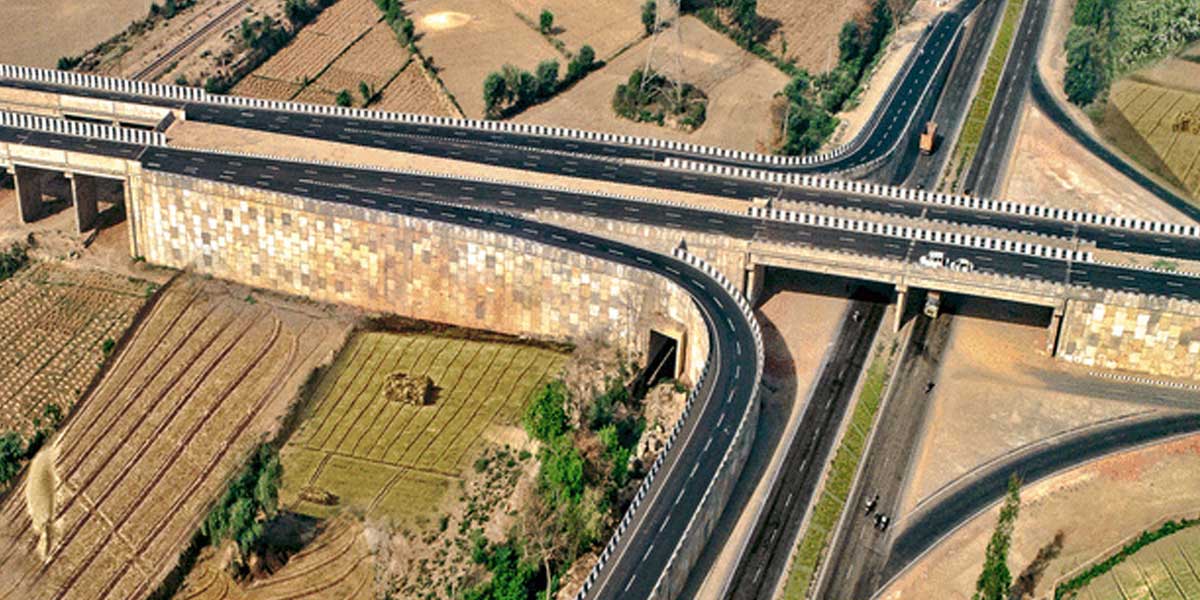
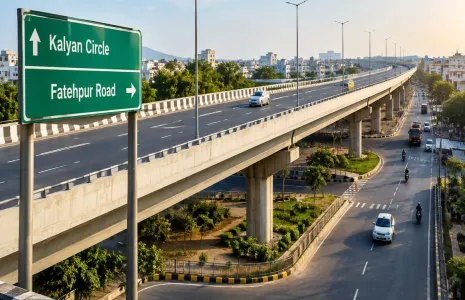
National Highways: The National Highway Act (NHA) 1956 provides for acquisition of land for National Highways, which are under the jurisdiction of the Central Government.
Railways/metro: Over the years, Indian Railways has been acquiring land for the operation of trains and, now, also to exploit the commercial benefits around stations.This came under the Land Acquisition Act 1894. Later, the Railway (Amendment) Act 2008 was enacted to deal with various concerns, including the involvement of more states. In recent years, to improve metro rail connectivity, there have been several rounds of expropriation by governments.
Coal mining: The Coal Mines Nationalisation Act 1973 provides that coal mining can be done only by a government company.
Nationalisation of banks: Pursuant to the provisions of the Banking Companies (Acquisition and Transfer of Undertakings) Act 1970, initially 14 banks were nationalised by the Government.
Expropriation and private business
According to India Infrastructure Report 2009, ‘social consent to operate’ is the most successful factor for expropriation for the purpose of private business. If locals are involved, they will be fairly compensated and their belief in the process will also improve.
Foreign investments and risk of expropriation
When business transactions across international borders take place, they carry additional risks, which are not generally present in domestic transactions. These include risks arising from differences in the foreign country’s economic structures and policies, political and legal system, unexpected changes in the exchange rate, changes in tax policies and codes, and other factors. Such risk factors could have a negative and positive impact on business and foreign investors.
In instances like the Vodafone case and Docomo case, allegations were made of expropriation of assets and revenue against the Indian Government and the Bilateral Investment Treaty (‘BIT’) was invoked. In the recent past, the Indian Government has also pushed for reforms so that foreign investment in infrastructure is not adversely affected.
In conclusion
It is a fact that land is a scant resource and infrastructure largely depends on the availability of land. However, when it comes to land acquisition, the disputes are so many that it delays infrastructure projects. Various methods are evolving, like pooling, where landowners give their land to the Government or its agency, which will develop the infrastructure. Once this is done, a parcel of developed land is returned to them. In this process, there is no land acquisition cost and the landowners get parcels of land similar to the cost of land. Land pooling was successfully used by the Andhra Pradesh government to develop the new capital, Amravati.
Some developed countries have used expropriation to exploit land rents as a source of financing urban infrastructure. Substantial increase in the property value in urban areas has made this option attractive. Before these practices/methods can be made popular in other parts of the country, it would be useful to examine the various facets of these methods and the issues discussed above.
About the Authors:
Ashish Pyasi, Associate Partner, Dhir & Dhir Associates, is a leading lawyer with vast experience in dispute resolution, insolvency and bankruptcy laws; Soumya Dubey is an Associate in the corporate litigation team of the firm.