Scores of point-to-point road connectivity projects across India have improved mobility and reduced travel time. But a shortcoming of point-to-point roads is that they don’t always unlock the full economic potential of the regions being connected, by creating opportunities for manufacturing, investments and employment along the route, thereby, effectively supporting India’s long-term growth ambitions.Consequently, the past decade in particular has seen a shift to corridor-led development, wherein infrastructure is planned as part of a larger economic ecosystem, explains Satyanarayan Purohit, Vice President, Dilip Buildcon. For instance, initiatives such as the Delhi-Mumbai Industrial Corridor, PM Gati Shakti, Bharatmala and the National Industrial Corridor Development Programme integrate highways with industrial nodes, logistics parks, freight networks, ports and urban centres, to drive industrial growth and logistics efficiency across multiple states rather than merely improving connectivity. Corridor-led development is changing the way infrastructure projects are conceived and executed. In this, bridges and tunnels are playing a key role.“From an infrastructure developer’s perspective, bridges and tunnels are no longer standalone structures; they are strategic components of integrated transportation corridors,” says Kavita Shirvaikar, Managing Director, Patel Engineering.Cases in point are the Sudhmahadev Dranga and Singhpora Vailoo tunnels in Jammu & Kashmir. Restoring permanent, reliable access through them has had consequences far beyond the immediate movement of people and goods.Further, the Atal tunnel bypassing the Rohtang pass, the Chenani Nashri tunnel and others have improved connectivity in treacherous mountainous terrain prone to landslides and harsh weather conditions; tunnels like the Z-Morh (Sonmarg) tunnel and the under-execution Zozila and Shinku La Pass tunnel shall provide all-weather connectivity to regions like Kashmir and Ladakh, which is important from the strategic point of view. No less important are tunnels like the twin tunnels on the Delhi-Mumbai Expressway alignment and the Mumbai-Pune Missing Link Tunnel, which improve corridor efficiency.“Bridges and tunnels have particularly become critical enablers of seamless road-corridor connectivity where challenging terrain (such as mountains), dense urban development, water bodies (rivers), and environmentally sensitive zones have traditionally acted as barriers to efficient transportation,” continues Shirvaikar. “In reducing travel distances, bridges and tunnels significantly reduce travel time, fuel consumption and vehicular emissions while enhancing year-round accessibility, in the process strengthening the socioeconomic development of remote regions.”Let us explore why this shift was much needed and what it means for the industry.Corridor focusExplaining why a corridor approach to developing roads is much needed, Devayan Dey, Partner - Infrastructure Transport & Logistic, PwC India, points out that whereas traditional road development treats ‘roads as an asset’, a corridor approach recognises ‘roads as a service’ (RaaS), and considers the entire ecosystem, spanning logistics efficiency, multimodality (from competing to complementing modes), industrial needs, etc., and in a passenger-driven corridor, the overall passenger experience.Whereas traditional approaches are founded on demand driving infrastructure needs, which tends to concentrate development around developed regions, the corridor approach sees infrastructure as a demand driver, built proactively to drive economic development and not just react to already developed regions, he adds. Focusing on corridors enables a larger network infrastructure approach and leverages network efficiency.Whether it is Bengaluru-Chennai, Delhi-Mumbai or even projects like the Mumbai Trans Harbour Link (MTHL), Dey points out that the focus has been to drive economic development through infrastructure creation.The corridor lens changes the outlook on project feasibility. Many a time, large bridge and tunnel projects may look financially unviable based on historical data but applying a corridor-led approach shows they can create large, generated traffic, he says. A case in point is the MTHL’s impact on the growth of Navi Mumbai and port logistics.That said, Dey cautions that as economic development takes time to materialise, executing such corridor projects requires patient capital deployment to build the ecosystem. Evolving outlookA corridor approach massively changes the future outlook for consultants, contractors and technology providers. Whether it is large expressways, tunnels or major bridges, Dey says the technology and capacity needs change drastically in comparison to plain vanilla projects. “How do you integrate design (cost-effective and focused on end-use effectiveness), manage mega equipment (today most tunnel-boring machines (TBMs) and launchers need to be imported), manage supply chain (global geopolitical impacts and supply chain risk management), bring in quality engineers and drive mechanisation and innovation (innovative materials, construction methodology, value engineering)? Given the scale, ensuring smooth execution is crucial, as even minor setbacks can have significant financial implications.”Consequently, Gagandeep Kansal, COO, Amberg Engineering, points out, “The role of consultants is expanding from traditional civil design services to integrated design including E&M and ventilation, digital studies and lifecycle (O&M) advisory; advanced geotechnical and geophysical investigations; tunnel risk assessment and management; digital-twin development; BIM-enabled design integration; asset management and predictive maintenance and O&M during the lifecycle of the tunnel; sustainability and carbon optimisation.”Future tunnel projects will increasingly require multidisciplinary expertise combining civil engineering, geology, data analytics, environmental sciences and operations planning.Consider that on mountain tunnel projects such as Sudhmahadev Dranga and Singhpora Vailoo, Rodic Consultants’ teams navigated the convergence of unpredictable geological behaviour, groundwater ingress, seismic sensitivity and ventilation complexity, each demanding technical precision and measured judgement founded on deep experience.With climate change being increasingly felt, Avishek Bhardwaj, Assistant Vice President, Roads and Highways, Rodic Consultants, says engineers must increasingly also account for climate-related risks such as extreme rainfall events, slope instability and changing hydrological conditions that can significantly influence project performance throughout its lifecycle.At Hebbal Junction, another Rodic Consultants’ project, he points out that the structural and civic dimensions of the project are inseparable; live traffic management, land constraints, and environmental compliance are not peripheral concerns to be managed around the engineering but integral to the engineering itself.“Successful delivery,” says Bhardwaj, “depends not merely on technical capability but on adaptability, rigorous risk management, multidisciplinary coordination and the ability to respond effectively to evolving site conditions.”Special skillsAmong the specialised skills that construction companies must bring to the table to execute challenging bridge and tunnel projects, Giridhar R, Deputy Managing Director, Afcons Infrastructure, counts the ability to work in difficult geotechnical conditions, high seismic and wind-prone zones, extreme climates and deep marine foundations, and apply innovative construction methodologies such as replacing an existing concrete superstructure with a new steel superstructure, a first-of-its-kind engineering feat in India undertaken at the MG Setu in Patna, Bihar.For the first time, a balanced cantilever bridge was converted into a simply supported superstructure, he shares about the MG Setu project. “Managing a large-scale dismantling operation while ensuring the environment-friendly disposal of waste materials posed a significant challenge. Strict environmental measures were implemented to prevent any debris falling into the river. The erection of the 120-m-long steel truss spans over river Ganga was another formidable challenge but meticulous planning and flawless execution ensured success.”A major completed project executed by Afcons is Package 2 of the Mumbai-Pune Expressway Missing Link Project. It involved widening of the existing expressway from six lanes to eight lanes and construction of two viaducts – including India’s highest cable-stayed road bridge at a height of 132 m—along with approach roads, slip roads and others. “While accessibility to the site location in the Sahyadri ranges was challenging, it also required wind tunnel testing for both the pylons and the deck due to extreme wind loads at such heights,” explains Giridhar.Dilip Buildcon’s New Zuari bridge project in Goa involved marine construction, deep foundations and complex execution in a coastal environment. A tunnel project near Kota (Ummedpura Nayagaon tunnel) required advanced structural engineering and precise construction methodologies. Seismic considerations, environmental compliance and construction in areas with difficult access are some other bridge challenges, explains Purohit. “The Chaharat tunnel presented challenges related to geology, excavation stability, groundwater management and continuous monitoring during construction. Working in fault zones, high overburden pressures and stringent safety requirements are some other tunnel-related challenges.”In building the Sela Tunnel Pass to the Tawang region in Arunachal Pradesh at a height of 13,000 ft, Patel Engineering faced multiple challenges such as heavy snowfall, freezing temperatures and low oxygen levels that often disrupted even basic movement. “Coordination among people and handling equipment and materials required planning,” says Shirvaikar. “Progressing excavation and changing geological conditions necessitated engineers to constantly assess the situation and adjust their approach.”In the case of tunnels, she explains, “one of the most significant challenges is dealing with unpredictable geological conditions.”Further, variations in rock strata, fault zones, high water ingress, weak rock formations and seismic considerations can impact excavation methodologies and construction timelines. In mountainous regions, Shirvaikar says, extreme weather conditions, high altitudes and limited site accessibility further add to the complexity. Ensuring worker safety while maintaining construction progress under such conditions requires advanced engineering solutions, specialised equipment and continuous geotechnical monitoring.Tech supportProject complexities require contractors to continuously evaluate and adopt modern construction methodologies and digital technologies that enhance productivity, improve safety standards and support their efficient delivery.In that context, the industry is witnessing a transition from conventional project execution towards digitally enabled infrastructure delivery, says Bhardwaj. “Increasingly, project stakeholders expect real-time visibility into progress, risk exposure, safety performance, quality control and lifecycle outcomes. Clients are, quite rightly, more rigorous in how they define and measure accountability.”Consequently, integrating digital project management, intelligent monitoring systems, data analytics and AI-enabled decision-making is rapidly becoming a baseline expectation. At Rodic, this evolution has been deliberate and structural, reflected in the work subsidiaries RDA and Rodic AI are undertaking to integrate digital intelligence, project analytics and technology-enabled decision-making into infrastructure delivery and asset management.While technology is becoming central to tunnel delivery and operation, the key growth areas, according to Kansal, “are TBMs, ground monitoring systems, AI-based predictive analytics, geospatial and digital-twin platforms, robotics and autonomous equipment, smart ventilation and safety systems, and real-time monitoring during execution”.Advanced TBMs, real-time geological monitoring systems and automated surveying technologies are improving tunnel excavation accuracy and safety while reducing project risks, explains Shirvaikar. “Sophisticated geotechnical instrumentation allows engineers to continuously monitor ground movement, water ingress and structural behaviour, enabling timely interventions where required. Technologies such as drones and AI-enabled project monitoring and data analytics provide real-time visibility into project progress, resource utilisation and potential risks, thus helping decision-making, optimising construction schedules and strengthening project governance.”Building information modelling (BIM) applied with discipline functions as a project management instrument of considerable power, adds Bhardwaj. “Geographic information systems (GIS) platforms and drone-based surveys have made reliable spatial intelligence accessible in terrains where conventional approaches would fall short. Digital twins are steadily extending accountability from construction delivery into long-term asset performance.”“BIM helps design coordination and project planning while LiDAR scanning helps improve accuracy and enables the real-time monitoring of project progress,” adds Purohit. Structural health monitoring systems equipped with sensors are increasingly being deployed to monitor the long-term performance of bridges. AI and predictive analytics are also beginning to support risk assessment and asset management.Modern NATM techniques, automated drilling rigs, mechanised construction equipment, robotic shotcrete application, digital project controls, GPS-enabled survey systems, fibreoptic sensing, IoT-connected sensors, tunnel seismic prediction and low-carbon construction technologies also play a role.Future opportunitiesConsidering that the projects of the future will not be limited to highways alone but will increasingly combine roads, bridges, tunnels, industrial infrastructure, logistics facilities, utility corridors and intelligent transportation systems, Purohit says strong engineering capabilities, efficient project management, financial strength and the ability to execute multiple infrastructure components simultaneously will be needed to deliver them: “While the opportunities multiply, the responsibilities also grow.”Kansal sees demand for contractors with underground construction expertise increasing, leading to the involvement of more foreign technical expertise, increasing costs. “Mechanised excavation methods, higher investment in specialised equipment and skilled manpower, more risk-sharing procurement models and greater focus on safety, automation and productivity are becoming essential.”In view of increasingly complex project requirements, Shirvaikar believes the future of infrastructure delivery will be driven by a closer integration of engineering excellence and technology innovation. This convergence will not only enhance project outcomes but improve sustainability, resilience and operational efficiency across India’s infrastructure ecosystem. “For contractors, the ability to combine engineering expertise with technology-driven execution will be a key competitive advantage,” she says.For technology providers, the opportunities extend to digital planning tools, BIM, GIS platforms, drone-based monitoring, digital twins, IoT-based asset monitoring and data analytics, all of which are essential for improving project efficiency, quality and safety.Not surprisingly, the market is shifting from supplying standalone products toward providing integrated digital ecosystems throughout the tunnel lifecycle.In the light of the increasing emphasis on sustainability, resilience and lifecycle performance despite climate-related risks and higher traffic volumes, Shirvaikar sees scope for the greater integration of advanced materials, digital design tools and rigorous quality-control systems throughout the project lifecycle.Noting that, today, India’s infrastructure asset operation capabilities are still closely tied to the construction business, as only a limited number of engineering and construction companies have augmented asset management and O&M capability beyond the needs of traditional projects, Dey points out that the post-construction space for complex projects is still a whitespace and open for the emergence of a new industry.In the emerging environment, the distinction between firms that have genuinely modernised their practice and those that have merely adopted the language of modernisation will become increasingly consequential.Some upcoming projects
Development
Length (km)
Total capital cost
(Rs cr)
Tentative mode
Chennani-Nashri
tunnel
9
2,869
BOT
Road tunnel on
NH 148 AE from Shiv Murti on NH8 to Nelson Mandela Marg – 5 km
5
6,767
HAM
Construction of twin-tube tunnel between km 203+300
to km 205+600 of Nerchowk-Pandoh section
2
992
HAM
Construction of four, two-lane single-tube tunnels and
four bridges in the Kiratpur to Nerchowk section of NH 21 (New NH 205 &
154)
3
929
HAM
The way forward
Corridor-led road development necessitates consultants and contractors to acquire new skills.
Consultants’ role is expanding from traditional civil design services to integrated design.
Contractors must acquire strong engineering capabilities, efficient project management, financial strength, the ability to simultaneously execute multiple projects and combine engineering expertise with technology-driven execution.
Technology opportunities extend to digital planning tools, BIM, GIS platforms, drone-based monitoring, digital twins, IoT-based asset monitoring and data analytics.
Sustainability, resilience and lifecycle performance necessitate the greater integration of advanced materials, digital design tools and rigorous quality-control systems throughout the project lifecycle.
The post-construction space for complex projects will generate new opportunities for engineering and construction companies as few have augmented their asset management and O&M capability.Bridges as Corridor Catalysts
Several bridge projects across India demonstrate how transport infrastructure is evolving from standalone assets into strategic corridor enablers.
Saraighat Bridge, Assam: The 1.49-km-long New Saraighat Bridge across the Brahmaputra strengthens connectivity between North and South Guwahati while enhancing movement along the East-West Corridor on NH-27. The bridge has improved regional mobility and reinforced the corridor's role as a critical economic artery in the Northeast.
Aunta-Simaria Ganga Bridge, Bihar: The 1.8-km-long six-lane bridge on the Aunta-Simaria section of NH-31 has transformed connectivity between North and South Bihar. Built parallel to the ageing Rajendra Setu rail-cum-road bridge, it has eliminated costly detours for heavy vehicles. As one of India's widest extradosed bridges, the project exemplifies how engineering innovation can support both seamless corridor connectivity and regional economic growth.
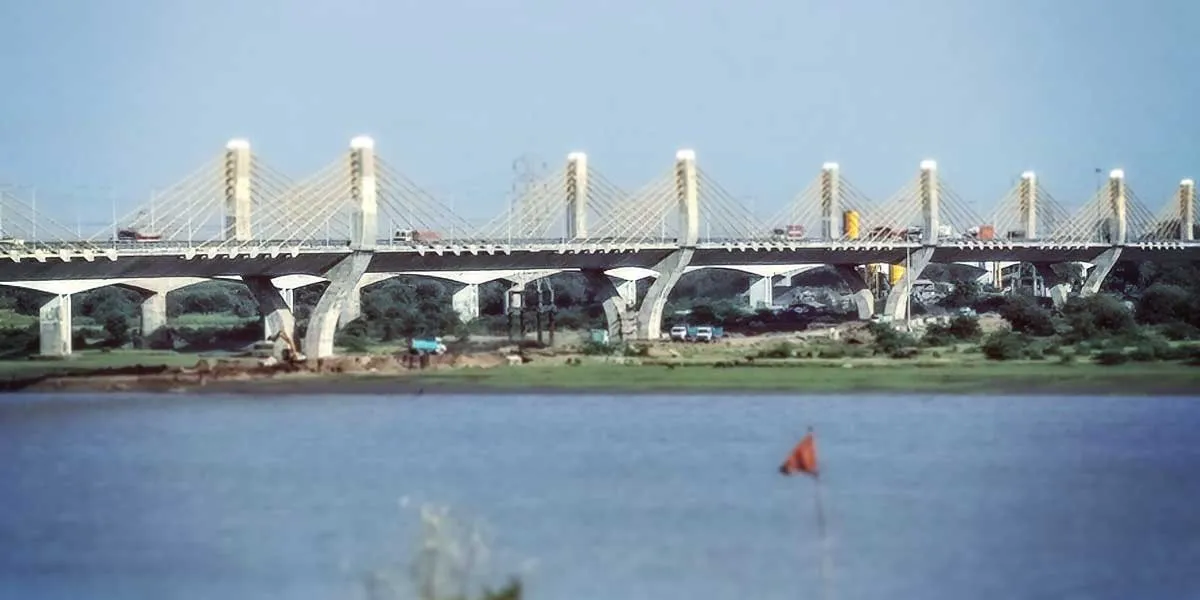
Narmada Bridge, Gujarat: The 1.34-km-long bridge across the Narmada at Bharuch forms part of the Ahmedabad-Mumbai section of NH-8. Besides facilitating faster and safer transportation, the bridge has contributed to the region's economic development. Technically, it is notable for incorporating one of the country's longest bridge spans, highlighting the increasing complexity and scale of corridor infrastructure.
- CHARU BAHRI