“For us, a filter is not a commodity; it’s a technology.”
Equipment

“For us, a filter is not a commodity; it’s a technology.”

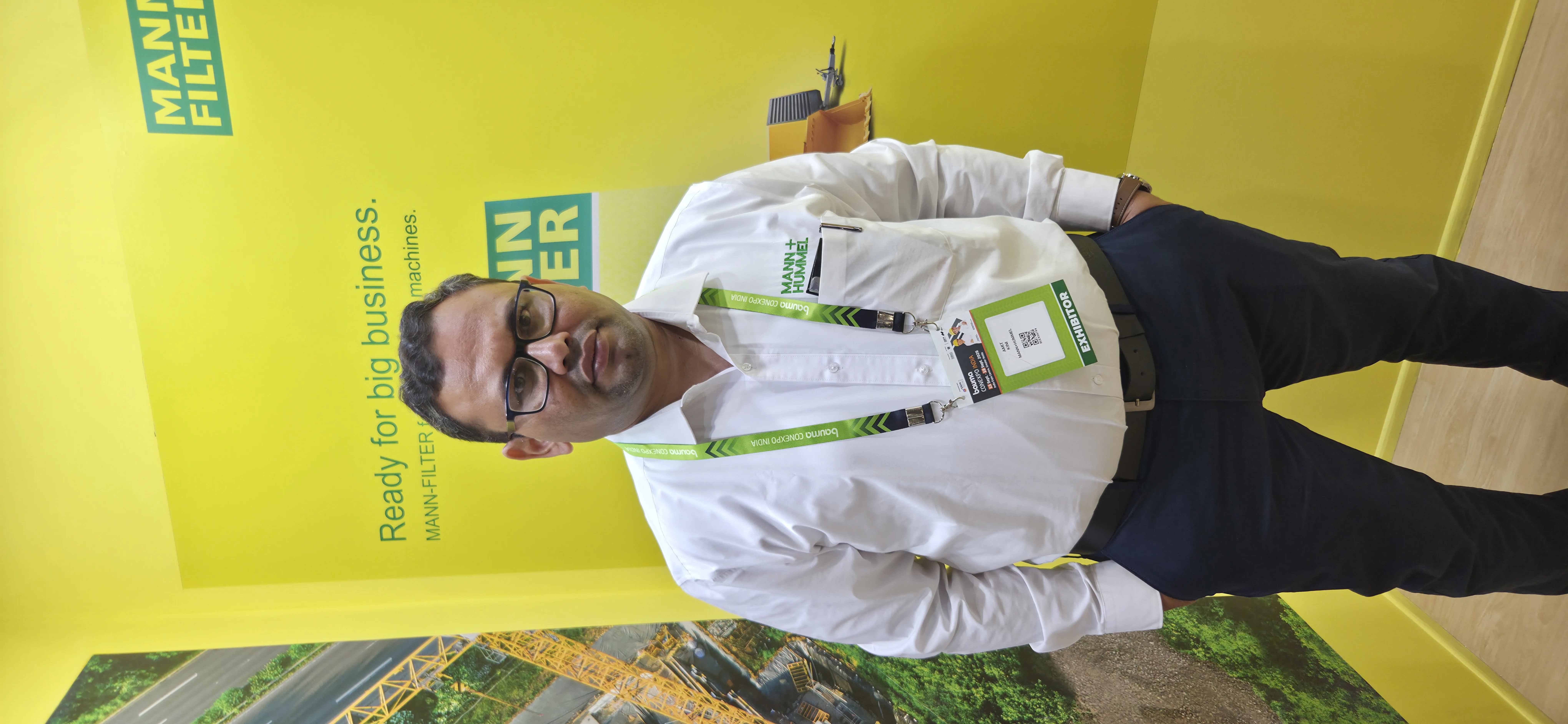
An Exclusive Interview with Amit Kini, DGM – Marketing and Product Manager, MANN+HUMMEL

Could you give us an overview of MANN+HUMMEL’s presence in the off-highway and construction equipment segments?
MANN+HUMMEL is a German company established in 1941. We operate across multiple segments, with off-highway and construction machinery being important focus areas for us. We offer a comprehensive range of filtration solutions for off-highway applications and also supply filters to several OEMs.

In India, we currently have manufacturing facilities in Bawal and Tumkur, and we are planning another facility in Pune to cater to the western region. The objective is to remain closer to OEM customers across different parts of the country. 

How is your product portfolio in India expanding beyond air filtration?
Historically, our major focus in India was on air filters, along with cabin filters for buses and passenger vehicles. We are now expanding significantly into liquid filtration as well. This includes fuel filters, oil filters and other filtration products across a wider range of applications. A major part of this strategy is localisation. Recent disruptions in global supply chains and shipment delays have also led customers to increasingly ask suppliers to localise products in India. 

What level of localisation have you achieved, and where do you intend to take it?
Currently, localisation is around 20 per cent, but our objective is to increase this to approximately 70-80 per cent. We have received support from our headquarters to pursue greater localisation in India. India also offers a cost-effective manufacturing environment, so we see considerable potential to increase local production across our filtration range. 

What changes are you seeing in the requirements of equipment manufacturers?
One significant development is that OEMs are increasingly participating in the aftermarket as well. At the same time, India is becoming an important manufacturing and sourcing base from which components and products can be exported globally.

There is also substantial engineering expertise available in India. We have invested in a new laboratory at Tumkur to strengthen our local capabilities and support the development and testing of filtration products. 

As construction equipment moves towards electrification and alternative energy, how is filtration technology evolving?
Alternative-energy technologies are beginning to emerge, and we are preparing for those applications as well. We have filtration solutions being developed for what we describe as new-energy vehicles.

These technologies are currently at the pilot stage rather than being widely available in the market, but we are already working on the next generation of filtration solutions so that we are prepared as equipment technologies evolve. 

How important is R&D to your filtration business?
For us, a filter is not a commodity; it is a technology. We develop filtration solutions based on the specific requirements of OEM customers, starting from aspects such as the filtration media and the application requirements.

Globally, we have eight R&D centres, with India being an important engineering location after Germany. We have more than 200 engineers based in Bengaluru.

Our recently established laboratory also enables us to conduct testing across different filtration technologies, including air, oil and fuel filters. This capability helps us develop and validate products closer to our customers in India. 

How important is India within MANN+HUMMEL’s global strategy?
India is increasingly being viewed as an important manufacturing and engineering hub. Apart from competitive manufacturing costs, the country has a strong availability of skilled resources and an established industrial ecosystem.

We are therefore evaluating how more products can be manufactured in India and supplied to other markets. We are also expanding our capabilities in Tumkur and planning additional manufacturing capacity in Pune.

Our Indian operations are also moving beyond air filtration into areas such as oil and fuel filtration, which creates further opportunities for growth. 

What are your growth priorities over the next five years?
Our target is to at least triple our turnover by 2030, and we are preparing our operations accordingly. We participate in several aftermarket segments, including industrial equipment, off-highway equipment, compressors, commercial vehicles and passenger cars. Among these, construction and infrastructure represent an important growth opportunity because infrastructure development in India continues to create demand for construction machinery and associated filtration solutions. 

An Exclusive Interview with Amit Kini, DGM – Marketing and Product Manager, MANN+HUMMELCould you give us an overview of MANN+HUMMEL’s presence in the off-highway and construction equipment segments?MANN+HUMMEL is a German company established in 1941. We operate across multiple segments, with off-highway and construction machinery being important focus areas for us. We offer a comprehensive range of filtration solutions for off-highway applications and also supply filters to several OEMs.In India, we currently have manufacturing facilities in Bawal and Tumkur, and we are planning another facility in Pune to cater to the western region. The objective is to remain closer to OEM customers across different parts of the country. How is your product portfolio in India expanding beyond air filtration?Historically, our major focus in India was on air filters, along with cabin filters for buses and passenger vehicles. We are now expanding significantly into liquid filtration as well. This includes fuel filters, oil filters and other filtration products across a wider range of applications. A major part of this strategy is localisation. Recent disruptions in global supply chains and shipment delays have also led customers to increasingly ask suppliers to localise products in India. What level of localisation have you achieved, and where do you intend to take it?Currently, localisation is around 20 per cent, but our objective is to increase this to approximately 70-80 per cent. We have received support from our headquarters to pursue greater localisation in India. India also offers a cost-effective manufacturing environment, so we see considerable potential to increase local production across our filtration range. What changes are you seeing in the requirements of equipment manufacturers?One significant development is that OEMs are increasingly participating in the aftermarket as well. At the same time, India is becoming an important manufacturing and sourcing base from which components and products can be exported globally.There is also substantial engineering expertise available in India. We have invested in a new laboratory at Tumkur to strengthen our local capabilities and support the development and testing of filtration products. As construction equipment moves towards electrification and alternative energy, how is filtration technology evolving?Alternative-energy technologies are beginning to emerge, and we are preparing for those applications as well. We have filtration solutions being developed for what we describe as new-energy vehicles.These technologies are currently at the pilot stage rather than being widely available in the market, but we are already working on the next generation of filtration solutions so that we are prepared as equipment technologies evolve. How important is R&D to your filtration business?For us, a filter is not a commodity; it is a technology. We develop filtration solutions based on the specific requirements of OEM customers, starting from aspects such as the filtration media and the application requirements.Globally, we have eight R&D centres, with India being an important engineering location after Germany. We have more than 200 engineers based in Bengaluru.Our recently established laboratory also enables us to conduct testing across different filtration technologies, including air, oil and fuel filters. This capability helps us develop and validate products closer to our customers in India. How important is India within MANN+HUMMEL’s global strategy?India is increasingly being viewed as an important manufacturing and engineering hub. Apart from competitive manufacturing costs, the country has a strong availability of skilled resources and an established industrial ecosystem.We are therefore evaluating how more products can be manufactured in India and supplied to other markets. We are also expanding our capabilities in Tumkur and planning additional manufacturing capacity in Pune.Our Indian operations are also moving beyond air filtration into areas such as oil and fuel filtration, which creates further opportunities for growth. What are your growth priorities over the next five years?Our target is to at least triple our turnover by 2030, and we are preparing our operations accordingly. We participate in several aftermarket segments, including industrial equipment, off-highway equipment, compressors, commercial vehicles and passenger cars. Among these, construction and infrastructure represent an important growth opportunity because infrastructure development in India continues to create demand for construction machinery and associated filtration solutions. 

Related Stories

Gold Stories

Next Story
Real Estate

LML Realty Sells Out Jhirka Valley Industrial Park in Haryana

LML Realty, the real estate arm of LML Group, recently announced the complete sell-out of its Jhirka Valley Industrial Park in Haryana, with over 1.17 million sq ft of industrial space acquired by more than 50 companies. With utilities and internal infrastructure in place, the company has commenced plot handovers, enabling buyers to begin construction and establish their operations.The industrial park has attracted companies across diverse sectors, including chemicals, metals and alloys, textiles, electrical equipment, energy, logistics, construction, polymers and engineering. Key buyers inclu..

Next Story
Real Estate

WSB Real Estate Partners Exits Six Housing Investments

WSB Real Estate Partners recently announced the successful exit of six residential investments across Bengaluru, Mumbai Metropolitan Region (MMR) and National Capital Region (NCR), delivering an average internal rate of return (IRR) of 19–21 per cent and an overall investment return of 1.4 times.The real estate-focused investment firm invested approximately Rs 7 billion across six mid-affordable housing projects over the past four years. All six investments were fully repaid between April and November 2026, several months ahead of their original investment tenures.WSB collaborated with sever..

Next Story
Infrastructure Transport

Aluminium Industry Seeks Policy Support for Rs 4 Trillion Investment

The Aluminium Association of India (AAI) has recently urged the government to introduce supportive policy measures to safeguard the sector’s proposed Rs 4 trillion investment pipeline. The association highlighted the need for a predictable policy framework to strengthen domestic manufacturing, expand production capacity and reduce import dependence.AAI submitted its recommendations for the Union Budget 2027-28 to the Ministries of Finance, Commerce and Industry, and Mines, along with the Department for Promotion of Industry and Internal Trade (DPIIT).India’s aluminium demand is projected t..

Subscribe to Our Newsletter

Get daily newsletters around different themes from Construction world.

STAY CONNECTED

Advertisement

SPECIAL OFFER
QR Code