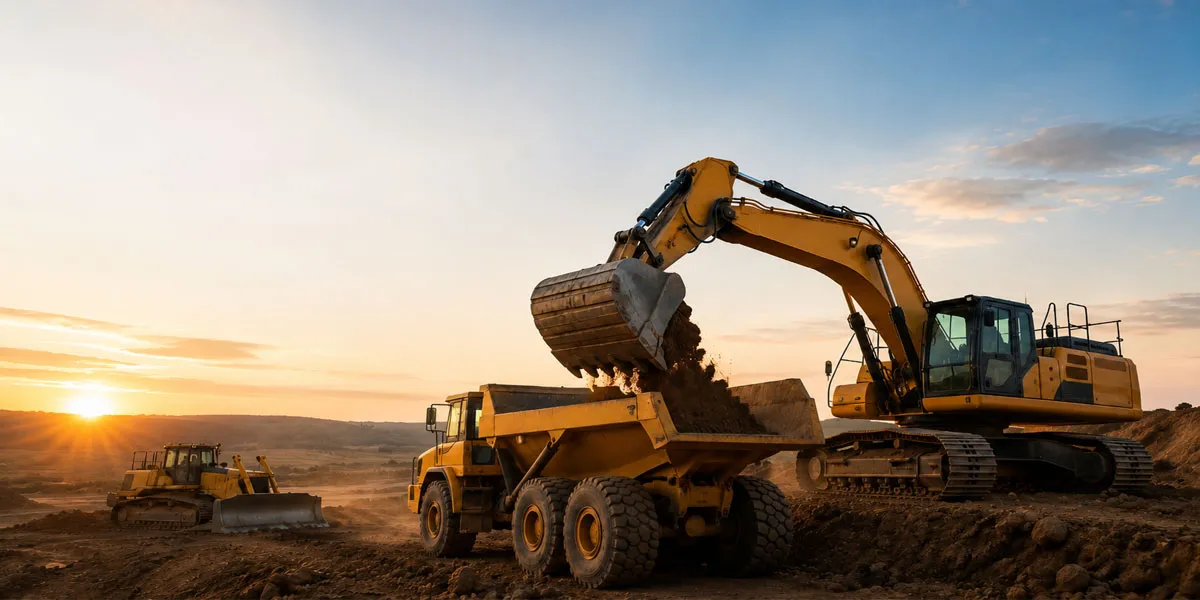
Constituting India’s biggest fleet of construction equipment by type, earthmovers positively impact project outcomes and company bottomlines if best practices are adopted. Here’s a guide from CW.Select the right machineOne of the biggest challenges in using earthmovers isn’t machine failure but using the wrong machine configuration for the application, according to Chaitanya Bhagde, P&M Head, SHC Projects. “Unless equipment is deployed after considering the soil type, excavation depth, haul distance and production target, the application will face low productivity, longer time deployment, more fatigue to machine and operator, faster wear and tear, and an increase in project cost.”To work around machine mismatches and under or overutilisation, Vaibhav Kulkarni, General Manager, JP Infra Reality, advises proper equipment fleet planning by balancing the excavator bucket capacity with the dumper size and haul distance, monitoring daily productivity through equipment utilisation reports, and revising machine deployments according to work fronts.Strata surveys to classify the ground by water level or moisture content, rock level before mobilising the earthmover, and understanding the depth to be reached and underground services can help mobilise the correct equipment and avoid reworks.A boom, an intrinsic part of the earthmover, is best selected on the basis of the site condition. At a sewage treatment plant project in Dharavi, Chetan Prakash Verma, General Manager - P&M, Ahluwalia Contracts (I), and his team found it challenging to work about 20 m below ground during the monsoon. “We used long boom large excavators, 210/220 and even sometime 350 based on the hardness of the rock, with buckets and specialised breakers to remove the debris,” he says. Sandy soils, especially as found in canal excavation desilting or drain cleaning projects, aren’t conducive to placing heavy earthmovers, and also necessitate long booms even though these can slow progress and cost more to operate. “At a site at Chandigarh, we used a 55-ft-long boom with a smaller bucket size,” shares Verma.Prepare for confined spacesExcavating in confined spaces is a key pain point especially with automated earthmoving equipment, he continues. “Relocating earthmoving equipment to a confined space needs specialised skills as does stabilising the ground where it is to be placed. Moving in logistical support (dumpers/mini dumpers/trollies, etc) and synchronising with the earthmoving equipment is also challenging. Using the correct attachment is vital for optimal outcomes.”For the Chhatrapati Shivaji Maharaj Terminus redevelopment project in Mumbai, Verma opted for compact mini excavators (SR 30 or smaller) with bucket and breaker and mini dumpers to work between two platforms or on the track. Nowadays, he says, companies like Pocolane are making even smaller specialised products with breakers, which are highly suitable for such projects.Safety is another issue, especially in confined spaces. Blind spots, reversing movements, unstable ground conditions and inadequate communication are common causes of accidents.“Integrating safety into daily operations through equipment inspections, operator competency assessments, mandatory toolbox talks, deploying banksmen during reversing operations, establishing exclusion zones around operating equipment, and proper traffic management plans contribute to safety,” according to Kulkarni. “Daily checks of brakes, lights, alarms and safety devices ensure safe operations, substantially reduce near misses and improve overall site safety.”Adopt fuel managementFuel is one of the largest operating expenses of earthmoving equipment, which is significantly increased by poor operating practices, excessive idling and inadequate maintenance.Introducing fuel management including the daily monitoring of consumption per machine helps identify abnormal fuel usage at an early stage, says Kulkarni. “We train operators to minimise unnecessary idling, maintain proper engine RPM, and follow efficient excavation techniques. Regular engine tuning and air filter maintenance further improve fuel efficiency.”Up to 40 per cent of earthmoving operating costs represented by fuel can be reduced by enabling auto-idle and auto-shutdown features to cut down on 20-40 per cent of total fuel burn, adds Sunil Tiku, Strategic Independent Construction Equipment Consultant. “Eco-mode utilisation during light trenching or rehandling rather than running continuously at max RPM also helps. Another best practice is matching excavator and loader bucket capacities directly to the haul truck’s payload capacity (aiming for optimal 3-to-4-pass loading cycles).”Use tech solutionsAchieving a precise grade without constant manual checking necessitates GPS-guided 2D or 3D grade control systems such as from Trimble, Topcon or Leica, mounted on the boom/blade, according to Bhagde. With this, the operator sees the real-time cut/fill levels on a screen and can achieve the required level in one or two runs instead of repeatedly checking, running and rework.“An ideal excavator swing angle, dumper positioning, dumping distance, truck cycle time and daily target monitoring also help improve machine productivity and achieve targets,” he adds.Continuously train operatorsInexperienced operators often fail to effectively utilise advanced hydraulic systems, electronic controls, GPS and telematics, resulting in lower productivity, higher maintenance costs and increased safety risks. “Investing in continuous operator training and periodic skill assessments, putting new operators to work under experienced mentors before independently handling critical activities, regularly reviewing performance indicators, and recognition programmes for high-performing operators further motivate workers and promote responsible machine handling,” says Kulkarni.“OEM virtual reality simulators and structured refresher courses focused onsite safety, blind-spot awareness and stability limits help improve safety,” adds Tiku. “Retrofitting machines with proximity sensors, 360° surround cameras, auto-braking detection and cabin rollover protection structures (ROPS/FOPS) helps.”Prefer preventive maintenanceIn critical path activities, even a few hours of downtime cause losses on account of idle manpower and delayed material movements, besides affecting subsequent construction operations. So, Kulkarni implements a preventive maintenance system based on operating hours rather than relying on reactive maintenance.Daily pre-start inspections, lubrication schedules, timely replacement of wear parts and close monitoring of hydraulic systems significantly reduce breakdowns for us, he says. Maintaining critical spares on site and engaging OEM service engineers for periodic health checks are part of this approach.Training maintenance teams to understand and attend to hydraulics, electronics, software or sensors issues also helps.Tiku proposes the use of IoT sensors to monitor oil temperature, hydraulic pressure, engine load and diagnostic fault codes in real time before minor wear causes major component failure, and implementing systematic oil sampling (SOS analysis) and fluid filtration checks to prevent contamination, the root cause of over 70 per cent of hydraulic system failures. Rigorous pre-shift inspections requiring operators to complete daily 10-minute walkaround inspections (checking belt tensions, leaks, track slack and grease points) also helps.As dust, mud, rain and vibration can affect cameras, LiDAR, radar and ultrasonic sensor readings, regular cleaning, inspection and calibration are essential for accuracy, says Bhagde. “Machine control systems rely on accurate positioning, which, in turn, needs strong GPS and signals, a challenge in dense areas, remote areas and underground terrain. Use additional base stations and signal boosters in such situations.”Maximise value from earthmover attachmentsSunil Tiku, Strategic Independent Construction Equipment Consultant, shares best practices to get the most out of earthmover attachments:Using the correct attachment – such as hydraulic breakers, grapples, augers or specialised buckets – turns a single machine into a multipurpose tool.Ensuring the attachment’s operating weight does not exceed the carrier machine’s lift capacity at maximum reach, and matching the host machine’s auxiliary hydraulic output (GPM/LPM and PSI/bar) to the attachment’s rated requirements helps avoid overheating, seal failures or slow cycle times.Using quick couplers equipped with automatic positive mechanical locks prevents accidental attachment drop while performing a physical ‘ground-press’ test visually verifies pin engagement before beginning work.Greasing hinge pins and high-friction pivot points daily or every eight hours is a best practice. Hydraulic breakers require specialised high-temperature chisel paste.Inspecting ground engaging tools such as bucket teeth, adapters, side cutters and wear plates, and replacing worn teeth immediately prevents damage to the underlying bucket structure.Cleaning quick-disconnect hydraulic fittings before attachment hook-up keeps dirt and grit out of the primary hydraulic circuit.Use heavy-duty rock buckets for abrasive materials, trenching buckets for narrow utility lines and skeleton buckets for sorting debris. Using a general-purpose bucket in high-abrasion rock accelerates structural cracking. Decompressing residual hydraulic lines via the cab control lever before disconnecting hydraulic hoses prevents fluid sprays and seal damage.Store attachments flat on hard, level ground with the moving parts like thumb cylinders or jaws fully retracted or supported. Install protective dust caps on disconnect couplers immediately after removal to shield the hydraulic system from airborne dust and moisture.