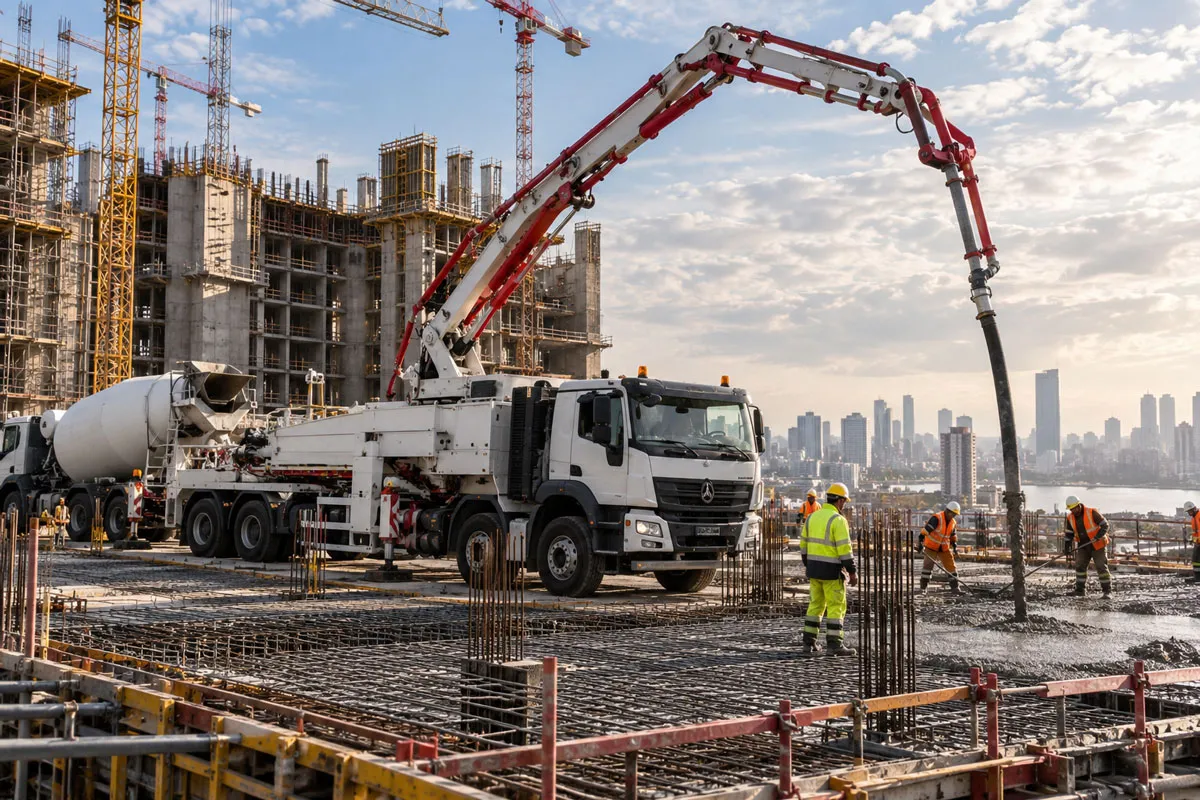
India has transitioned to higher Bharat Stage (BS) emission standards across vehicle types. Concrete equipment is no exception, with the latest engines generation in that category being CEV Stage IV and V models. This shift has fundamentally transformed how this critical equipment is operated and maintained.Fuel-efficiencyUpgrading to advanced BS-compliant engines has replaced older mechanical fuel systems with Electronic Control Units (ECUs) and Common Rail Direct Injection (CRDI). Rather than running at a constant high output, these new systems precisely meter fuel based on the immediate load demands of the pump or mixer drum, explains Abhik Ghosh, Manager QA/QC, Jyo Consultants. In practice, Ghosh estimates, the resulting optimised combustion typically yields a 10-15 per cent reduction in overall fuel consumption. Over the lifecycle of a major construction phase, this translates to substantial operational cost savings.“In advanced electronic engines, the revolutions per minute automatically changes as per the load so the fuel consumption reduces 5-8 per cent,” estimates Pramod Joshi, General Manager, Plant & Machinery, BG Shirke Construction.Low pollutionConcrete pumps with engines adhering to the latest Bharat Stage emission standards use electronic fuel management systems (EFMS) that respond to the equipment load requirements, in determining the exact quantities of fuel to be injected into the cylinders so that all the fuel is fully burnt and no unburnt fuel is released to the exhaust system, explains Prasanta Kumar Ray, Head - Plant & Machinery, L&T Construction - Heavy Civil. This, in turn, helps to reduce carbon particulate and improve engine life. Additionally, he says, “the life of the cylinder, piston, injectors and valve improve drastically and the maintenance requirement reduces. Further, the engine oil replacement cycle increases; possibly, a normal replacement cycle of 250 hours gets extended up to 500 hours, although this may need to be validated from time to time by the laboratory testing of engine oils.”“In many of our projects we also use concrete pumps with electric motors which avoids any pollution,” adds Ray, while pointing out that this is suitable when grid power supply is available (preferably from green energy sources). Using motors with VFD (variable frequency drive) optimises the starting power requirements for the motors.Maintenance needsManaging continuous, high-volume concrete pours, particularly for high-rise structures and massive deep foundation rafts, requires absolute reliability from transit mixers and concrete pumps. Absolute reliability, in turn, hinges on an optimal maintenance paradigm: “Proactive, data-driven servicing as opposed to reactive mechanical repairs,” to quote Ghosh.“Integrating electronic control units has streamlined diagnostics, by allowing maintenance teams to plug in laptops or diagnostic tools to read error codes; thus, instantly pinpointing issues and drastically reducing equipment downtime,” he adds. While core engine longevity has improved, Ghosh also notes that these advanced systems are highly sensitive to fuel contamination. “Strict adherence to standardised filter replacement schedules and careful management of new exhaust after-treatment systems, such as diesel exhaust fluid and diesel particulate filters, is vital to ensure machine uptime.”Essentially, maintaining these machines demands much tighter quality control over site consumables.Operator skillingUpgrading equipment mandates an immediate upgrade in operator capabilities. “Shifting from analogue levers and dials to digital interfaces means operators must now interpret electronic dashboards, act on diagnostic alerts, and understand specific protocols like safe diesel particulate filters regeneration,” points out Ghosh. Another feature in newer diesel engines that operators need to understand is AdBlu equipment to reduce pollution, as using this feature needs specialised skills, according to Pramod Joshi. AdBlu is a specialised emissions-control component that injects a high-purity urea liquid into the exhaust to break down polluting nitrogen oxides into safe nitrogen and water.“The injection of the AdBlu liquid is associated with a regeneration code and necessitates the equipment to be kept running, but operators who don’t adhere to this methodology end up causing the silencers to jam due to carbon contamination,” he says. “Skipping simple best-practices causes unnecessary expensive breakdowns. Advanced engines shouldn’t be started without warm-up or parameter checks, but operators tend to skip that as well.” “There is a genuine need to train operators and site staff to inculcate new operational habits when they shift from older Bharat Stage II/III diesel engines to Diesel Exhaust Fluid machines,” says G Boopathi, Director, Planning, Uniqcore Constructions India. “Operators need to learn how to handle DEF machines and mechanics need diagnostic tool familiarity in such fault codes.”Operators need a few days of hands-on-training to effectively operate concrete equipment with advanced engines, says Ray.Boopathi attests to a real training gap in smaller/rural contracting firms, which some companies are trying to bridge by increasingly bundling operator training and telematics-based remote diagnostics.While the physical judgment required to guide a pump boom remains the same, the technical monitoring requires structured upskilling, continues Ghosh. “Operators are now the first line of diagnostic defence, meaning technical literacy is just as important as mechanical experience.”However, technical literacy is largely lacking, including in interpreting the many electronic controls that machines feature. It doesn’t help that most machine operators have low education levels. “With older models of engines, operators would fault-find themselves but with electronics, the cost of repairs has increased,” adds Joshi. “Besides, we require a skilled team to handle such eventualities.”Switching enginesConcrete pumps from brands like Schwing or Putzmeister use engines from Deutz or Caterpillar, while in India Greaves or Kirloskar engines are common.Equipment may need an engine switch at some point, depending on its age, usage or condition. Boopathi explains how to identify such instances.“Most fleets consider replacing or upgrading engines when they are seven to 10 years old or hit 10,000-15,000 operating hours, whichever comes first,” he says. “These limits are roughly when older diesel engines start to show steep increases in repair frequency and fuel inefficiency relative to newer units.”However, heavily used equipment such as pumps and mixers running more than 1,500 hours a year hit that threshold faster, sometimes in five to seven years. In contrast, lightly used or backup equipment can stay in service well past 10 years if it is properly maintained, since low hours mean less wear, regardless of engine generation.Some fleets use condition-based signals rather than a hard year cutoff; among these, Boopathi counts fuel consumption creeping beyond the 15 per cent baseline for that model; a noticeable increase in the frequency of unplanned repairs, such as more than two to three unscheduled shop visits per year; emissions system failures becoming recurring rather than occasional; and the resale/trade-in value dropping below the threshold where holding onto the machine costs more than upgrading.Indeed, keeping close tabs on engine performance is vital to ensure uninterrupted pours.