




Maha govt approves amnesty scheme for stuck projects
Real Estate

Maha govt approves amnesty scheme for stuck projects

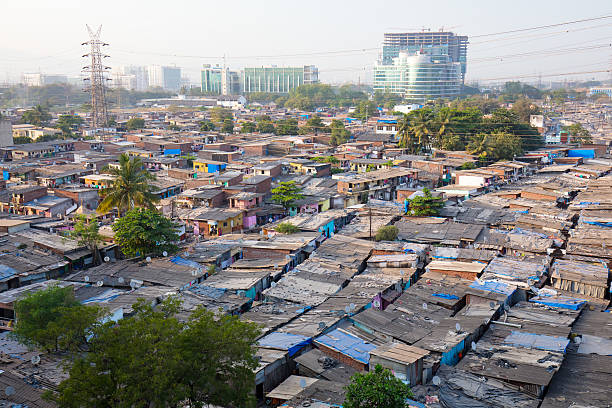
The Maharashtra government approved an amnesty scheme to revive the stuck slum redevelopment schemes in Mumbai, under which financial institutions registered with the Reserve Bank of India (RBI), Securities and Exchange Board of India (SEBI), National Housing Bank (NHB), and financed stuck schemes will be allowed to take over the stalled projects.

More than 500 slum redevelopment projects are stuck, and the state government has plans to revive these projects to ensure housing to all and the loss-making financial institutions can recover their money.

The developers taking over these stuck projects should construct affordable homes in the sale component. The Slum Rehabilitation Authority (SRA) was implemented by the Maharashtra government about three decades ago to make Mumbai slum-free.

The authority allows private developers to rehabilitate slum dwellers residing in particular areas. In return for the rehab component, the developer is granted an additional Floor Space Index (FSI) as an incentive to commercially sell flats, also known as the sale component, and make a profit.

The state government approved the amnesty scheme allowing financial institutions to take up the redevelopment of stuck projects. Other developers were also called to construct affordable homes in the sale component of stuck projects.

The SRA issued a public notice inviting interested financial institutions and developers to come forward and bid to take over the construction work of the stuck projects under the amnesty scheme. The deadline to apply is between 7 June and 21 July.

The demonetisation, Covic-19 pandemic, and the overall slowdown of the economy are some of the reasons for the delay in projects.

Many financial institutions have approved finance for slum rehabilitation schemes. However, the concerned developers have failed to complete the rehab component in the schemes and to pay transit rent to eligible slum dwellers. Considering the interest of slum dwellers at large and financial institutions having the approval of RBI, SEBI, and NHB will be allowed to come forward for the completion of schemes to which they have granted finance. Those financial institutions shall be in the Letter of Intent (LoI) of such a scheme as co-developer or lender.

According to data, there are around 517 stuck slum rehabilitation schemes in the city and should be brought back on track to ensure that slum dwellers get homes.

Image Source

Also read: Maharashtra’s amnesty scheme to benefit 523 stranded slum projects

The Maharashtra government approved an amnesty scheme to revive the stuck slum redevelopment schemes in Mumbai, under which financial institutions registered with the Reserve Bank of India (RBI), Securities and Exchange Board of India (SEBI), National Housing Bank (NHB), and financed stuck schemes will be allowed to take over the stalled projects. More than 500 slum redevelopment projects are stuck, and the state government has plans to revive these projects to ensure housing to all and the loss-making financial institutions can recover their money. The developers taking over these stuck projects should construct affordable homes in the sale component. The Slum Rehabilitation Authority (SRA) was implemented by the Maharashtra government about three decades ago to make Mumbai slum-free. The authority allows private developers to rehabilitate slum dwellers residing in particular areas. In return for the rehab component, the developer is granted an additional Floor Space Index (FSI) as an incentive to commercially sell flats, also known as the sale component, and make a profit. The state government approved the amnesty scheme allowing financial institutions to take up the redevelopment of stuck projects. Other developers were also called to construct affordable homes in the sale component of stuck projects. The SRA issued a public notice inviting interested financial institutions and developers to come forward and bid to take over the construction work of the stuck projects under the amnesty scheme. The deadline to apply is between 7 June and 21 July. The demonetisation, Covic-19 pandemic, and the overall slowdown of the economy are some of the reasons for the delay in projects. Many financial institutions have approved finance for slum rehabilitation schemes. However, the concerned developers have failed to complete the rehab component in the schemes and to pay transit rent to eligible slum dwellers. Considering the interest of slum dwellers at large and financial institutions having the approval of RBI, SEBI, and NHB will be allowed to come forward for the completion of schemes to which they have granted finance. Those financial institutions shall be in the Letter of Intent (LoI) of such a scheme as co-developer or lender. According to data, there are around 517 stuck slum rehabilitation schemes in the city and should be brought back on track to ensure that slum dwellers get homes. Image Source Also read: Maharashtra’s amnesty scheme to benefit 523 stranded slum projects

Next Story
Infrastructure Energy

Vedanta Aluminium Uses 1.57 bn Units of Green Energy in FY25

Vedanta Aluminium, India’s largest aluminium producer, recently reported consumption of 1.57 billion units of renewable energy in FY25, marking a significant milestone in its 2030 decarbonisation roadmap. The company also achieved an 8.96 per cent reduction in greenhouse gas (GHG) emissions intensity compared to FY21, reinforcing its leadership in India’s low-carbon manufacturing transition. During FY25, Vedanta Aluminium expanded its renewable energy portfolio through long-term power purchase agreements, strengthening its strategy to source nearly 1,500 MW of renewable power over the lon..

Next Story
Real Estate

Oberoi Group to Develop Luxury Resort at Makaibari Tea Estate

EIH Limited, the flagship company of The Oberoi Group, has announced the signing of a management agreement to develop an Oberoi luxury resort at the iconic Makaibari Tea Estate in Darjeeling. The project marks a key milestone in the Group’s long-term strategy of creating distinctive hospitality experiences in rare and environmentally significant locations. Established in 1859, Makaibari is one of the world’s oldest tea estates and is globally recognised for its Himalayan landscape, primary forests and exceptional biodiversity. Spread across 1,236 acres, the estate houses one of the world..

Next Story
Real Estate

GHV Infra Secures Rs 1.09 Bn EPC Order in Jamshedpur

GHV Infra Projects Ltd, a fast-growing EPC company in India’s infrastructure and construction sector, has recently secured a Rs 1.09 billion work order in Jamshedpur, Jharkhand. Awarded by a reputed group entity, the contract covers end-to-end civil construction, mechanical, electrical and plumbing (MEP) systems, along with high-quality finishing works for a large building development. The project will be executed over a 30-month period, with defined benchmarks for quality, safety and timely delivery. The order strengthens GHV Infra’s footprint in Jamshedpur, a key industrial hub known fo..

Advertisement

Subscribe to Our Newsletter

Get daily newsletters around different themes from Construction world.

STAY CONNECTED

Advertisement

Advertisement

Advertisement

Advertisement

Open In App