Maharashtra Housing Societies Receive 5,000 Suggestions on Draft Bylaws
Real Estate

Maharashtra Housing Societies Receive 5,000 Suggestions on Draft Bylaws

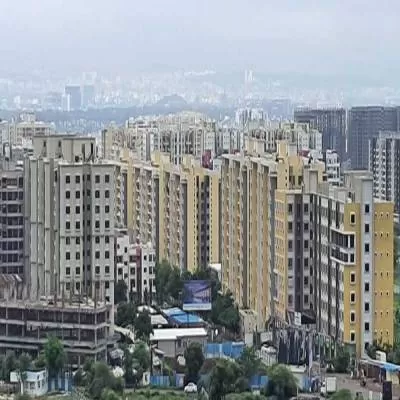
Maharashtra’s cooperation department has received more than 5,000 suggestions and objections on draft bylaws for the state’s over 117,000 housing societies. The consultation was launched last month after the government published the draft for feedback from residents, societies and their federations.

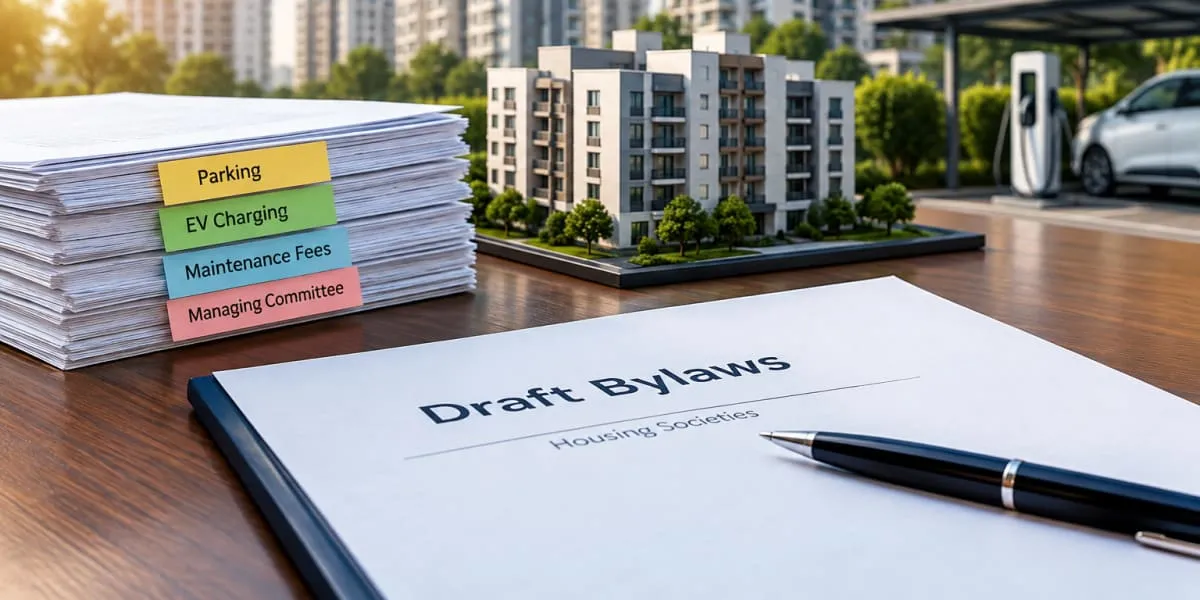
Officials said most submissions concern parking, electric vehicle charging stations, maintenance fees and the powers of managing committees. The draft places financial responsibility for charging equipment installed exclusively by a member within their allocated parking space on that member, while residents have sought greater responsibility for societies to provide common charging facilities and maintain them.

The proposals classify common parking areas, visitor parking spaces, parking decks and mechanical parking systems as common areas and facilities to be maintained by societies. Stakeholders have also sought clarity on open slots, stilt parking and podium parking, and have asked that these categories be treated consistently under the bylaws.

The draft seeks to standardise maintenance charges by dividing common service costs equally among flats. Water charges would be based on the number and size of taps or inlets. Owners of smaller flats have opposed equal charges and sought area-based maintenance, while larger flat owners have supported the proposed system for services such as security, electricity, housekeeping and management.

Residents have also urged the government to limit managing committees’ powers, including their authority over no-objection certificates and sale- and lease-related matters. Joint registrar Shahaji Patil, who heads the committee on the bylaws, said 90 per cent of the work had been completed and the rules were expected to be finalised in the first week of October after further meetings. He said suggestions from Mumbai, the Mumbai Metropolitan Region, Nashik and other areas were being assessed against existing rules and laws. The new bylaws would have to be adopted within three months of publication, and any society seeking changes would require approval from the registrar.

Maharashtra’s cooperation department has received more than 5,000 suggestions and objections on draft bylaws for the state’s over 117,000 housing societies. The consultation was launched last month after the government published the draft for feedback from residents, societies and their federations. Officials said most submissions concern parking, electric vehicle charging stations, maintenance fees and the powers of managing committees. The draft places financial responsibility for charging equipment installed exclusively by a member within their allocated parking space on that member, while residents have sought greater responsibility for societies to provide common charging facilities and maintain them. The proposals classify common parking areas, visitor parking spaces, parking decks and mechanical parking systems as common areas and facilities to be maintained by societies. Stakeholders have also sought clarity on open slots, stilt parking and podium parking, and have asked that these categories be treated consistently under the bylaws. The draft seeks to standardise maintenance charges by dividing common service costs equally among flats. Water charges would be based on the number and size of taps or inlets. Owners of smaller flats have opposed equal charges and sought area-based maintenance, while larger flat owners have supported the proposed system for services such as security, electricity, housekeeping and management. Residents have also urged the government to limit managing committees’ powers, including their authority over no-objection certificates and sale- and lease-related matters. Joint registrar Shahaji Patil, who heads the committee on the bylaws, said 90 per cent of the work had been completed and the rules were expected to be finalised in the first week of October after further meetings. He said suggestions from Mumbai, the Mumbai Metropolitan Region, Nashik and other areas were being assessed against existing rules and laws. The new bylaws would have to be adopted within three months of publication, and any society seeking changes would require approval from the registrar.

Related Stories

Gold Stories

Next Story
Real Estate

LML Realty Sells Out Jhirka Valley Industrial Park in Haryana

LML Realty, the real estate arm of LML Group, recently announced the complete sell-out of its Jhirka Valley Industrial Park in Haryana, with over 1.17 million sq ft of industrial space acquired by more than 50 companies. With utilities and internal infrastructure in place, the company has commenced plot handovers, enabling buyers to begin construction and establish their operations.The industrial park has attracted companies across diverse sectors, including chemicals, metals and alloys, textiles, electrical equipment, energy, logistics, construction, polymers and engineering. Key buyers inclu..

Next Story
Real Estate

WSB Real Estate Partners Exits Six Housing Investments

WSB Real Estate Partners recently announced the successful exit of six residential investments across Bengaluru, Mumbai Metropolitan Region (MMR) and National Capital Region (NCR), delivering an average internal rate of return (IRR) of 19–21 per cent and an overall investment return of 1.4 times.The real estate-focused investment firm invested approximately Rs 7 billion across six mid-affordable housing projects over the past four years. All six investments were fully repaid between April and November 2026, several months ahead of their original investment tenures.WSB collaborated with sever..

Next Story
Infrastructure Transport

Aluminium Industry Seeks Policy Support for Rs 4 Trillion Investment

The Aluminium Association of India (AAI) has recently urged the government to introduce supportive policy measures to safeguard the sector’s proposed Rs 4 trillion investment pipeline. The association highlighted the need for a predictable policy framework to strengthen domestic manufacturing, expand production capacity and reduce import dependence.AAI submitted its recommendations for the Union Budget 2027-28 to the Ministries of Finance, Commerce and Industry, and Mines, along with the Department for Promotion of Industry and Internal Trade (DPIIT).India’s aluminium demand is projected t..

Subscribe to Our Newsletter

Get daily newsletters around different themes from Construction world.

STAY CONNECTED

Advertisement

SPECIAL OFFER
QR Code