


Maharashtra Tightens Housing Society Redevelopment Rules
Real Estate

Maharashtra Tightens Housing Society Redevelopment Rules

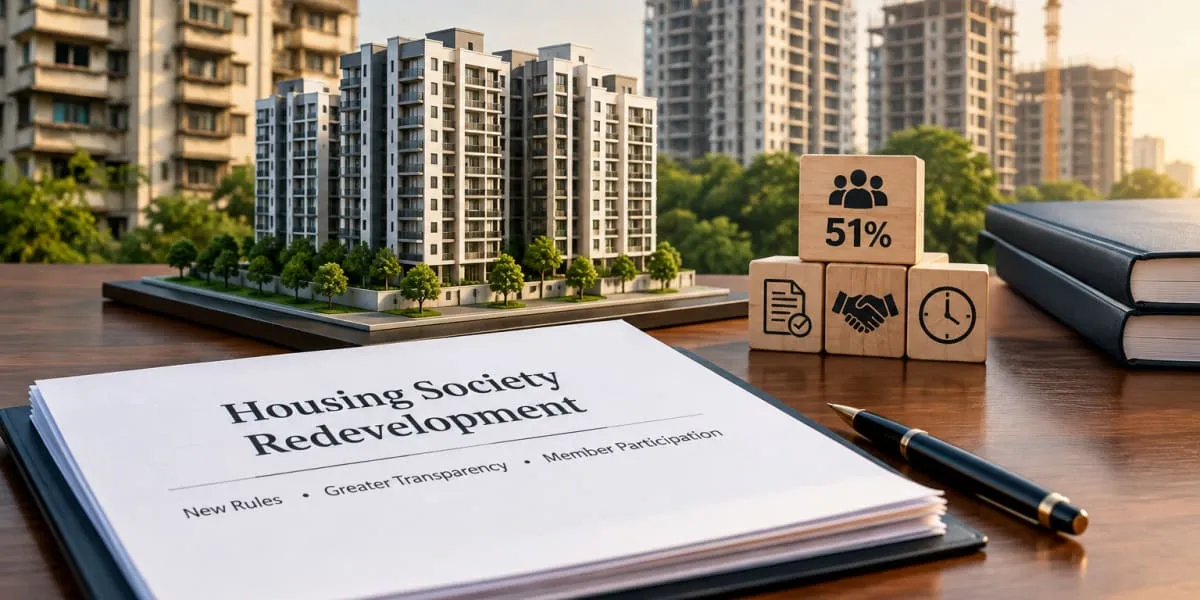
The Maharashtra government has tightened the redevelopment process for co-operative housing societies through a Government Resolution issued by the Co-operation Department on September 30, 2026. The revised framework places greater emphasis on member participation, written consent, competitive developer selection and time-bound documentation.

A redevelopment proposal must receive approval from at least 51 per cent of the society’s total membership. The special general meeting requires a two-thirds quorum. Members who are living abroad, critically ill, persons with disabilities or unable to attend for unavoidable reasons may participate through video conference or other approved remote systems. Their participation counts towards both the quorum and the required majority.

Members voting in favour of redevelopment must provide written consent before the process proceeds. The same requirement applies to the appointment of a developer, for which approval from at least 51 per cent of the total membership participating physically or remotely is required. Votes or opinions from absent members cannot be included. The developer-selection meeting must be video-recorded, with one copy retained by the society and another submitted to the registrar.

Societies must invite at least three competitive tenders from developers. If fewer than three bids are received, the tender period must be extended before the available proposals are placed before the special general meeting. An appointed architect or Project Management Consultant (PMC) must assess the building and land, examine available Floor Space Index (FSI) and Transferable Development Rights (TDR), and prepare a project report covering construction, open spaces, gardens and parking.

The Development Agreement (DA) must be executed within three months of developer selection. The registered Permanent Alternative Accommodation Agreement (PAAA) with individual members must be completed within three months of the DA’s registration. Notices, minutes, attendance records, video recordings, PMC reports, tender documents, comparative statements and draft agreements must be available to members for inspection without charge.

The revised provisions replace the earlier 2019 procedure and related circulars. Redevelopment projects must generally be completed within two years of the first or plinth certificate, although exceptional projects may receive up to three years. The order also provides for action against office-bearers or committee members involved in violations, collusion, fraud or conduct harmful to members’ interests.

The Maharashtra government has tightened the redevelopment process for co-operative housing societies through a Government Resolution issued by the Co-operation Department on September 30, 2026. The revised framework places greater emphasis on member participation, written consent, competitive developer selection and time-bound documentation. A redevelopment proposal must receive approval from at least 51 per cent of the society’s total membership. The special general meeting requires a two-thirds quorum. Members who are living abroad, critically ill, persons with disabilities or unable to attend for unavoidable reasons may participate through video conference or other approved remote systems. Their participation counts towards both the quorum and the required majority. Members voting in favour of redevelopment must provide written consent before the process proceeds. The same requirement applies to the appointment of a developer, for which approval from at least 51 per cent of the total membership participating physically or remotely is required. Votes or opinions from absent members cannot be included. The developer-selection meeting must be video-recorded, with one copy retained by the society and another submitted to the registrar. Societies must invite at least three competitive tenders from developers. If fewer than three bids are received, the tender period must be extended before the available proposals are placed before the special general meeting. An appointed architect or Project Management Consultant (PMC) must assess the building and land, examine available Floor Space Index (FSI) and Transferable Development Rights (TDR), and prepare a project report covering construction, open spaces, gardens and parking. The Development Agreement (DA) must be executed within three months of developer selection. The registered Permanent Alternative Accommodation Agreement (PAAA) with individual members must be completed within three months of the DA’s registration. Notices, minutes, attendance records, video recordings, PMC reports, tender documents, comparative statements and draft agreements must be available to members for inspection without charge. The revised provisions replace the earlier 2019 procedure and related circulars. Redevelopment projects must generally be completed within two years of the first or plinth certificate, although exceptional projects may receive up to three years. The order also provides for action against office-bearers or committee members involved in violations, collusion, fraud or conduct harmful to members’ interests.

Related Stories

Gold Stories
Next Story
Infrastructure Transport

Supreme Infrastructure posts first post-scheme quarterly profit

Supreme Infrastructure India reported its first profitable quarter following the completion of its Composite Scheme, with a sharp increase in revenue and a significant reduction in finance costs driving its financial turnaround in Q2 FY27.Revenue from operations rose 114.8 per cent year-on-year to Rs 290.04 million in Q2 FY27, compared with Rs 135.02 million in the corresponding quarter last year. Total income increased 130.3 per cent to Rs 335.63 million from Rs 135.56 million.The company reported a profit after tax (PAT) of Rs 36.78 million in Q2 FY27, against a loss of Rs 591.43 million in ..
Next Story
Infrastructure Transport

J. Kumar Infraprojects Q2 profit rises 25 per cent to Rs 1.13 billion

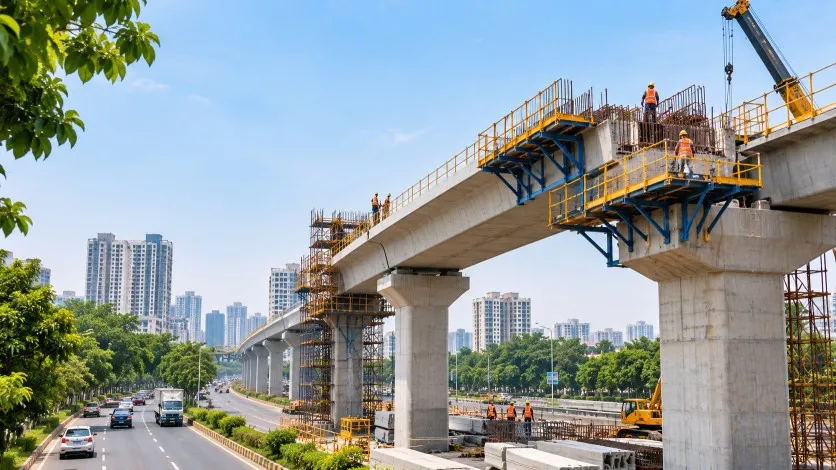
J. Kumar Infraprojects reported a 25 per cent year-on-year increase in net profit to Rs 1.13 billion in Q2 FY27, while revenue from operations grew 15 per cent to Rs 15.39 billion.Profitability improved faster than revenue, with EBITDA rising 18 per cent to Rs 2.29 billion. The EBITDA margin expanded to 14.9 per cent, supported by cost control and steady project execution. Net profit margin increased to 7.4 per cent from 6.7 per cent in the corresponding quarter last year.The company's order book stood at Rs 227.11 billion, equivalent to nearly four times its annual revenue. It secured fresh o..
Next Story
Equipment

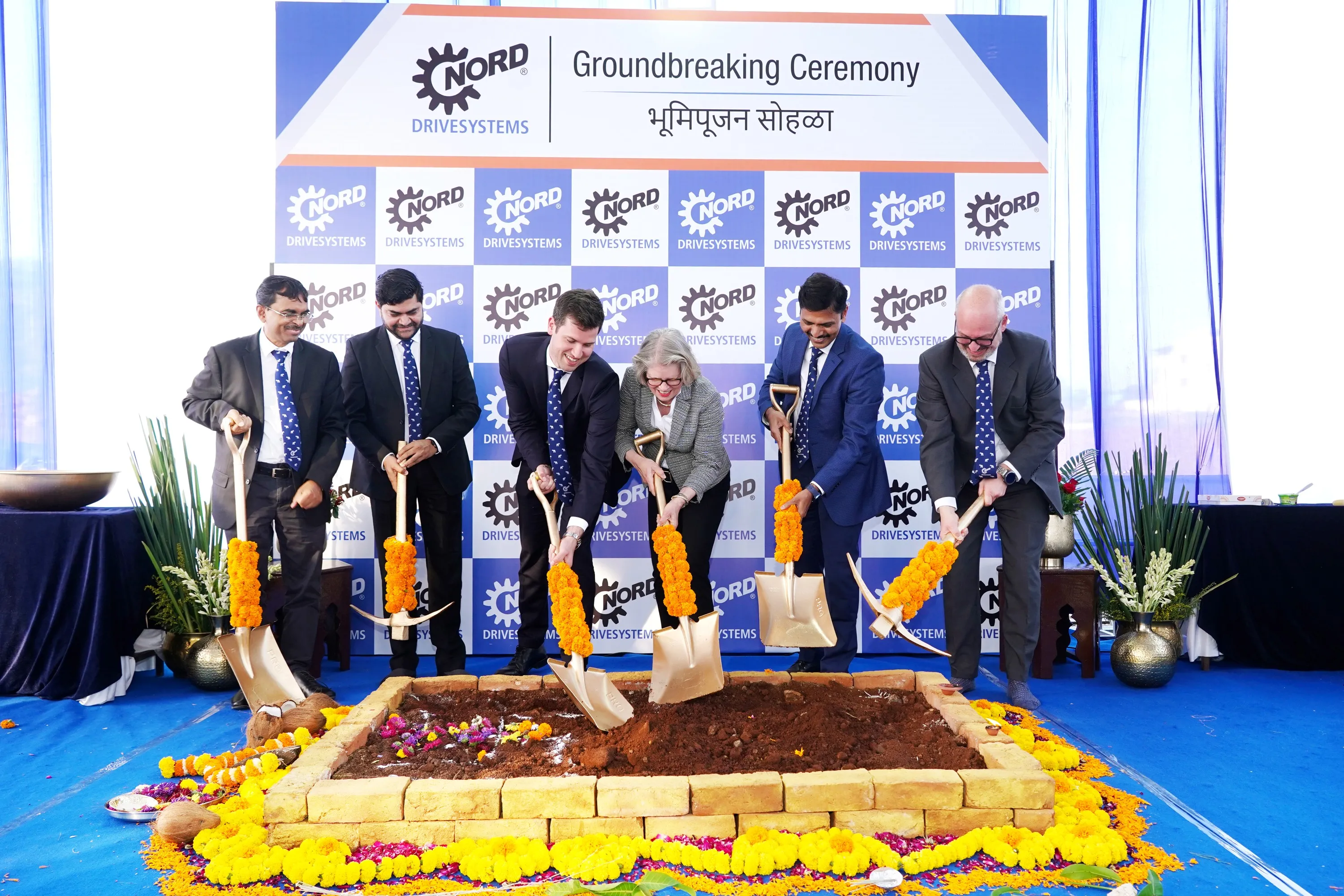
NORD India to invest Rs 4 billion in new Pune manufacturing facility

NORD Drivesystems India (NDPL) has commenced construction of a new manufacturing facility at RMK Industrial Park 3, near MIDC Talegaon Phase V, Pune, with a planned investment of Rs 4 billion. The expansion will double the company's gearbox and geared motor production capacity and introduce gear-component manufacturing.The facility will cater to domestic demand and exports to other NORD subsidiaries, including its headquarters in Germany. The company also plans to manufacture gears and related components at the new plant, supporting both the Indian market and global operations.Dhanraj Kalbhor,..

Advertisement

Subscribe to Our Newsletter

Get daily newsletters around different themes from Construction world.

STAY CONNECTED

Advertisement

SPECIAL OFFER
QR Code