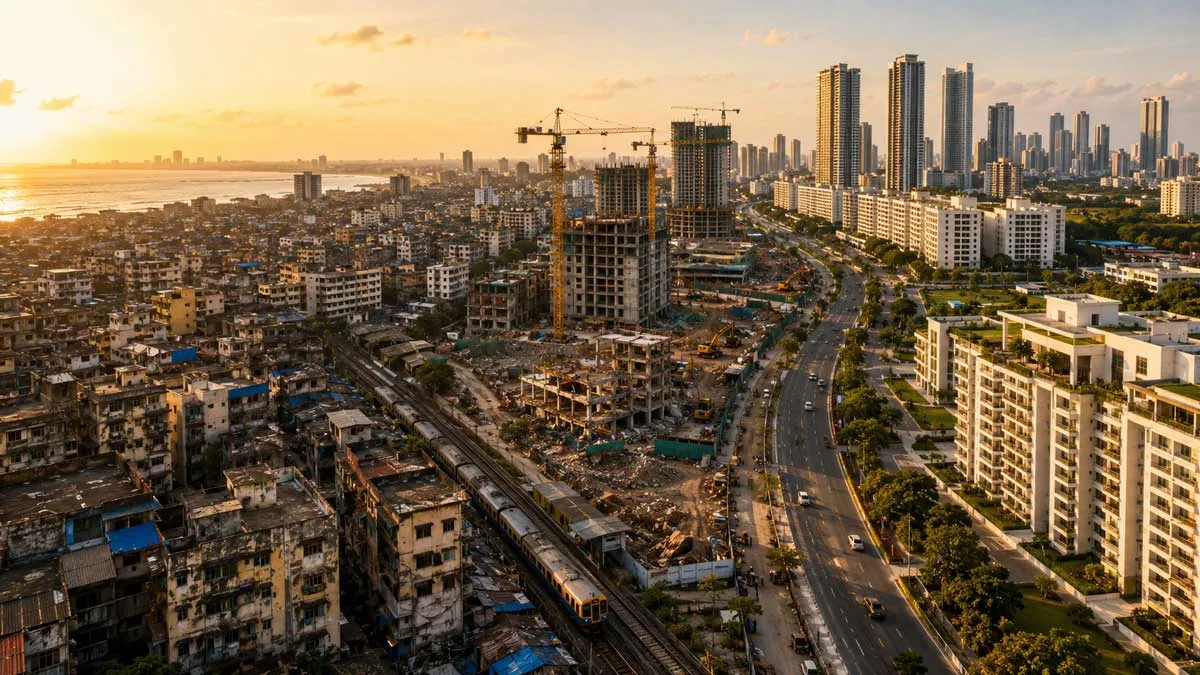
In 2017, Mumbai identified 160,000 ageing buildings due for structural audit. Close to half of these were in the Western Suburbs. Redeveloping the oldest and structurally weakest of these would help unlock new housing, much needed given the city’s growing population density and constant developed area of 437.7 sq km. At 30,600 people per sq km in 2024, Mumbai’s density was almost thrice that of Gurugram, and 60 per cent higher than Bengaluru’s.Essentially, Mumbai’s realty market has demand. It has capital. It has realty development potential.Fast forward to 2026. Mumbai has 1,094 registered redevelopment projects, based on data from the past six years, which are poised to add 59,000 new housing units, according to Knight Frank. While all this is happening in a redevelopment ecosystem that has matured since the concept took off, continuing gaps in the governance framework have left the city with a redevelopment delivery deficit. And as the ongoing real-estate cycle wears on, projects may become more vulnerable to failure (see box).What Mumbai needs now is a governance architecture that combines professional project management, institutional finance, transparent escrow structures, rigorous developer vetting and technology-enabled oversight.Considering that redevelopment has become one of the largest urban renewal exercises, there is a strong need to not only facilitate the process but to make it transparent, speedy, sustainable, technology-driven, professionally managed and citizen-centric, says advocate Shreeprasad Parab, Expert Director, The Maharashtra State Cooperative Housing and Apartment Federation.Redevelopment 2.0 is not about constructing taller buildings. It is about constructing better governance. CW explains what that might look like. Independent project managementOne of the reforms Naushad Panjwani, Chairman, Mandarus Partners, proposes is genuinely independent project management. Execution discipline, professional project management, stakeholder alignment and system integration are pressing gaps where a project management consultant (PMC) can be helpful. Especially, Parthh K Mehta, CMD, Paradigm Realty, explains, “because the typical timelines from the development agreement signing to completion can average five to seven years”. In such a long cycle, even small gaps in planning, approvals, documentation, rent management or construction monitoring can become major delivery risks.In playing the role of an independent technical and process advisor, Mehta continues, “PMCs can help societies deal with multiple layers – feasibility, FSI, developer selection, approvals, rent, temporary accommodation, construction quality, timelines, member expectations and final handover.”Societies evaluating developers mainly consider higher corpus, additional area, transit rent, or faster promises, but they don’t fully assess their financial strength, funding visibility, execution track record, governance standards, litigation history, approval strategy, RERA history and actual delivery capability. This omission is one of the biggest reasons for projects to fail to come together, according to him.Panjwani sees a strong case for a holistic standardised evaluation framework. Essentially, a PMC brings structure, transparency and independent oversight to the journey, by looking into feasibility, financial viability, developer credentials, tender documents, approval timelines, construction progress, documentation and the measurability of commitments made to society members.A PMC also ensures continuous alignment between the society, developer, architects, structural consultants, municipal authorities, utility departments, contractors and residents, playing the role of a neutral professional body managing these interdependencies, ensuring that disputes don’t escalate quickly.The challenge is that, today, the PMC is expected to safeguard the interests of the housing society, yet in most projects its fees, at around 1-2 per cent of project cost, are paid by the developer, which Panjawani points out, “creates an inherent conflict of interest”.The way out, he says, is for the client to appoint, evaluate and compensate its own advisor.Besides client acceptance, Mumbai’s serious shortage of experienced redevelopment PMCs stands in the way of this reform. “Only a limited number of firms possess the multidisciplinary capability required – engineering, contracts, finance, legal coordination, stakeholder management and project controls,” according to Panjwani. “Expanding this professional talent pool should become an industry priority.”Protection for selective financeMumbai has no systemic shortage of capital for credible redevelopment projects, whether from banks, NBFCs, alternative investment funds, private credit funds, family offices and the internal accruals of established developers. However, Panjwani says, “Capital today is selective rather than scarce; it follows projects with clear title, realistic assumptions, experienced developers, disciplined governance and demonstrable execution capability. The equity-intensive phase, which is often the most financially demanding part of redevelopment, remains relatively underfunded.”Upfront expenditure during the equity-intensive phase includes transit rent, corpus payments, statutory premiums, approval costs, professional fees and project mobilisation.To selective financiers looking for certainty of the use of funds as intended, Panjwani proposes milestone-linked financing as a standard market practice, but with one important qualification: independently certified milestones.Essentially, the disbursements should not only be linked to projected timelines or construction progress but also to achieving critical project milestones such as statutory approvals, tenant rehabilitation, independently certified construction progress, sales performance, collection efficiency and occupation certification.Fortunately, technology now enables lenders, societies and developers to monitor progress through digital dashboards, drone mapping, geo-tagged reporting and real-time MIS.Further, escrow mechanisms need to evolve from being primarily lender-protection tools into project-governance tools, says Panjwani. “Today’s escrow structures generally monitor inflows effectively but do not always provide sufficient transparency or protection for execution.”Escrow mechanisms and project-specific financial monitoring should ensure that funds are utilised only for the concerned project, avers Anand Gupta, Chairperson, Housing & RERA Committee, and former Vice President, Builders Association of India; Chairman & Director, Ayg Group. “Making periodic disclosure of project progress and financial status mandatory would improve transparency for societies and homebuyers. Repeated project failures or regulatory violations should attract stricter restrictions on undertaking new redevelopment assignments.”A stronger financial framework as visualised by Panjwani would include ring-fenced payments for construction and critical contractors, clearly defined payment waterfalls linked to certified milestones, independent monitoring and certification of fund utilisation, greater transparency for societies regarding escrow inflows and outflows, and real-time digital reporting accessible to key stakeholders.Adoption of industrialised constructionClose to nine in 10 redevelopment projects are happening on sub-one-acre plots, according to Knight Frank, a tiny size that Sukhraj Nahar, President, CREDAI-MCHI, points out,“restricts the widespread adoption of advanced construction methodologies that are optimised for volume”.For instance, prefabrication and modular construction deliver the greatest benefits on larger greenfield projects where repetition of design and adequate staging areas are available.“On small urban redevelopment plots,” he points out, “their economic viability reduces substantially.”Likewise, the transportation of large precast components through Mumbai’s narrow roads and densely populated neighbourhoods to most redevelopment sites and adhering to peak hour traffic restrictions further increase costs and logistical complexity.Highly congested sites also leave very limited space for material storage, compelling developers to adopt ‘just-in-time’ deliveries, making projects vulnerable to supply disruptions, adds Jitendra Mehta, Senior Vice President, CREDAI-MCHI.Tower crane, passenger hoist, piling rig and concrete pump movements, prefabricated component assembly and logistics management also become challenging.However, a silver lining is visible in that Nahar says “digital technologies such as BIM, drone-based site monitoring, Cloud-based project management, digital quality control, RFID-enabled material tracking and AI-assisted planning are increasingly being adopted irrespective of project size because they improve coordination, reduce design clashes and enhance execution efficiency.”And if not full, partial prefabrication, such as precast staircases, bathroom pods, facade elements, reinforcement cages and MEP modules, is gradually becoming more feasible even on smaller projects.Widening the adoption of industrialised construction in Mumbai would require policy support, dedicated logistics corridors, common precast manufacturing facilities near the city and the standardisation of building components, according to Nahar.Self-development pathwaySelf-redevelopment implies that members of a housing society collectively assume the role traditionally performed by a private developer. Recognising self-redevelopment as an important policy initiative, the Government of Maharashtra has created a separate authority for self-redevelopment projects.A standout feature of self-redevelopment is that it eliminates the developer’s profit margin and, therefore, ensures the economic benefit generated through the additional development potential remains with the members themselves, enabling larger homes, superior specifications or reduced project costs.This modus is particularly suitable, according to Parab, “where the society has a high level of member consensus and institutional discipline; where the redevelopment potential is substantial, enabling the project to generate adequate surplus; where members seek complete control over design, quality, timelines and financial decisions; where societies are dissatisfied with conventional redevelopment models because of delays, disputes or lack of transparency; and where experienced consultants, including PMCs, are available to manage execution.”“Without institutional governance, societies attempting self-redevelopment risk replacing developer risk with execution risk,” Panjwani cautions. Another practical indicator of readiness, according to him, is whether the society has successfully managed major repair projects in the past; from obtaining member consensus to tendering, contracting and supervision.Parab cites the ongoing redevelopment of the Tilak Safalya Co-operative Housing Society, Tilak Nagar, Mumbai, as a notable example. Under a conventional redevelopment proposal, the developer had offered each member owning a modest residential unit with an existing carpet area of approximately 200 sq f. a rehabilitated flat measuring 500 sq ft. After carefully evaluating their long-term interests, the members democratically resolved to undertake self-redevelopment. As a result, each eligible member has secured 867 sq ft carpet area. Adopting a vision that extends beyond mere redevelopment, the society has resolved to construct a modern, environmentally responsible and sustainable residential complex equipped with world-class amenities, including a centralised air-conditioning system, sewage and water treatment facilities for water recycling, solar power generation systems, and a rooftop café and community spaces.Like any redevelopment project, the success of self-redevelopment also hinges on professional project management, robust governance, statutory compliance, transparent financial controls and continuous monitoring.According to Parab, “Cooperative financing has significantly strengthened the feasibility of self-redevelopment, especially nowadays when financial institutions, including District Central Cooperative Banks and The Maharashtra State Cooperative Bank in the State of Maharashtra, are increasingly willing to finance such projects.”Developer vetting mechanismToday, the entry barrier to the redevelopment market is low.“Virtually any entity can enter by forming a company, obtaining tenant consent and appointing consultants,” points out Gupta. This raises concerns because urban redevelopment is not merely a real-estate transaction. Once an existing building is demolished and residents move into transit accommodation, any delay in funding, approvals or construction creates enormous hardship for families while simultaneously eroding confidence in the redevelopment system.What’s missing, according to Gupta, “is a statutory comprehensive policy framework and a regulator of the same”.While MahaRERA has delivered benefits, by regulating registered projects, ensuring disclosures, promoting transparency and providing a dispute-resolution mechanism, he points out that it isn’t empowered to pre-qualify developers, assess their financial health before project award, or certify their technical competence. “Its intervention generally begins only after a project is registered and regulatory obligations arise.”A robust pre-award developer prequalification or vetting mechanism for redevelopment projects above a prescribed size would weed out relatively small or inexperienced developers who secure projects that are beyond their financial or managerial capacity, which go on to get stalled or delayed.Objective criteria, such as net worth, liquidity, past project delivery, technical capability and compliance history, would thus require a developer to demonstrate minimum financial strength, technical expertise, execution capability or a successful track record before taking up large and complex redevelopment projects.Essentially, “a developer’s capability – not merely intent – must be evaluated,” says Gupta.Online speedier approvalsThe greatest impediment to timely redevelopment is the prolonged approval process. Every additional month results in increased finance costs, escalation in construction costs, higher rent payable to members and, ultimately, higher apartment prices.So, Parab points out, “The most transformative reform would be the establishment of a fully integrated online single-window approval system.”Using a technology-driven online platform to speed approvals from six months to approximately 30 minutes would drastically reduce administrative delays, minimise human interface, enhance transparency, substantially lower financing and holding costs, accelerate delivery, improve investor confidence and reasonably translate into approximately 15 per cent lower apartment prices.Pointing out that redevelopment is a highly interconnected delivery system, Mehta explains that system integration would ensure that MCGM approvals, MahaRERA compliance, utility coordination, construction planning, finance, rent obligations, member communication and final Occupation Certificate are not treated as separate departments working in isolation but are managed through one integrated project timeline.“We believe redevelopment succeeds when every function moves together, as one integrated system with clear ownership and accountability,” he says.Improving redevelopment efficiency, reducing project timelines, improving quality and lowering overall construction costs would require faster inter-agency coordination, single-window utility clearances, dedicated construction logistics planning, wider adoption of digital project management, skill development for construction workers and policies encouraging industrialised construction methods.Redevelopment: The bigger, the better?Projects in Borivali span 0.41 acre while those in Ghatkopar cover roughly half of that, 0.23 acre, according to Knight Frank India. Project size has a meaningful influence on the final product, although it is not the only determinant, explains Gulam Zia, International Partner, Senior Executive Director, Research, Advisory, Infrastructure and Valuation, Knight Frank India.Larger redevelopment sites generally provide greater planning flexibility, allowing developers to incorporate better internal layouts, larger open spaces, more recreational amenities, efficient parking solutions and improved circulation within the development. In contrast, redevelopment projects on smaller plots, such as those commonly seen in established Eastern Suburbs, operate under greater space constraints. Developers must often optimise building design to accommodate rehabilitation obligations while maintaining saleable inventory. As a result, amenity offerings and open spaces may be relatively limited compared to larger developments. While smaller projects can still command strong buyer demand because of their established locations, excellent connectivity, mature social infrastructure and proximity to employment hubs, ultimately, the finished product reflects a combination of plot size, location, planning regulations and developer expertise rather than plot size alone.Redevelopment: Vulnerable to real-estate cyclesWhile Mumbai’s redevelopment market has gathered pace of late, its vulnerability to real-estate cycle risks is a growing concern, especially considering the signs emanating in the city. “The strong residential upcycle has intensified competition for redevelopment opportunities, prompting some developers to make more aggressive offers,” says Gulam Zia, International Partner, Senior Executive Director, Research, Advisory, Infrastructure and Valuation, Knight Frank India. Higher corpus payments to society members, larger additional carpet area, increased rental compensation during the construction period, premium amenities and faster possession commitments may help secure projects, but they also compress developer margins and increase execution risks if market conditions soften, construction costs rise or sales slow. In contrast, during the market downturn, developers generally adopted a disciplined approach while bidding for redevelopment projects, with offers closely aligned to project viability, construction costs and anticipated sales realisations, which ensured that projects remained financially feasible even in challenging market conditions.Pointing out that redevelopment agreements are fundamentally commercial arrangements between developers and housing societies, Zia says the focus should not be on regulating commercial terms but on ensuring that project commitments are realistic and backed by adequate financial strength and execution capability.“Greater transparency in feasibility assessments, financial disclosures and execution capabilities can help societies make informed decisions,” he says.Redevelopment: Cluster vs. soloCluster redevelopment, while offering significant long-term urban planning benefits through better infrastructure, improved road networks and more efficient land utilisation, involves multiple societies, landowners and stakeholders, which increases the complexity of obtaining consensus, coordinating approvals and synchronising project execution, making such projects more susceptible to delays, particularly during the planning and approval stages. Once approvals are in place, Gulam Zia, International Partner, Senior Executive Director, Research, Advisory, Infrastructure and Valuation, Knight Frank India, points out, “Well-planned cluster redevelopment projects can generate superior urban outcomes, but they generally require stronger institutional coordination and longer gestation periods than standalone redevelopment projects.”Quick bytes1. Redevelopment is reshaping Mumbai's urban landscape. 2. Demand is strong, but delivery remains inconsistent. 3. Governance gaps continue to slow project execution. 4. Delayed approvals and weak oversight increase project risks. 5. Small sites constrain construction efficiency. 6. Technology is improving project planning and monitoring. 7. Self-redevelopment is gaining traction. 8. Better governance will define Redevelopment 2.0.Mumbai by the numbers 160,000 ageing buildings identified (2017) 30,600 people/sq km population density 437.7 sq km developed area 1,094 redevelopment projects 59,000 new homes in pipeline 90 per cent of redevelopment projects are on plots under one acre 5-7 years average project duration 1-2 per cent PMC fee