Yesterday, Today, Tomorrow
Real Estate

Yesterday, Today, Tomorrow

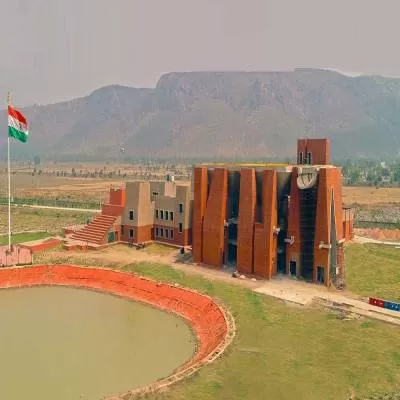
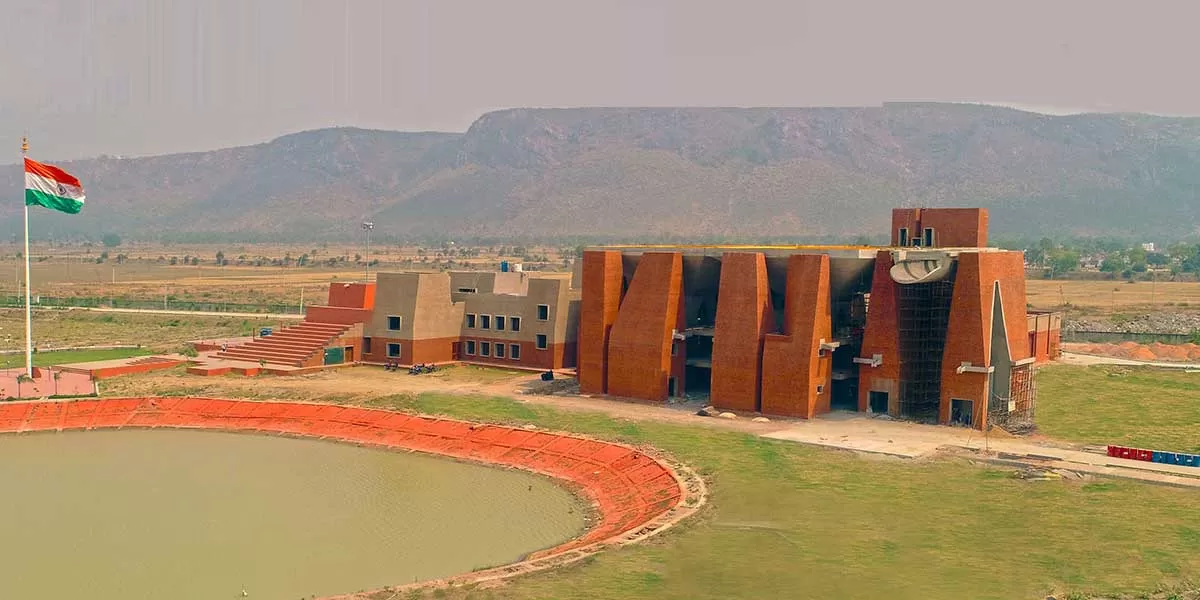
The new Nalanda University campus at Rajgir in Bihar, remodelled after the 1,600-year-old Nalanda Mahavihar, was inaugurated by Prime Minister Narendra Modi in June 2024, marking a significant revival of the first residential university in the world, originally founded in 427 CE by Emperor Kumara...

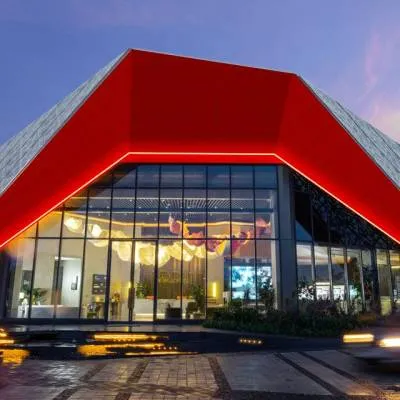
The new Nalanda University campus at Rajgir in Bihar, remodelled after the 1,600-year-old Nalanda Mahavihar, was inaugurated by Prime Minister Narendra Modi in June 2024, marking a significant revival of the first residential university in the world, originally founded in 427 CE by Emperor Kumaragupta.Steeped in historyThe world’s first residential university gained its name from ‘nalam’ (lotus) and ‘da’ (to give), symbolising the blossoming of knowledge.Green campusRevival of the university gained momentum in 2006 after Dr APJ Abdul Kalam, then President of India, proposed its reestablishment. The architectural design was chosen on the basis of a global competition and the jury, consisting of architects including Liu Thai Ker, chose Pritzker Prize laureate and Padma Vibhushan late BV Doshi’s firm, Vastu Shilpa Consultants, as the winner of the design competition.The new campus, built at an initial cost of Rs 18 billion and spread over 485 acre, merges eco-friendly architecture with ancient Vaastu principles. The campus is among the largest in India and its commitment to sustainability is evident in its net-zero green campus, which includes a 6.5-MW DC on-grid solar plant, a 500-kld water treatment plant, a 400-kld water recycling plant and 100 acre of water bodies with an innovative 1.2-MW AC biogas-based waste-to-energy plant. Indeed, the new campus of Nalanda University symbolises the revival of an ancient institution and serves as a beacon of modern educational excellence and sustainability.A Forest of MemoriesSmritivan Earthquake Memorial is on UNESCO's 2024 list of the most beautiful museums.The Smritivan (Forest of Memories) Earthquake Memorial Museum in Bhuj, Gujarat, has been honoured as one of the world’s seven most beautiful museums globally by UNESCO’s Prix Versailles Award for Architecture and Design. It is the first museum in India to receive international recognition for adherence to local culture, environmental conservation and sustainable practices.Situated on the Bhujiyo Dungar (a small hill) on the outskirts of Bhuj and spread over 470 acres, it is the first earthquake memorial in the country. The site features the world’s largest Miyawaki forest, with around 0.5 million trees, 50 check dams adorned with plaques bearing the names of the victims of the 2001 earthquake, measuring 7.9 on the Richter scale, which claimed close to 13,000 lives and affected 890 villages. The museum also includes a special theatre that offers a realistic simulation of the earthquake experience using sound, light and vibration along with a 360º projection. The architect was Rajeev Kathpalia from Vastushilpa Sangath LLP while the exhibition design and curation for the museum was done by Design Factory India.Design intentThe hill’s steep slope posed a challenge in constructing a building that blended with the landscape as the hill holds cultural significance to the community and constructing a large-scale box contrasting with the hill was considered inappropriate. So, the natural contours of the hill were incorporated into the design.Resilience and regenerationAs Smritivan was planned to be a pilgrimage site for bereaved families of the victims, each element of the museum, which was inaugurated by Prime Minister Narendra Modi in 2022, stands as a symbol of Gujarat’s resilience in the face of adversity and focuses on regeneration and hope for a better future.- R SRINIVASAN      

Next Story
Infrastructure Transport

Kavach 4.0 Commissioned on Delhi–Mumbai and Delhi–Howrah

"Kavach version four has been commissioned on 1,452 route km, covering the high density Delhi–Mumbai and Delhi–Howrah corridors. The rollout included laying 8,570 km of optical fibre, installation of 1,100 telecom towers, deployment of trackside equipment over 6,776 RKm and establishment of 767 station data centres. Trackside implementation has been taken up on 24,427 RKm covering Golden Quadrilateral, Golden Diagonal and High Density Network sections. The programme aims to strengthen signalling and train protection on key routes.Kavach is an indigenously developed automatic train protecti..

Next Story
Infrastructure Transport

Railways Advance Kalyan–Murbad Line And Mumbai Capacity Expansion

"Indian Railways is advancing multiple rail infrastructure projects in Maharashtra, including the sanctioned Kalyan–Murbad new line and sizable investments under the Mumbai Urban Transport Project and the Mumbai–Ahmedabad High Speed Rail project. The Kalyan–Murbad 28 km new line has been sanctioned at Rs 8.36 billion (bn) on a 50:50 cost-sharing basis with the Government of Maharashtra and has been declared a Special Railway Project for land acquisition; proposals covering 214 hectares are at various stages of acquisition. Budgetary outlay for projects falling fully or partly in Maharash..

Next Story
Infrastructure Urban

Parliamentary Panel Flags Funding Gaps in Heavy Industries

"The Department-Related Parliamentary Standing Committee on Industry (Rajya Sabha) presented its 332nd report on the Demands for Grants 2026-27 of the Ministry of Heavy Industries (MHI). Figures converted from crore and lakh are expressed in million (mn). The Budget Estimates 2026-27 for the Ministry stand at Rs 79,399 mn against a projected requirement of Rs 94,843.2 mn, a shortfall of about 16 per cent, with revenue at Rs 79,370.8 mn and capital compressed to Rs 28.2 mn from Rs 5,020 mn.The committee flagged recurring BE-to-RE compression and declining revised estimate utilisation, and calle..

Advertisement

Subscribe to Our Newsletter

Get daily newsletters around different themes from Construction world.

STAY CONNECTED

Advertisement

Advertisement

Advertisement