Large Businesses Urged to Help MSMEs Build Competitiveness
Technology

Large Businesses Urged to Help MSMEs Build Competitiveness

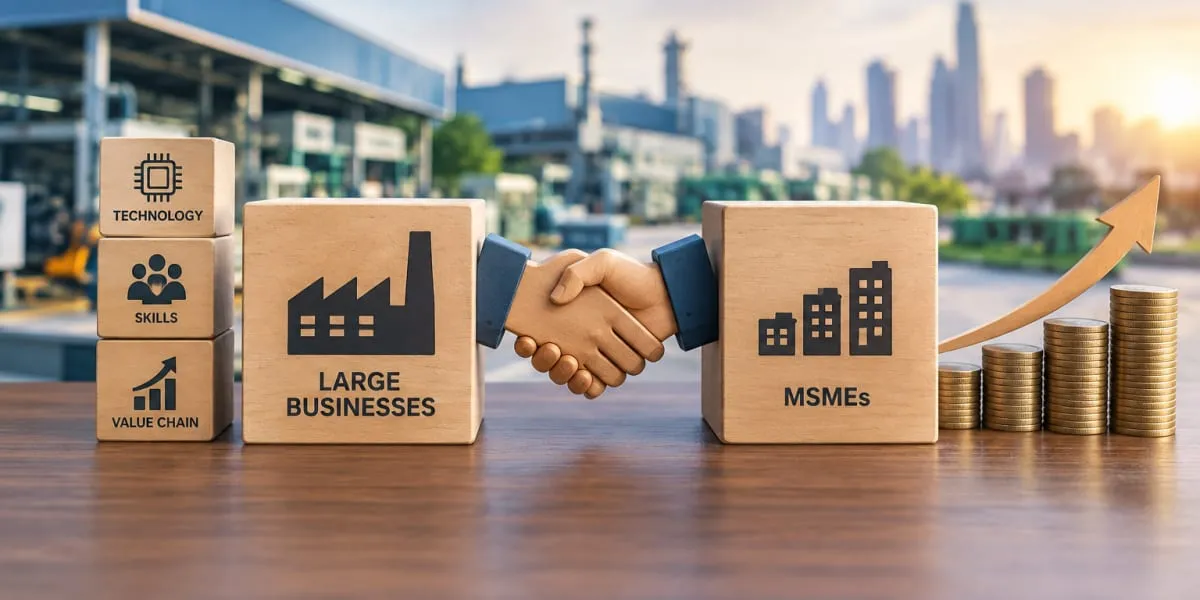
Large companies must do more than purchase from micro, small and medium enterprises (MSMEs) and should help them upgrade technology, develop skills and move up the value chain, Bharat Khera, secretary of the Ministry of Micro, Small and Medium Enterprises, said at a Confederation of Indian Industry (CII) event in New Delhi.

Khera said production-linked incentive (PLI) schemes had helped create manufacturing champions and brought tier-II and tier-III MSME suppliers into their supply chains. He urged original equipment manufacturers and other large businesses to strengthen support for smaller firms through innovation, technology transfer, vendor development and supply-chain integration.

India had 97.4 mn registered MSMEs on the government’s Udyam portal as of October, up from 78.3 mn in February. More than 99 per cent were micro enterprises with annual turnover below Rs. 100 mn, while MSMEs accounted for around 80 per cent of CII’s membership.

Khera identified product quality, cost competitiveness, access to timely capital and technology adoption as key priorities for the sector. The government introduced 14 PLI schemes in 2020 across industries including textiles, bulk drugs, white goods and electric vehicles, with total incentives of Rs. 1.97 tn planned to support domestic manufacturing.

Delayed payments and higher input costs continue to constrain smaller businesses, while global disruptions have increased pressure on exporters and firms dependent on imported energy and raw materials. Khera also encouraged businesses to use market access created by India’s free trade agreements (FTAs), noting that MSMEs account for more than 50 per cent of the country’s exports.

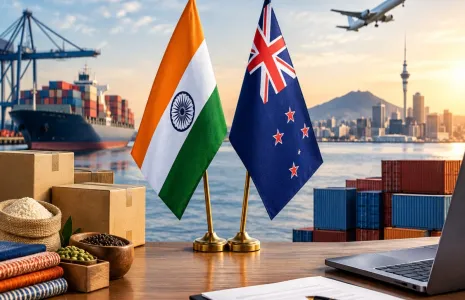
India has signed trade agreements with Mauritius, the United Arab Emirates, Australia, the European Free Trade Association, the UK, Oman and New Zealand. The India-European Union agreement was concluded in January, while discussions on a bilateral trade deal with the US are continuing. Exporting MSMEs have also had to adjust routes amid disruption in West Asia and risks around the Strait of Hormuz and the Red Sea.

Large companies must do more than purchase from micro, small and medium enterprises (MSMEs) and should help them upgrade technology, develop skills and move up the value chain, Bharat Khera, secretary of the Ministry of Micro, Small and Medium Enterprises, said at a Confederation of Indian Industry (CII) event in New Delhi. Khera said production-linked incentive (PLI) schemes had helped create manufacturing champions and brought tier-II and tier-III MSME suppliers into their supply chains. He urged original equipment manufacturers and other large businesses to strengthen support for smaller firms through innovation, technology transfer, vendor development and supply-chain integration. India had 97.4 mn registered MSMEs on the government’s Udyam portal as of October, up from 78.3 mn in February. More than 99 per cent were micro enterprises with annual turnover below Rs. 100 mn, while MSMEs accounted for around 80 per cent of CII’s membership. Khera identified product quality, cost competitiveness, access to timely capital and technology adoption as key priorities for the sector. The government introduced 14 PLI schemes in 2020 across industries including textiles, bulk drugs, white goods and electric vehicles, with total incentives of Rs. 1.97 tn planned to support domestic manufacturing. Delayed payments and higher input costs continue to constrain smaller businesses, while global disruptions have increased pressure on exporters and firms dependent on imported energy and raw materials. Khera also encouraged businesses to use market access created by India’s free trade agreements (FTAs), noting that MSMEs account for more than 50 per cent of the country’s exports. India has signed trade agreements with Mauritius, the United Arab Emirates, Australia, the European Free Trade Association, the UK, Oman and New Zealand. The India-European Union agreement was concluded in January, while discussions on a bilateral trade deal with the US are continuing. Exporting MSMEs have also had to adjust routes amid disruption in West Asia and risks around the Strait of Hormuz and the Red Sea.

Related Stories

Gold Stories
Next Story
Resources

Kalpataru Projects International elevates Amit Uplenchwar as Joint MD and CEO

Kalpataru Projects International (KPIL) has elevated Amit Uplenchwar as Joint Managing Director and CEO (designate), following approval by its board on 5 November 2026. He will take charge as Additional Director, Joint Managing Director and CEO from 1 January 2027 for a five-year term ending 31 December 2031, subject to shareholders' approval.Uplenchwar brings over three decades of experience in corporate strategy, business operations, business development, mergers and acquisitions, and international business management. His experience spans transportation, power, water, oil and gas, aerospace..
Next Story
Resources

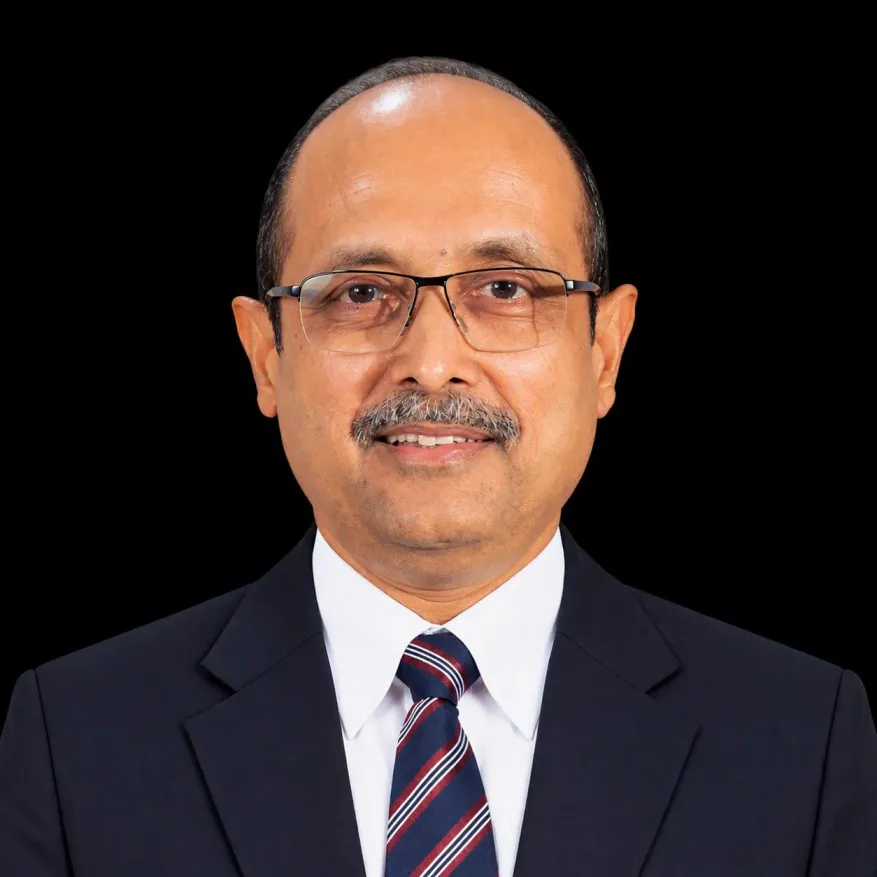
HCC appoints Vivek Singhal as CEO

Hindustan Construction Company (HCC) has appointed Vivek Singhal as Chief Executive Officer, effective 5 November 2026. He brings over four decades of experience in infrastructure and engineering, procurement and construction (EPC), covering project execution, business leadership, business development and profit and loss management.Singhal has spent 16 years in international markets, delivering projects and managing assets worth approximately Rs 285 billion across five countries. His experience spans airports, metro rail, urban transport, hydropower, bridges and other infrastructure sectors.He..
Next Story
Infrastructure Energy

Essar Signs PPA for 300 MW Hybrid Renewable Energy Project

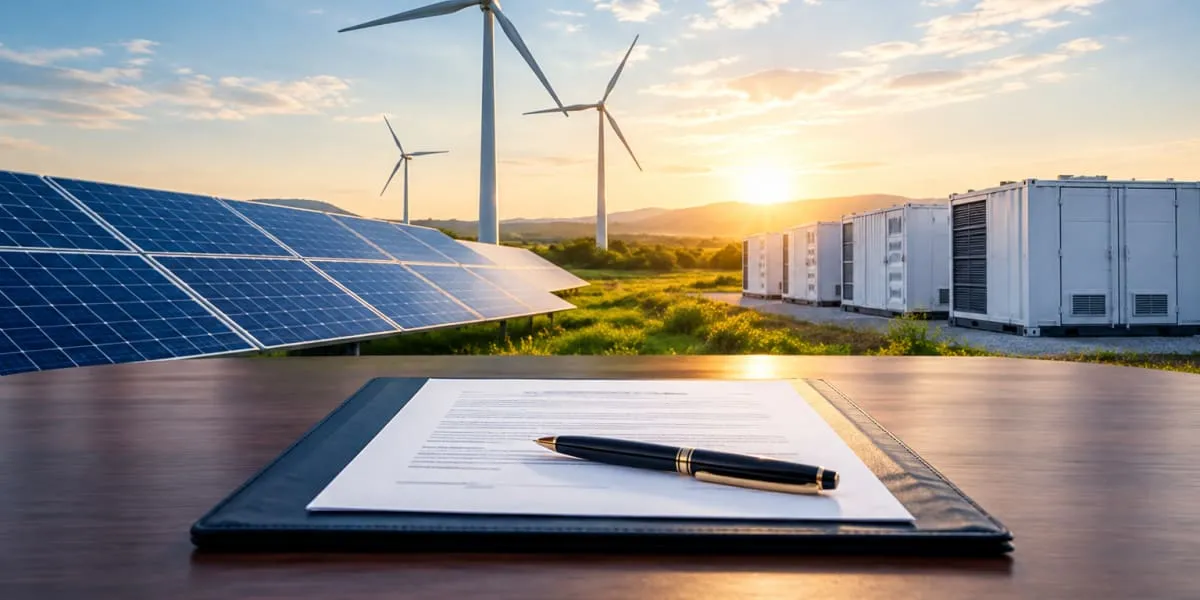
Essar Renewables, the renewable energy arm of Essar Power, has signed a Power Purchase Agreement (PPA) with NHPC for a 300 MW renewable energy project in Andhra Pradesh. The agreement follows the company’s successful bid for the project two years ago. Essar Power will invest approximately Rs. 45 bn in the development. The project will combine solar and wind generation with Battery Energy Storage Systems (BESS), enabling the supply of reliable and dispatchable renewable power. It forms part of Essar Power’s plan to build a diversified energy portfolio of approximately 5 GW across renewable,..

Advertisement

Subscribe to Our Newsletter

Get daily newsletters around different themes from Construction world.

STAY CONNECTED

Advertisement

SPECIAL OFFER
QR Code