AI revolutionises industrial and manufacturing sectors
ECONOMY & POLICY

AI revolutionises industrial and manufacturing sectors

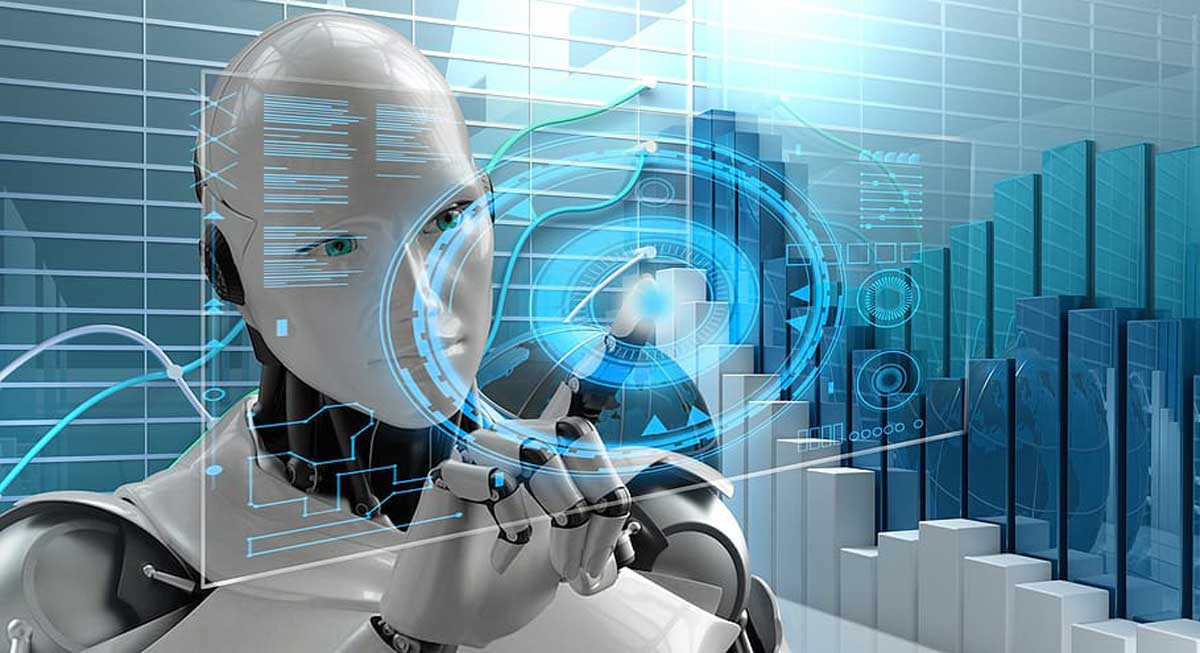
After the Covid-19 pandemic, it has been observed that Indian enterprises have commenced the incorporation of advanced analytics and data-driven decision-making into their operations. According to a report by PwC, the industrial products and manufacturing sector has exhibited the highest level of acceptance of Artificial Intelligence and Machine Learning (AI/ML) over the preceding two years.

The report, titled "Towards a smarter tomorrow: Impact of AI in the post-Covid era," points out that the industrial products and manufacturing sector has witnessed the most substantial surge, reaching up to 20%, in the adoption and implementation of AI/ML solutions from mid-2020 to 2022-23. During the period spanning 12 to 18 months subsequent to the pandemic outbreak, these sectors derived the utmost advantages from AI across three key business functions: manufacturing and operations, supply chain and logistics, and IT and cybersecurity.

In the early stages, around 64 percent of the organizations surveyed within the Industrial Products and Manufacturing sector have expressed that they are presently positioned at the initial phase of their AI-driven transformation journey. This illustrates the potential for further investments and expansion driven by AI/ML solutions within this sector, as per the details provided in the report. While there has been a noteworthy surge in the assimilation of AI, yielding significant outcomes, trends suggest that the travel and hospitality sector has achieved a saturation point. On the other hand, domains like technology, media, telecom, healthcare, and pharmaceuticals have shown consistent advancement. Nevertheless, they are encountering specific challenges in evaluating the returns on investments, particularly when considering the periods before and after the Covid-19 outbreak.

Also read: 
LiuGong introduces 936F excavator for heavy-duty digging
Sany unveils intelligent new energy dump trucks


After the Covid-19 pandemic, it has been observed that Indian enterprises have commenced the incorporation of advanced analytics and data-driven decision-making into their operations. According to a report by PwC, the industrial products and manufacturing sector has exhibited the highest level of acceptance of Artificial Intelligence and Machine Learning (AI/ML) over the preceding two years. The report, titled Towards a smarter tomorrow: Impact of AI in the post-Covid era, points out that the industrial products and manufacturing sector has witnessed the most substantial surge, reaching up to 20%, in the adoption and implementation of AI/ML solutions from mid-2020 to 2022-23. During the period spanning 12 to 18 months subsequent to the pandemic outbreak, these sectors derived the utmost advantages from AI across three key business functions: manufacturing and operations, supply chain and logistics, and IT and cybersecurity. In the early stages, around 64 percent of the organizations surveyed within the Industrial Products and Manufacturing sector have expressed that they are presently positioned at the initial phase of their AI-driven transformation journey. This illustrates the potential for further investments and expansion driven by AI/ML solutions within this sector, as per the details provided in the report. While there has been a noteworthy surge in the assimilation of AI, yielding significant outcomes, trends suggest that the travel and hospitality sector has achieved a saturation point. On the other hand, domains like technology, media, telecom, healthcare, and pharmaceuticals have shown consistent advancement. Nevertheless, they are encountering specific challenges in evaluating the returns on investments, particularly when considering the periods before and after the Covid-19 outbreak. Also read:  LiuGong introduces 936F excavator for heavy-duty digging Sany unveils intelligent new energy dump trucks

Next Story
Infrastructure Urban

Implementation Status of Jal Jeevan Mission

Since August 2019 the Government has implemented Jal Jeevan Mission to provide assured potable water through household tap connections in rural India. At the start of the mission only 32.3 million (mn) rural households, representing 16.7 per cent, were reported to have tap water connections. States and union territories have reported that 125.8 mn additional rural households have since been provided with tap connections. As a result, of about 193.6 mn rural households roughly 158.2 mn, or 81.71 per cent, are reported to have tap water supply at home.\n\nThe State, district and village level st..

Next Story
Infrastructure Urban

Jal Jeevan Mission Reaches Eighty One Per Cent Rural Coverage

The Government reported substantial progress under the Jal Jeevan Mission, launched in August 2019 to provide tap water to every rural household. At launch only 32.3 million (mn) rural households had tap connections and states and Union territories reported provision of 125.8 mn additional households by March 2026. Consequently, out of about 193.6 mn rural households around 158.2 mn, or 81.71 per cent, are reported to have tap water at home. The Finance Minister announced extension of the mission until 2028 in the 2025-26 budget speech. The Swachh Bharat Mission Grameen, launched in October 20..

Next Story
Infrastructure Urban

Empowering Local Governance for Sustainable Rural Water Supply

The Ministry of Jal Shakti has aligned the Jal Jeevan Mission (JJM) with the 73rd Amendment to strengthen village level planning and community ownership of water supply. Gram Panchayats, village water and sanitation committees and Pani Samitis are to plan, implement, manage and maintain piped water systems, with gram sabha processes formalising handover and oversight. Implementation support agencies including non government organisations, community based organisations and self help groups have been empanelled to train local committees and promote women participation. Under JJM, the department ..

Advertisement

Subscribe to Our Newsletter

Get daily newsletters around different themes from Construction world.

STAY CONNECTED

Advertisement

Advertisement

Advertisement