Air Force To Use Drones For Lakshadweep Deliveries And Defence
ECONOMY & POLICY

Air Force To Use Drones For Lakshadweep Deliveries And Defence

The Indian Air Force (IAF) is preparing to deploy multi-purpose drones capable of delivering medicines, essential supplies, and defence equipment to Lakshadweep, while also enhancing surveillance and security operations across the island chain.

According to Air Marshal Narmadeshwar Tiwari, Vice Chief of the Air Force, the initiative will include developing long-range drones in partnership with the private sector. These drones will be able to fly up to 500 kilometres, carry payloads of around 300 kilograms, and operate for up to five hours. Designed with wide horizontal wings, the drones will be built to endure challenging satellite connectivity and adverse weather conditions.

The Air Force plans to implement the project within three years, with over 100 Indian start-ups already collaborating on design, technology, and operations.

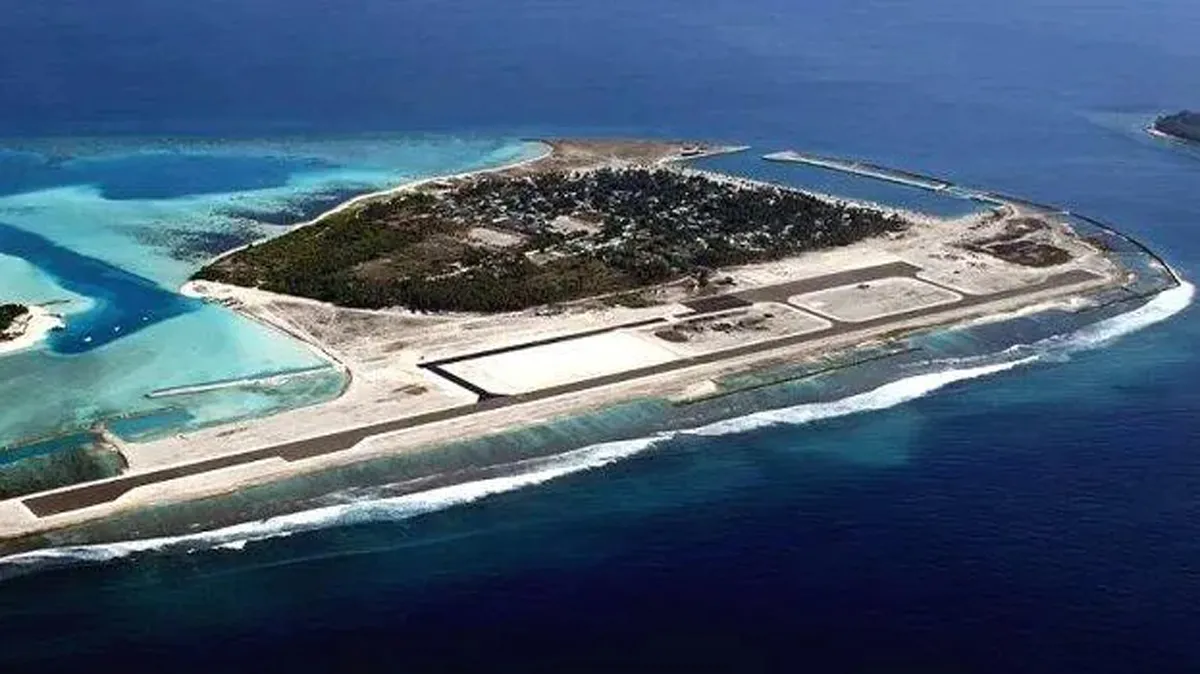
In a parallel effort to boost connectivity, the Central Government has approved funding for two major aviation infrastructure projects in Lakshadweep — the construction of a new airport at Minicoy and the expansion of the existing airport at Agatti. These projects will be coordinated by the Southern Air Force Headquarters in Akkulam.

The initiative aims to address both logistical and security challenges in the remote archipelago, where human trafficking, drug smuggling, and arms movement through uninhabited islands have been growing concerns.

The drone network will enable the transportation of essential goods such as vegetables, medicines, and daily supplies from Kochi to Lakshadweep, while also linking the various inhabited islands.

Officials expect that the expansion of Agatti Airport and the new Minicoy Airport will not only enhance connectivity but also significantly boost tourism in the islands, which are increasingly being viewed as a key strategic and economic zone in the Arabian Sea.

The Indian Air Force (IAF) is preparing to deploy multi-purpose drones capable of delivering medicines, essential supplies, and defence equipment to Lakshadweep, while also enhancing surveillance and security operations across the island chain. According to Air Marshal Narmadeshwar Tiwari, Vice Chief of the Air Force, the initiative will include developing long-range drones in partnership with the private sector. These drones will be able to fly up to 500 kilometres, carry payloads of around 300 kilograms, and operate for up to five hours. Designed with wide horizontal wings, the drones will be built to endure challenging satellite connectivity and adverse weather conditions. The Air Force plans to implement the project within three years, with over 100 Indian start-ups already collaborating on design, technology, and operations. In a parallel effort to boost connectivity, the Central Government has approved funding for two major aviation infrastructure projects in Lakshadweep — the construction of a new airport at Minicoy and the expansion of the existing airport at Agatti. These projects will be coordinated by the Southern Air Force Headquarters in Akkulam. The initiative aims to address both logistical and security challenges in the remote archipelago, where human trafficking, drug smuggling, and arms movement through uninhabited islands have been growing concerns. The drone network will enable the transportation of essential goods such as vegetables, medicines, and daily supplies from Kochi to Lakshadweep, while also linking the various inhabited islands. Officials expect that the expansion of Agatti Airport and the new Minicoy Airport will not only enhance connectivity but also significantly boost tourism in the islands, which are increasingly being viewed as a key strategic and economic zone in the Arabian Sea.

Next Story
Infrastructure Transport

MMRDA advances 250 m on Orange Gate–Marine Drive tunnel

The Mumbai Metropolitan Region Development Authority (MMRDA) has completed 250 m of underground tunnelling for the Orange Gate–Marine Drive Urban Road Tunnel using India’s largest slurry shield tunnel boring machine (TBM) deployed for an urban road project.The project involves twin tunnels extending over 7 km beneath critical transport corridors, including Central Railway, Western Railway and Metro Line 3. The work requires high-precision engineering to navigate densely developed urban infrastructure.Once completed, the tunnel is expected to reduce travel time between Orange Gate and Marin..

Next Story
Infrastructure Urban

Hindustan Zinc Pays Rs 188.46 Billion in FY26

Hindustan Zinc contributed Rs 188.46 billion to the public exchequer in FY 2025-26, according to its 9th Tax Transparency Report. The contribution, equivalent to 46 per cent of the company’s revenue, included direct and indirect taxes, government royalties, dividends to the Government of India, withholding taxes and other statutory levies.The company’s five-year cumulative contribution to the exchequer stood at Rs 915.72 billion. In FY26, Hindustan Zinc reported revenue of Rs 408.44 billion, EBITDA of Rs 221.62 billion and profit after tax of Rs 138.32 billion. It also achieved its highest..

Next Story
Infrastructure Urban

World of Concrete India 2026 Opens in Mumbai

Informa Markets in India will host the 12th edition of World of Concrete India 2026 from 3–5 June 2026 at the Bombay Exhibition Centre, Mumbai. The specialised B2B exhibition will bring together manufacturers, suppliers, contractors, developers, architects, consultants, infrastructure companies, project leaders and government stakeholders.The event is expected to feature over 350 brands and more than 18,000 trade professionals. It will cover concrete and cement, dry mortar, precast technologies, formwork, construction chemicals, industrial and commercial flooring, scaffolding, safety solutio..

Advertisement

Subscribe to Our Newsletter

Get daily newsletters around different themes from Construction world.

STAY CONNECTED

Advertisement

Advertisement

Advertisement