


Dimapur Airport Drainage Progress At 3.38%
AVIATION & AIRPORTS

Dimapur Airport Drainage Progress At 3.38%

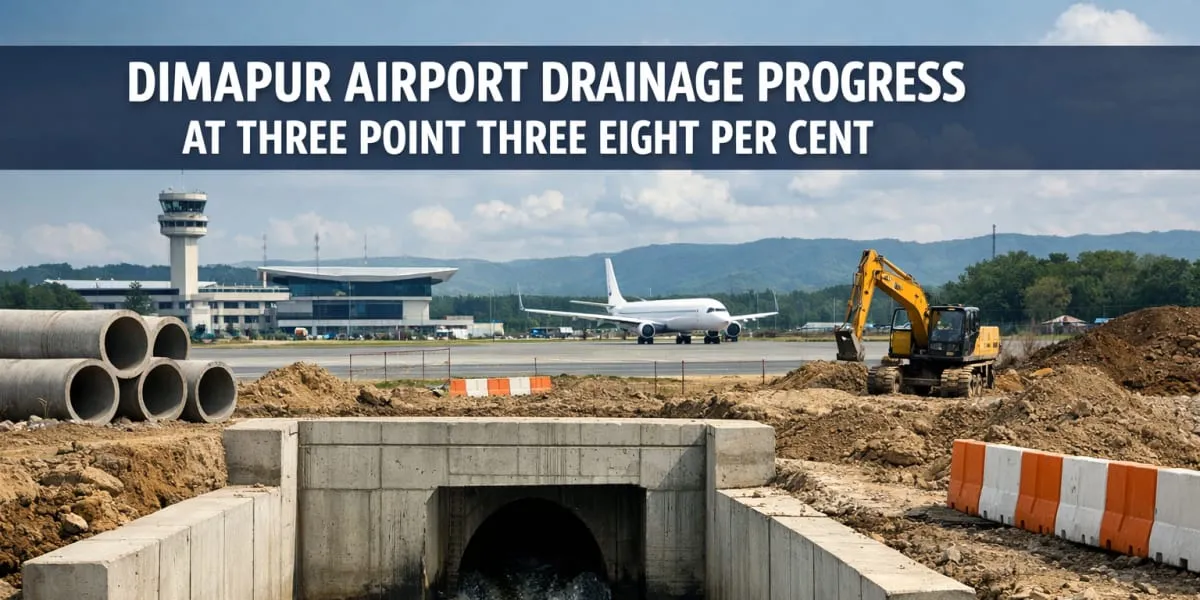
The drainage project aimed at addressing recurring flooding at Dimapur Airport recorded three point three eight per cent progress in 2024–25, according to the Ministry of Jal Shakti annual report 2025–26. The report noted that the Brahmaputra Board is implementing the Development of Dimapur Airport Drainage Scheme Phase IV at an estimated cost of Rs 248.7 million (mn). The slow pace has renewed concerns over operational resilience at the state’s only airport and prompted a review of support options at central and state levels.

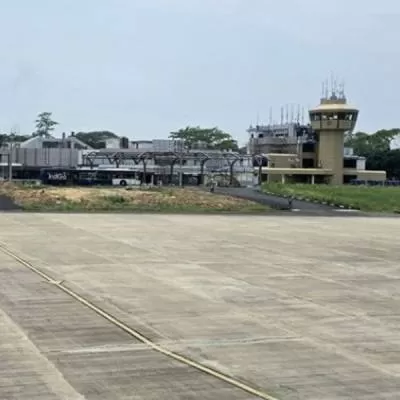
Flooding and waterlogging have repeatedly disrupted flight operations at the airport, with flights suspended in July 2025 after heavy rainfall inundated the runway and parking areas. The report attributed the problem largely to heavy runoff from the Sugar Mill Nallah, which passes through the airport operational area, and flagged the need for regular de-silting of an approximately eight km external storm water drain towards Aoyimti village. The board’s scheme is intended to reduce inundation risk and improve drainage capacity across the site.

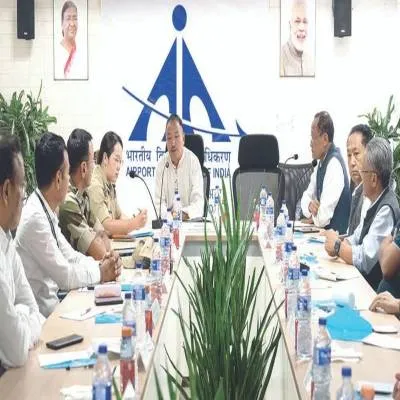
In view of the situation, the Nagaland government sought financial support from the Ministry of Jal Shakti, which asked the Brahmaputra Board to explore the feasibility of taking up the project under its River Basin Management Scheme in coordination with the state government. The report also recorded that works for pollution abatement of the Diphu and Dhansiri rivers in Dimapur have been sanctioned under the National River Conservation Plan at an estimated cost of Rs 786.5 mn, with a 25.43 MLD sewage treatment plant already commissioned. Those measures form part of a broader effort to address water quality and urban drainage challenges in the region.

At present, projects for pollution abatement of 14 rivers have been sanctioned under the plan at a cost of Rs 614.7 mn across 13 towns in Nagaland. The report informed that 13 faecal sludge treatment plants with a total capacity of 220 KLD are under implementation. Officials will monitor progress and coordinate desilting to mitigate airport flooding.

The drainage project aimed at addressing recurring flooding at Dimapur Airport recorded three point three eight per cent progress in 2024–25, according to the Ministry of Jal Shakti annual report 2025–26. The report noted that the Brahmaputra Board is implementing the Development of Dimapur Airport Drainage Scheme Phase IV at an estimated cost of Rs 248.7 million (mn). The slow pace has renewed concerns over operational resilience at the state’s only airport and prompted a review of support options at central and state levels. Flooding and waterlogging have repeatedly disrupted flight operations at the airport, with flights suspended in July 2025 after heavy rainfall inundated the runway and parking areas. The report attributed the problem largely to heavy runoff from the Sugar Mill Nallah, which passes through the airport operational area, and flagged the need for regular de-silting of an approximately eight km external storm water drain towards Aoyimti village. The board’s scheme is intended to reduce inundation risk and improve drainage capacity across the site. In view of the situation, the Nagaland government sought financial support from the Ministry of Jal Shakti, which asked the Brahmaputra Board to explore the feasibility of taking up the project under its River Basin Management Scheme in coordination with the state government. The report also recorded that works for pollution abatement of the Diphu and Dhansiri rivers in Dimapur have been sanctioned under the National River Conservation Plan at an estimated cost of Rs 786.5 mn, with a 25.43 MLD sewage treatment plant already commissioned. Those measures form part of a broader effort to address water quality and urban drainage challenges in the region. At present, projects for pollution abatement of 14 rivers have been sanctioned under the plan at a cost of Rs 614.7 mn across 13 towns in Nagaland. The report informed that 13 faecal sludge treatment plants with a total capacity of 220 KLD are under implementation. Officials will monitor progress and coordinate desilting to mitigate airport flooding.

Next Story
Infrastructure Transport

MMRDA Removes 1.14 lakh m of Metro Barricades

In a bid to ease congestion and improve urban mobility during monsoon, MMRDA has undertaken one of the largest coordinated barricade removal and monsoon preparedness drives across its ongoing metro and infrastructure projects.With substantial progress achieved in viaduct and structural works across multiple metro corridors, barricades from completed stretches beneath metro viaducts are being systematically removed, restoring maximum possible road space before the monsoon. Wider carriageways across key arterial roads are expected to improve traffic flow, reduce congestion, support better rainwa..

Next Story
Infrastructure Transport

Pune Division to Remove All Diamond Crossings by Year-End

The Pune railway division has announced plans to remove all 16 diamond crossings by the end of 2026 as part of a major yard remodelling project following the derailment of a Vande Bharat Express at Pune Junction on April 27. Railway authorities said the replacements aim to improve safety and streamline train operations across the busy station. The decision followed a Central Railway finding that the accident involved a non-standard diamond crossing and highlighted the need for replacement. Regular maintenance of existing crossings will continue until the replacement work is completed. Official..

Next Story
Infrastructure Urban

Goa Declares 80 Million Square Metres No Development Zone

The Goa state government has declared 80 million square metres (mn) of land a no development zone, designating the area as protected from new construction. The notification reclassifies tracts across the state under a no development category for planning and regulatory purposes. The declaration signals a formal halt to new building permits within the defined zone. Authorities indicated that maps will be issued to show broad boundaries while detailed surveys will refine precise limits. The move transfers responsibility for enforcement to local planning authorities and relevant departments, whic..

Advertisement

Subscribe to Our Newsletter

Get daily newsletters around different themes from Construction world.

STAY CONNECTED

Advertisement

Advertisement

Advertisement