GenusPlus Wins EPC Contract For Koolunga Battery Project
POWER & RENEWABLE ENERGY

GenusPlus Wins EPC Contract For Koolunga Battery Project

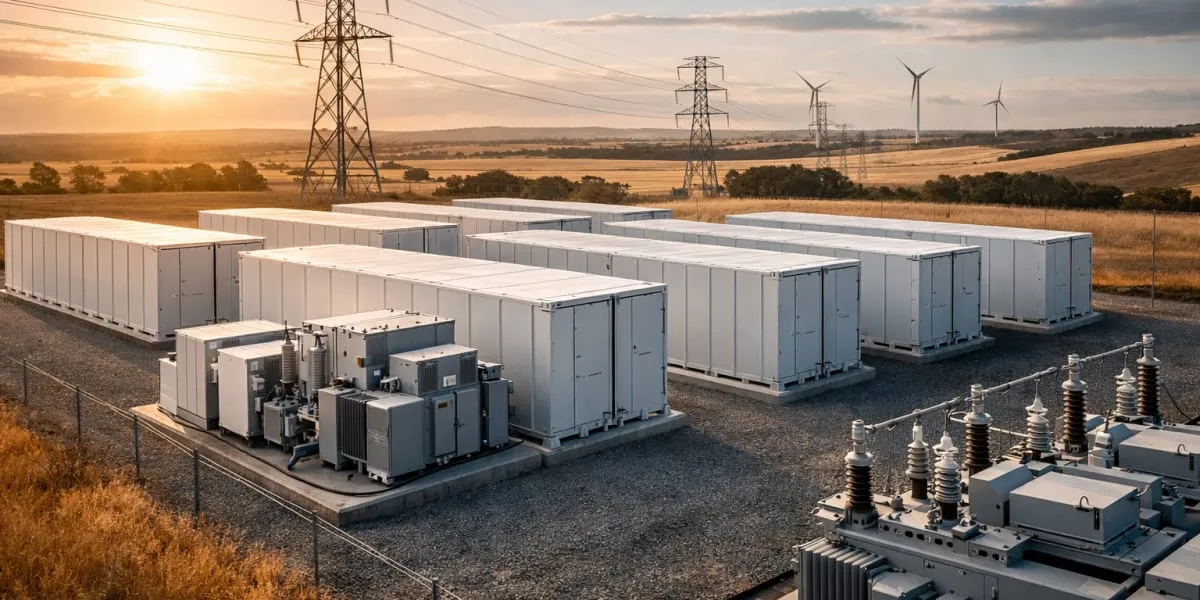
GenusPlus Group Ltd will serve as the engineering, procurement and construction contractor for the 200 megawatt and 800 megawatt hour battery energy storage project in South Australia. The turnkey EPC and commissioning contract was awarded by Equis Development Pte Ltd, owner of the Koolunga battery energy storage system project, and the deal is valued at AUD 110 million, equivalent to USD 78.9 mn and EUR 67.3 mn. The company said the contract covers the Balance of Plant scope and includes commissioning services.

The Koolunga project will be located about six kilometres southeast of Koolunga and will connect to an existing substation at Brinkworth, and it has secured required planning and environmental approvals together with community impact assessments. GenusPlus indicated that building works are expected to commence shortly and that the construction phase is anticipated to create around 110 jobs. The battery is designed to provide four hours of discharge and, when fully charged, could supply electricity to up to 26,000 homes.

The project is scheduled for commission in September 2027 and forms part of a broader shift in South Australia towards greater renewable integration, where renewables supplied the majority of generation in the last quarter of 2025. The state hosts large-scale battery facilities such as the Hornsdale Power Reserve and has high per capita rooftop solar penetration, factors that support further deployment of storage. GenusPlus said the project will strengthen local grid stability and flexibility as thermal plants retire.

Across Australia, the transition to renewables and storage is prompting a redesign of grid architecture to combine renewable capacity, battery storage, grid forming inverters, synchronous condensers and gas backup as stabilising technologies. The Australian Energy Market Operator framework highlights hybrid systems of renewables, storage and gas as the least-cost pathway to a fully renewable system by 2050, and large battery energy storage systems are expected to play a growing role in reliability and flexibility. The Koolunga contract adds to the pipeline of utility scale projects that support this transformation. Market participants noted increasing demand for integrated Balance of Plant solutions.

GenusPlus Group Ltd will serve as the engineering, procurement and construction contractor for the 200 megawatt and 800 megawatt hour battery energy storage project in South Australia. The turnkey EPC and commissioning contract was awarded by Equis Development Pte Ltd, owner of the Koolunga battery energy storage system project, and the deal is valued at AUD 110 million, equivalent to USD 78.9 mn and EUR 67.3 mn. The company said the contract covers the Balance of Plant scope and includes commissioning services. The Koolunga project will be located about six kilometres southeast of Koolunga and will connect to an existing substation at Brinkworth, and it has secured required planning and environmental approvals together with community impact assessments. GenusPlus indicated that building works are expected to commence shortly and that the construction phase is anticipated to create around 110 jobs. The battery is designed to provide four hours of discharge and, when fully charged, could supply electricity to up to 26,000 homes. The project is scheduled for commission in September 2027 and forms part of a broader shift in South Australia towards greater renewable integration, where renewables supplied the majority of generation in the last quarter of 2025. The state hosts large-scale battery facilities such as the Hornsdale Power Reserve and has high per capita rooftop solar penetration, factors that support further deployment of storage. GenusPlus said the project will strengthen local grid stability and flexibility as thermal plants retire. Across Australia, the transition to renewables and storage is prompting a redesign of grid architecture to combine renewable capacity, battery storage, grid forming inverters, synchronous condensers and gas backup as stabilising technologies. The Australian Energy Market Operator framework highlights hybrid systems of renewables, storage and gas as the least-cost pathway to a fully renewable system by 2050, and large battery energy storage systems are expected to play a growing role in reliability and flexibility. The Koolunga contract adds to the pipeline of utility scale projects that support this transformation. Market participants noted increasing demand for integrated Balance of Plant solutions.

Next Story
Infrastructure Urban

Systematix Posts FY26 Revenue Growth And Declares 10 Per Cent Dividend

Systematix Corporate Services Limited has reported audited results for the quarter and year ended March 31, 2026, signalling steady revenue growth and continued strategic investment to support expansion. The firm reported ongoing business momentum across its core financial services and noted platform building in private wealth and asset management. The board recommended a 10 per cent dividend for FY26, continuing a consistent shareholder payout record. Management indicated that investments in technology and talent aim to build long-term scale. Total income from operations for FY26 rose five pe..

Next Story
Infrastructure Transport

Maharashtra Guarantees Rs 60 bn Loan For Purandar Airport Land

The Maharashtra government has cleared a state guarantee for a Rs 60 bn loan that the Maharashtra Industrial Development Corporation (MIDC) will raise to fund land acquisition for the proposed Chhatrapati Sambhaji Raje International Airport at Purandar in Pune district. The guarantee will remain in force for one year, within which the borrowing must be tied up and the proceeds deployed for buying land and disbursing compensation to affected farmers. A formal government resolution to this effect was issued on Friday. About 3,000 acres are slated to be acquired for the greenfield airport, with t..

Next Story
Building Material

Cement Production Up Eight Point Six Per Cent To 491.4 mn t In FY26

Icra reported that cement production volumes rose by eight point six per cent in the financial year 2026 to 491.4 million (mn) metric tonne (t). March output was 48.4 mn t, up four per cent year on year on a high base. The agency projected that volumes are expected to grow by seven to eight per cent in the current financial year, supported by sustained demand from the housing and infrastructure sectors. Average cement prices were reported to have remained flat in March at Rs 340 per bag on a month on month basis, while prices for FY26 increased by two per cent to Rs 345 per bag year on year. A..

Advertisement

Subscribe to Our Newsletter

Get daily newsletters around different themes from Construction world.

STAY CONNECTED

Advertisement

Advertisement

Advertisement