+
Ashwini Vaishnaw Launches Qualcomm Two Nanometre Chip
ECONOMY & POLICY

Ashwini Vaishnaw Launches Qualcomm Two Nanometre Chip

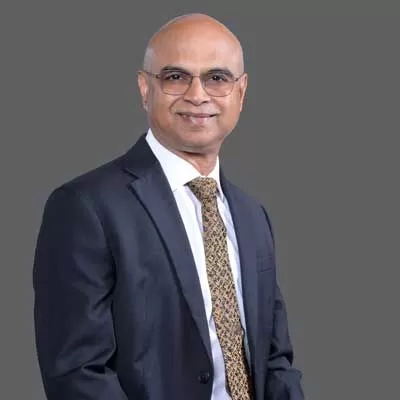
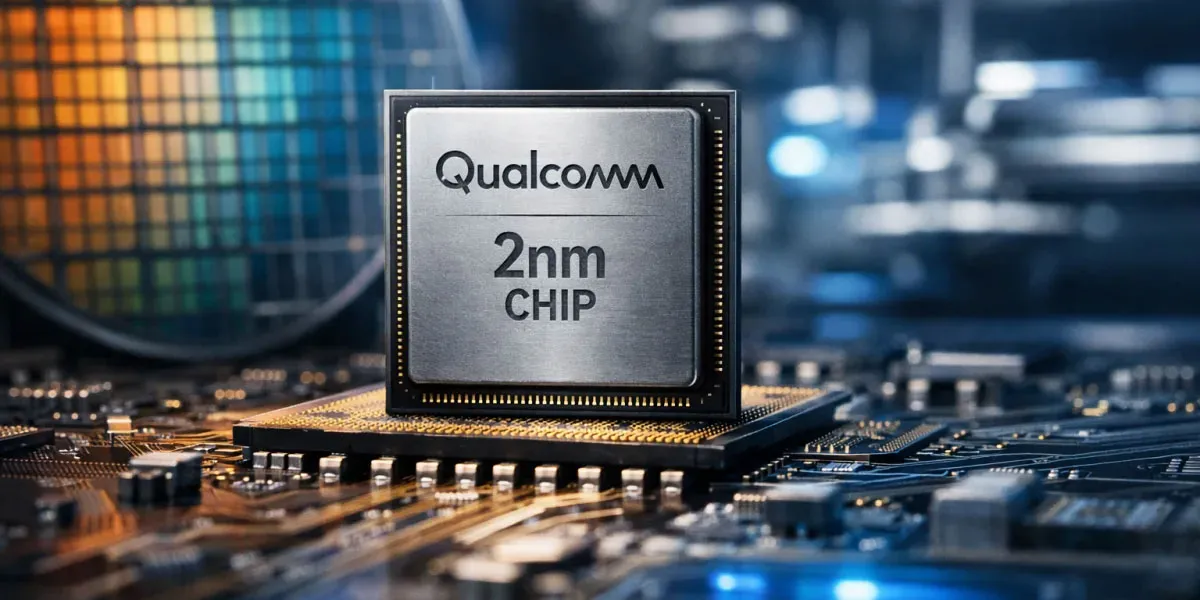
Union Minister Ashwini Vaishnaw launched a Qualcomm two nanometre semiconductor chip in Bengaluru, marking a milestone in advanced semiconductor design and highlighting India’s role in global engineering operations. The minister said he was pleased by the progress and that the world was looking to India because of its talent pool, which would drive future achievement. He added that co-creation and co-development, supported by the Prime Minister’s leadership, had opened a new chapter for the semiconductor mission.

He traced the origins to the 1960s when the Fairchild group and Intel had considered a unit in India but a past government had not prioritised the sector. The minister noted that the Prime Minister recognised the strategic need and initiated initial semiconductor machinery and a measured programme to bring units online, with at least one fabrication plant planned. The programme began with 28 nanometre technology as it covered about 75 per cent of requirements across automotive, telecom, power management and strategic applications.

He said 10 units were under construction and that four had begun pilot production, with products undergoing customer qualification and validation ahead of commercial manufacture. Since 2022, 315 universities had adopted major electronic design automation tools from Synopsis, Cadence and Siemens, enabling students to design, tape out and validate chips. This activity was creating a sizeable talent pipeline that would bolster the country’s competitive advantage.

He outlined India Semiconductor Mission 2.0, focusing first on design companies and startups, second on building the full ecosystem of equipment, chemical and gas suppliers and testing and validation capabilities in India, and third on deepening the talent base through university partnerships. The minister emphasised that as the fifth Industrial Revolution unfolded, government, industry and academia must collaborate to foster deep tech innovation originating in India and to provide greater value globally. He urged industry and academia to align curricula and to prioritise upskilling and reskilling so students and employees gained required capabilities.

Union Minister Ashwini Vaishnaw launched a Qualcomm two nanometre semiconductor chip in Bengaluru, marking a milestone in advanced semiconductor design and highlighting India’s role in global engineering operations. The minister said he was pleased by the progress and that the world was looking to India because of its talent pool, which would drive future achievement. He added that co-creation and co-development, supported by the Prime Minister’s leadership, had opened a new chapter for the semiconductor mission. He traced the origins to the 1960s when the Fairchild group and Intel had considered a unit in India but a past government had not prioritised the sector. The minister noted that the Prime Minister recognised the strategic need and initiated initial semiconductor machinery and a measured programme to bring units online, with at least one fabrication plant planned. The programme began with 28 nanometre technology as it covered about 75 per cent of requirements across automotive, telecom, power management and strategic applications. He said 10 units were under construction and that four had begun pilot production, with products undergoing customer qualification and validation ahead of commercial manufacture. Since 2022, 315 universities had adopted major electronic design automation tools from Synopsis, Cadence and Siemens, enabling students to design, tape out and validate chips. This activity was creating a sizeable talent pipeline that would bolster the country’s competitive advantage. He outlined India Semiconductor Mission 2.0, focusing first on design companies and startups, second on building the full ecosystem of equipment, chemical and gas suppliers and testing and validation capabilities in India, and third on deepening the talent base through university partnerships. The minister emphasised that as the fifth Industrial Revolution unfolded, government, industry and academia must collaborate to foster deep tech innovation originating in India and to provide greater value globally. He urged industry and academia to align curricula and to prioritise upskilling and reskilling so students and employees gained required capabilities.

Next Story
Resources

Hisense Opens First India Manufacturing Plant at Sri City

Hisense has inaugurated its first manufacturing facility in India at Sri City, Andhra Pradesh, through a joint venture with Epack Manufacturing Technologies Private Limited, a wholly owned subsidiary of Epack Durable Limited.The 10-acre facility, developed with an investment exceeding USD 30 million, is located within Epack Durable’s industrial park at Sri City and will commence commercial production from February 2026. Once fully operational, the plant will manufacture Room Air Conditioners (RACs) exclusively for Hisense India, accounting for 100 per cent of the brand’s domestic RAC outpu..

Next Story
Real Estate

Superb Realty Launches Altura, Focuses on IAQ-Led Office Design

Superb Realty has launched Superb Altura, a mixed-use Grade A commercial development at Amar Mahal junction in the Chembur–Ghatkopar corridor, positioning indoor air quality and intelligent building systems at the centre of its design strategy amid rising pollution levels in Mumbai.The development reflects a shift in office real estate priorities, where occupiers increasingly evaluate how buildings manage health, energy efficiency and operational resilience in high-pollution urban environments. Altura integrates advanced systems that continuously monitor and optimise indoor environments, cov..

Next Story
Infrastructure Transport

CPCL Tops NHAI’s First DPR Consultant Ranking

Chaitanya Projects Consultancy (CPCL) has secured the top position in the National Highways Authority of India’s first-ever provisional DPR consultants rating, achieving a score of 80.75 out of 100. The ranking places CPCL ahead of 55 peer firms, including Pentacle Consultants (78), L&T Infrastructure Engineering (76), MSV International Technology (74), and Transys Consulting (72).The rankings, released in the fourth week of January 2026, mark NHAI’s first structured and transparent evaluation of DPR consultants to improve quality standards under Bharatmala and other national highway p..

Advertisement

Subscribe to Our Newsletter

Get daily newsletters around different themes from Construction world.

STAY CONNECTED

Advertisement

Advertisement

Advertisement

Open In App