Auto PLI Draws Rs 454.77 Billion Investment Creates Over 67,000 Jobs
ECONOMY & POLICY

Auto PLI Draws Rs 454.77 Billion Investment Creates Over 67,000 Jobs

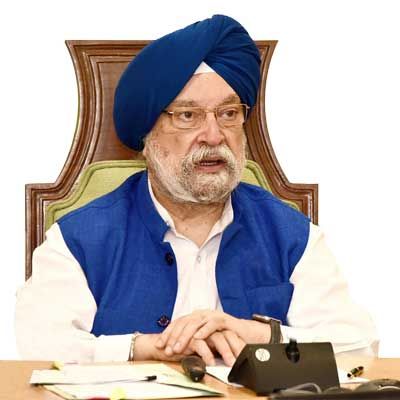
Union Minister for Heavy Industries and Steel HD Kumaraswamy said the production-linked incentive scheme for automobiles and auto components had attracted Rs 454.77 billion (Rs 454.77 bn) in investment and generated more than 67,000 jobs as of 30 June 2026.

He told the Automotive Component Manufacturers Association of India that the next phase should focus on scale, deeper localisation, innovation and positioning India as a global hub for advanced and green mobility technologies. The minister urged industry to invest in cleaner technologies to help lead the global mobility transition.

The government enhanced the outlay for electric two wheelers to Rs 119 billion (Rs 119 bn), including Rs 10 billion (Rs 10 bn), and intends the funding to support four point five seven nine million (4.579 mn) vehicles. To date the scheme has supported more than two point five six six million (2.566 mn) two wheelers, zero point two seven five million (0.275 mn) three wheelers and 53 electric trucks, and the ministry allocated Rs 43.91 billion (Rs 43.91 bn) to deploy 14,028 electric buses, of which 13,800 have been assigned.

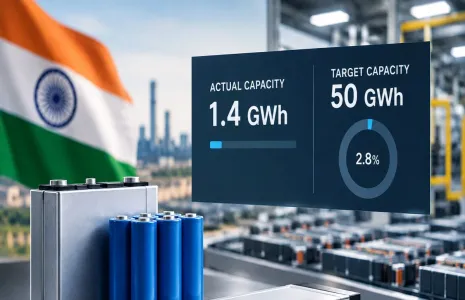
Rs 20 billion (Rs 20 bn) has been earmarked for public charging infrastructure, with approved proposals worth Rs 7.29 billion (Rs 7.29 bn) covering 7,254 chargers. A payment security mechanism with Rs 34.35 billion (Rs 34.35 bn) is to support more than 38,000 electric buses. Kumaraswamy said the PLI scheme for advanced chemistry cell battery storage, with Rs 181 billion (Rs 181 bn), aims to establish 50 GW of capacity and that efforts are under way to boost capacity in sintered rare earth permanent magnets.

ACMA President Vikrampati Singhania said the auto component industry crossed Rs 7.6 trillion (Rs 7.6 tn) in fiscal 2026, growing 12.7 per cent, while exports reached USD 24 billion (USD 24 bn). He called for closer government industry collaboration to build an automotive ecosystem capable of competing globally. The session underlined a government emphasis on scale, localisation and innovation to position India as a manufacturing and engineering hub.

Union Minister for Heavy Industries and Steel HD Kumaraswamy said the production-linked incentive scheme for automobiles and auto components had attracted Rs 454.77 billion (Rs 454.77 bn) in investment and generated more than 67,000 jobs as of 30 June 2026. He told the Automotive Component Manufacturers Association of India that the next phase should focus on scale, deeper localisation, innovation and positioning India as a global hub for advanced and green mobility technologies. The minister urged industry to invest in cleaner technologies to help lead the global mobility transition. The government enhanced the outlay for electric two wheelers to Rs 119 billion (Rs 119 bn), including Rs 10 billion (Rs 10 bn), and intends the funding to support four point five seven nine million (4.579 mn) vehicles. To date the scheme has supported more than two point five six six million (2.566 mn) two wheelers, zero point two seven five million (0.275 mn) three wheelers and 53 electric trucks, and the ministry allocated Rs 43.91 billion (Rs 43.91 bn) to deploy 14,028 electric buses, of which 13,800 have been assigned. Rs 20 billion (Rs 20 bn) has been earmarked for public charging infrastructure, with approved proposals worth Rs 7.29 billion (Rs 7.29 bn) covering 7,254 chargers. A payment security mechanism with Rs 34.35 billion (Rs 34.35 bn) is to support more than 38,000 electric buses. Kumaraswamy said the PLI scheme for advanced chemistry cell battery storage, with Rs 181 billion (Rs 181 bn), aims to establish 50 GW of capacity and that efforts are under way to boost capacity in sintered rare earth permanent magnets. ACMA President Vikrampati Singhania said the auto component industry crossed Rs 7.6 trillion (Rs 7.6 tn) in fiscal 2026, growing 12.7 per cent, while exports reached USD 24 billion (USD 24 bn). He called for closer government industry collaboration to build an automotive ecosystem capable of competing globally. The session underlined a government emphasis on scale, localisation and innovation to position India as a manufacturing and engineering hub.

Related Stories

Gold Stories

Next Story
Real Estate

WSB Real Estate Partners Exits Six Housing Investments

WSB Real Estate Partners recently announced the successful exit of six residential investments across Bengaluru, Mumbai Metropolitan Region (MMR) and National Capital Region (NCR), delivering an average internal rate of return (IRR) of 19–21 per cent and an overall investment return of 1.4 times.The real estate-focused investment firm invested approximately Rs 7 billion across six mid-affordable housing projects over the past four years. All six investments were fully repaid between April and November 2026, several months ahead of their original investment tenures.WSB collaborated with sever..

Next Story
Infrastructure Transport

Aluminium Industry Seeks Policy Support for Rs 4 Trillion Investment

The Aluminium Association of India (AAI) has recently urged the government to introduce supportive policy measures to safeguard the sector’s proposed Rs 4 trillion investment pipeline. The association highlighted the need for a predictable policy framework to strengthen domestic manufacturing, expand production capacity and reduce import dependence.AAI submitted its recommendations for the Union Budget 2027-28 to the Ministries of Finance, Commerce and Industry, and Mines, along with the Department for Promotion of Industry and Internal Trade (DPIIT).India’s aluminium demand is projected t..
Next Story
Technology

ABB Unveils Intelligent Motor to Accelerate Industrial AI Adoption

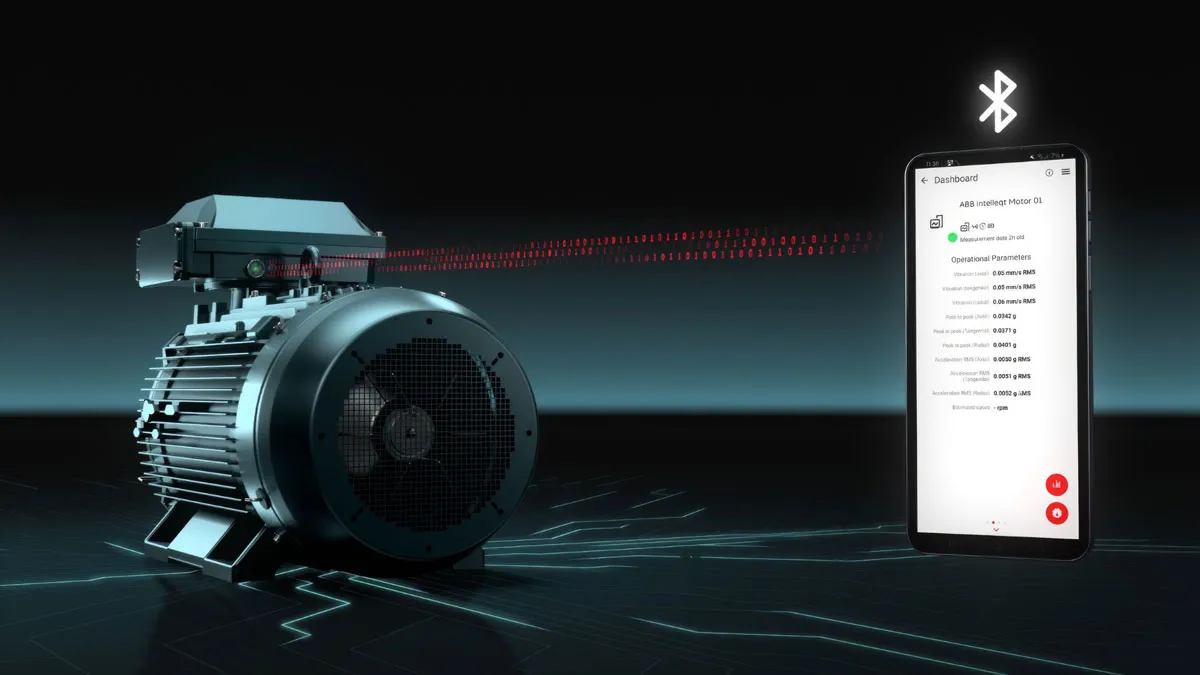
ABB recently launched Intelleqt, which it describes as the world’s first low-voltage motor with factory-integrated intelligence, at the SPS trade fair in Germany. Designed to deliver real-time operational insights from its first rotation, the motor enables industrial operators to integrate equipment-level data into existing digital platforms while retaining full ownership of their data.The launch addresses growing challenges in scaling artificial intelligence (AI) across industrial operations, particularly data quality and availability. According to Deloitte, while 84 per cent of manufacture..

Subscribe to Our Newsletter

Get daily newsletters around different themes from Construction world.

STAY CONNECTED

Advertisement

SPECIAL OFFER
QR Code