Centre Encourages PPP Approach for Harbour Crane Procurement
ECONOMY & POLICY

Centre Encourages PPP Approach for Harbour Crane Procurement

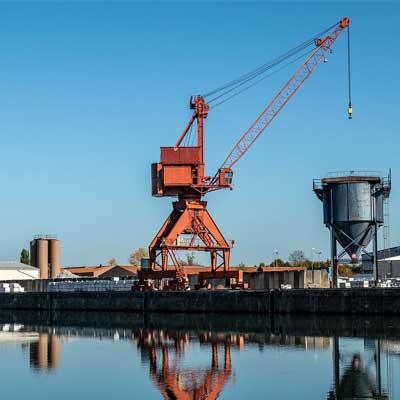
The Union Ministry of Shipping has proposed a dual strategy to Mormugao Port Authority (MPA) for acquiring a much-needed harbour crane. In a bid to enhance container transfer efficiency, MPA has been advised to explore the public-private partnership (PPP) model. However, if private sector participation proves elusive, the Ministry stands ready to fund the procurement.

The pressing requirement for a new crane emerged due to the breakdown of the port's harbour mobile crane in 2020. The subsequent intermittence in container cargo feeder services prompted cargo redirection to Jawaharlal Nehru Port Trust (JNPT), Navi Mumbai. The harbour crane is pivotal to bolstering container cargo operations at the port.

To address this issue, MPA is currently in the midst of a PPP tender for the redevelopment of berths 10 and 11. Integral to this plan is the acquisition of a 100-tonne mobile crane. The Ministry's suggestion to incorporate the crane into the ongoing PPP model aligns with broader redevelopment goals.

N Vinod Kumar, Chairman of MPA, stated, "In the event of the tender not attracting participants or receiving bids, the Ministry has offered to allocate necessary funds to the port for acquiring the crane. This acquisition is intended to streamline cargo movement."

Initially, MPA sought financial support from the Ministry under the Sagarmala mission, which was declined. The Ministry's recommendation to opt for a PPP approach aims to drive efficient and sustainable procurement.

Kumar elaborated on the forward strategy, saying, "Our hope is that a private entity will undertake the crane procurement and operate it under a revenue-sharing arrangement for ten years."

Given the specialised nature of harbour cranes and the limited supplier pool, a timeline of six to eight months is anticipated for the acquisition process. Even if the PPP route is pursued, operational readiness is expected to take a similar duration.

As the port navigates this crucial decision, the collaboration between the government and private sector is poised to shape the future of container transfer operations at Mormugao Port.

The Union Ministry of Shipping has proposed a dual strategy to Mormugao Port Authority (MPA) for acquiring a much-needed harbour crane. In a bid to enhance container transfer efficiency, MPA has been advised to explore the public-private partnership (PPP) model. However, if private sector participation proves elusive, the Ministry stands ready to fund the procurement.The pressing requirement for a new crane emerged due to the breakdown of the port's harbour mobile crane in 2020. The subsequent intermittence in container cargo feeder services prompted cargo redirection to Jawaharlal Nehru Port Trust (JNPT), Navi Mumbai. The harbour crane is pivotal to bolstering container cargo operations at the port.To address this issue, MPA is currently in the midst of a PPP tender for the redevelopment of berths 10 and 11. Integral to this plan is the acquisition of a 100-tonne mobile crane. The Ministry's suggestion to incorporate the crane into the ongoing PPP model aligns with broader redevelopment goals.N Vinod Kumar, Chairman of MPA, stated, In the event of the tender not attracting participants or receiving bids, the Ministry has offered to allocate necessary funds to the port for acquiring the crane. This acquisition is intended to streamline cargo movement.Initially, MPA sought financial support from the Ministry under the Sagarmala mission, which was declined. The Ministry's recommendation to opt for a PPP approach aims to drive efficient and sustainable procurement.Kumar elaborated on the forward strategy, saying, Our hope is that a private entity will undertake the crane procurement and operate it under a revenue-sharing arrangement for ten years.Given the specialised nature of harbour cranes and the limited supplier pool, a timeline of six to eight months is anticipated for the acquisition process. Even if the PPP route is pursued, operational readiness is expected to take a similar duration.As the port navigates this crucial decision, the collaboration between the government and private sector is poised to shape the future of container transfer operations at Mormugao Port.

Next Story
Infrastructure Transport

Large Format Store Planned At M G Road Metro Station

M G Road station in Bengaluru is set to host the city’s first large-format commercial and experience space, with planning led by Bangalore Metro Rail Corporation Limited. BMRCL has invited proposals to develop and operate a central business district destination at the Purple?Pink Line interchange. The plan positions the station as a commercial hub designed to serve a broad commuter base across the city. The proposal is part of a broader effort to activate transit nodes commercially. Tender documents set a minimum monthly rental of Rs 0.944 million (mn), inclusive of GST, for the large-format..

Next Story
Infrastructure Energy

Government Cancels Auction Of Eleven Critical Mineral Blocks

The government has cancelled the auction of 11 critical and strategic mineral blocks after receiving a poor investor response and failing to attract a sufficient number of qualified bidders. The decision represents a setback to plans to ramp up domestic exploration and production of critical minerals amid global supply chain disruptions and rising demand for materials used in clean energy and advanced technologies. The mines ministry issued an annulment notice setting out the reasons for the cancellations. The annulment notice indicated that the auction process for five mineral blocks was canc..

Next Story
Infrastructure Energy

Gujarat Pushes Biogas Growth With 193 Operational Units

Gujarat has operationalised 193 biogas plants across the state and is planning to add 60 more units as part of a broader push to scale up clean and sustainable energy solutions. The existing plants, established under various government-supported schemes, process organic waste including cattle dung and agricultural residue to produce biogas and a nutrient-rich slurry. The output is mainly used for cooking and other energy needs in rural and semi-urban communities, while also improving local waste management practices. The Gujarat Energy Development Agency (GEDA) is leading the initiative and is..

Advertisement

Subscribe to Our Newsletter

Get daily newsletters around different themes from Construction world.

STAY CONNECTED

Advertisement

Advertisement

Advertisement