Credibility of Dispute Resolution System Key to Investor Confidence: CJI Surya Kant
ECONOMY & POLICY

Credibility of Dispute Resolution System Key to Investor Confidence: CJI Surya Kant

Hon’ble Chief Justice of India Surya Kant said the credibility of India’s dispute resolution mechanisms will play a growing role in shaping how global investors evaluate the country as a dependable destination for long-term investment.

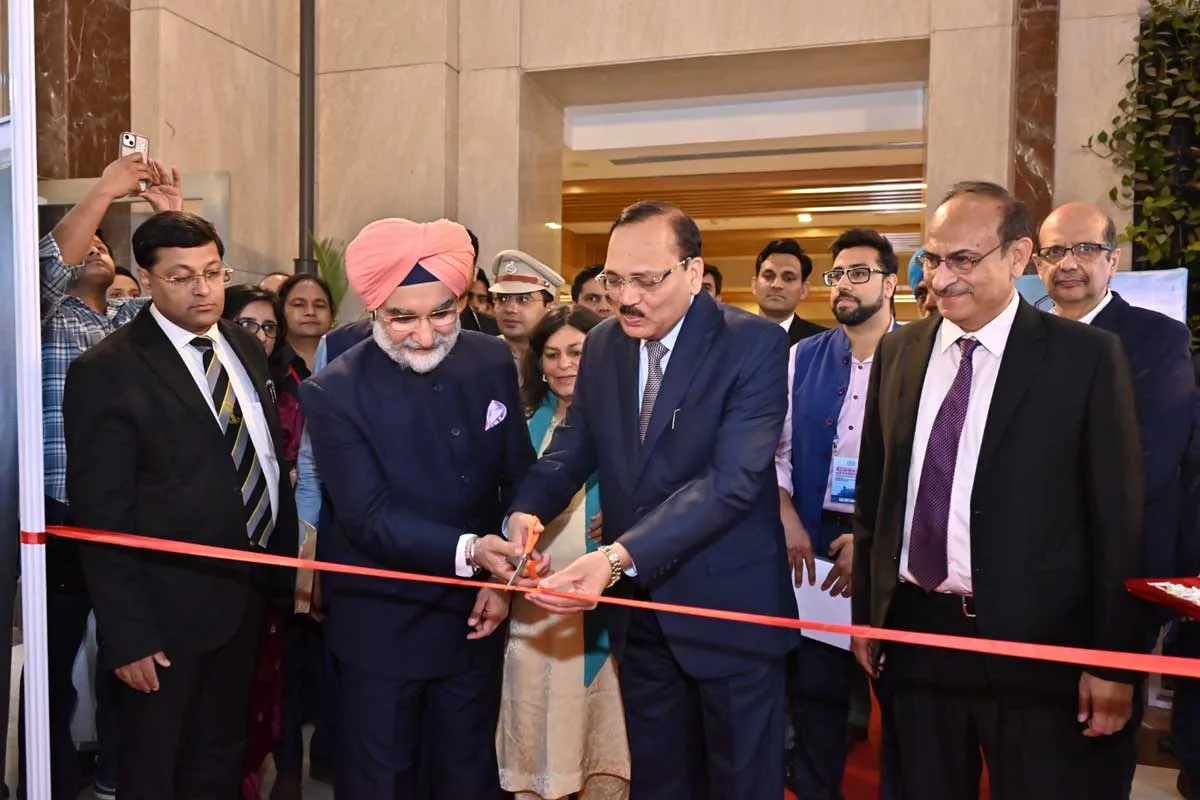
Speaking at the 5th edition of the ICA International Conference on “Arbitration in the Era of Globalization - Legal Technology, Economic Development & Cross-Border Disputes” in New Delhi, the CJI underlined that stable and predictable dispute resolution is essential for global commerce.

“Globalization ultimately depends not only upon the movement of capital, but upon the stability of expectations. Arbitration provides that stability. It reassures investors, supports commercial partnerships, and ensures that disagreement does not become disruption,” CJI Surya Kant said.

He stressed that institutional arbitration in India must continue to expand its reach, strengthen professional capacity and align more closely with global best practices. He further said that encouraging public sector bodies and large commercial entities to adopt institutional arbitration rules more frequently would support this transition.

The Chief Justice also noted that institutional arbitration can play a significant role in building specialised arbitration capacity at the Bar and within arbitral panels. “Expanding such capacity and infrastructure across the country will enhance India’s position as a global hub for arbitration,” he said.

Lt Governor of Delhi Taranjit Singh Sandhu also highlighted the importance of strengthening arbitration systems to support predictable, rules-based commerce. He said Delhi has a natural advantage in emerging as a key centre for arbitration and legal services due to its concentration of institutions, courts, regulatory bodies, law firms and corporate entities. “The development of Delhi, as a global arbitration hub is not merely a matter of infrastructure, but of institutional alignment, and sustained policy support,” he said.

Dr N G Khaitan, President, ICA and Senior Partner, Khaitan & Co, said India should actively promote institutional arbitration as a global destination. “India is one of the safest harbours to do business in the world today. The time has come that we must promote institutional arbitration. India provides and offers the cheapest institutional arbitration in the world,” he said, adding that India’s legal system and Supreme Court judgments are respected internationally.

Arun Chawla, Director General, ICA and Former Director General, FICCI, said arbitration and mediation are becoming critical pillars of investor safety amid rising geopolitical shifts, regulatory divergence and global economic uncertainty. He added that India must play a stronger role in shaping a global order driven by certainty, fairness and the rule of law.

Hon’ble Chief Justice of India Surya Kant said the credibility of India’s dispute resolution mechanisms will play a growing role in shaping how global investors evaluate the country as a dependable destination for long-term investment.Speaking at the 5th edition of the ICA International Conference on “Arbitration in the Era of Globalization - Legal Technology, Economic Development & Cross-Border Disputes” in New Delhi, the CJI underlined that stable and predictable dispute resolution is essential for global commerce.“Globalization ultimately depends not only upon the movement of capital, but upon the stability of expectations. Arbitration provides that stability. It reassures investors, supports commercial partnerships, and ensures that disagreement does not become disruption,” CJI Surya Kant said.He stressed that institutional arbitration in India must continue to expand its reach, strengthen professional capacity and align more closely with global best practices. He further said that encouraging public sector bodies and large commercial entities to adopt institutional arbitration rules more frequently would support this transition.The Chief Justice also noted that institutional arbitration can play a significant role in building specialised arbitration capacity at the Bar and within arbitral panels. “Expanding such capacity and infrastructure across the country will enhance India’s position as a global hub for arbitration,” he said.Lt Governor of Delhi Taranjit Singh Sandhu also highlighted the importance of strengthening arbitration systems to support predictable, rules-based commerce. He said Delhi has a natural advantage in emerging as a key centre for arbitration and legal services due to its concentration of institutions, courts, regulatory bodies, law firms and corporate entities. “The development of Delhi, as a global arbitration hub is not merely a matter of infrastructure, but of institutional alignment, and sustained policy support,” he said.Dr N G Khaitan, President, ICA and Senior Partner, Khaitan & Co, said India should actively promote institutional arbitration as a global destination. “India is one of the safest harbours to do business in the world today. The time has come that we must promote institutional arbitration. India provides and offers the cheapest institutional arbitration in the world,” he said, adding that India’s legal system and Supreme Court judgments are respected internationally.Arun Chawla, Director General, ICA and Former Director General, FICCI, said arbitration and mediation are becoming critical pillars of investor safety amid rising geopolitical shifts, regulatory divergence and global economic uncertainty. He added that India must play a stronger role in shaping a global order driven by certainty, fairness and the rule of law.

Next Story
Technology

AI-Enabled Workflows Lift Profitability and Productivity

Organisations modernising frontline workflows with artificial intelligence, automation and real-time data are reporting stronger financial performance, higher productivity and improved employee engagement, according to a global study by Zebra Technologies and Oxford Economics.The research covered 1,000 senior leaders across retail, manufacturing, transportation and logistics in the US, Mexico, the UK, Germany, India, Japan, Australia and New Zealand.In transportation and logistics, 54 per cent of companies that improved picking and packing operations reported faster operational performance, wh..

Next Story
Real Estate

India Leads Global AI Readiness but Implementation Lags

Indian companies lead global averages across all eight artificial intelligence readiness indicators tracked by JLL, but only 19 per cent have started making changes to their workplaces, according to the JLL 2026 Future of Work Survey.The study found that 77 per cent of Indian business leaders expect AI to change their office requirements, creating a 58-percentage-point gap between awareness and implementation. The survey covered more than 2,200 CEOs, CFOs and real estate leaders across 21 countries during the first quarter of 2026.Despite concerns over automation, 58 per cent of Indian leaders..

Next Story
Equipment

Three WOLFF Cranes Build Riyadh Cable-Stayed Bridges

Three WOLFF 180 B luffing jib cranes are supporting the construction of two cable-stayed bridges alongside the existing Wadi Laban Bridge in Riyadh, Saudi Arabia. The project is being developed for the Royal Commission for Riyadh City and executed by the ICRC joint venture comprising IC Ictas and Al Rashid Trading & Contracting Company.The cranes are handling lifting operations including formwork, reinforcement, concrete placement, work platforms, surveying equipment and other construction materials. Each crane is fitted with a 40 m jib, reaches a hook height of 157 m and offers a maximum ..

Advertisement

Subscribe to Our Newsletter

Get daily newsletters around different themes from Construction world.

STAY CONNECTED

Advertisement

Advertisement

Advertisement