Delhi gets 7,900 cr budget for infrastructure development
ECONOMY & POLICY

Delhi gets 7,900 cr budget for infrastructure development

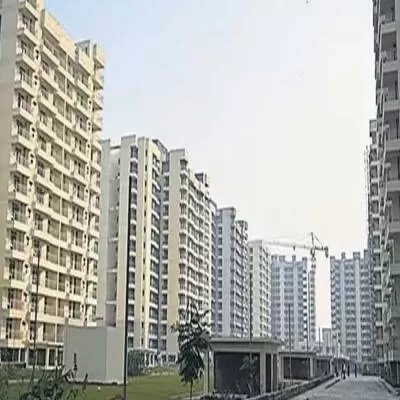
The Delhi Development Authority (DDA) allocated over one-third of the annual budget for 2022-23 worth Rs 7,933 crore for Delhi infrastructure. The funds are to be used for road development, drainage system, water, power, and so on in sub-cities including Dwarka, Rohini, and Narela.

Significant allocations have also been made by the DDA for projects such as ‘Urban Extension Road-II’ or ‘Ring Road-III’, Phase-IV project of the Delhi Metro, and Karkardooma East Delhi Hub.

The budget obtained approval in a meeting conducted by LG Anil Baijal. There is around an 18% increase in the fiscal outlay than the previous year which was Rs 6,738 crore. This financial year’s receipts are projected at approximately Rs 7,943 crore.

The multi-storeyed flats on Baba Kharak Singh and Pandit Pant Marg to be allotted to Lok Sabha members were a part of the major approvals.

The budget is termed sustainable and development-oriented. DDA has allocated Rs 2,922 crore for land development and physical infrastructure development mainly in the areas of Dwarka, Rohini, and Narela. Sewage drain construction in Dwarka Sector 8 for allowing the water discharge from IGI airport has been allocated Rs 47.5 crore. This was due to the problem of airport flooding caused by heavy rainfall.

The Narela sub-city is a ghost town because of the lack of connectivity via public transport. However, it will benefit from the budget allocation for transportation-linked projects. The Urban Extension Road–II construction project being executed by the National Highways Authority of India which will link Narela to Rohini as well as Dwarka has been allocated Rs 725 crore by the DDA.

Image Source

The Delhi Development Authority (DDA) allocated over one-third of the annual budget for 2022-23 worth Rs 7,933 crore for Delhi infrastructure. The funds are to be used for road development, drainage system, water, power, and so on in sub-cities including Dwarka, Rohini, and Narela. Significant allocations have also been made by the DDA for projects such as ‘Urban Extension Road-II’ or ‘Ring Road-III’, Phase-IV project of the Delhi Metro, and Karkardooma East Delhi Hub. The budget obtained approval in a meeting conducted by LG Anil Baijal. There is around an 18% increase in the fiscal outlay than the previous year which was Rs 6,738 crore. This financial year’s receipts are projected at approximately Rs 7,943 crore. The multi-storeyed flats on Baba Kharak Singh and Pandit Pant Marg to be allotted to Lok Sabha members were a part of the major approvals. The budget is termed sustainable and development-oriented. DDA has allocated Rs 2,922 crore for land development and physical infrastructure development mainly in the areas of Dwarka, Rohini, and Narela. Sewage drain construction in Dwarka Sector 8 for allowing the water discharge from IGI airport has been allocated Rs 47.5 crore. This was due to the problem of airport flooding caused by heavy rainfall. The Narela sub-city is a ghost town because of the lack of connectivity via public transport. However, it will benefit from the budget allocation for transportation-linked projects. The Urban Extension Road–II construction project being executed by the National Highways Authority of India which will link Narela to Rohini as well as Dwarka has been allocated Rs 725 crore by the DDA. Image Source

Next Story
Infrastructure Urban

Implementation Status of Jal Jeevan Mission

Since August 2019 the Government has implemented Jal Jeevan Mission to provide assured potable water through household tap connections in rural India. At the start of the mission only 32.3 million (mn) rural households, representing 16.7 per cent, were reported to have tap water connections. States and union territories have reported that 125.8 mn additional rural households have since been provided with tap connections. As a result, of about 193.6 mn rural households roughly 158.2 mn, or 81.71 per cent, are reported to have tap water supply at home.\n\nThe State, district and village level st..

Next Story
Infrastructure Urban

Jal Jeevan Mission Reaches Eighty One Per Cent Rural Coverage

The Government reported substantial progress under the Jal Jeevan Mission, launched in August 2019 to provide tap water to every rural household. At launch only 32.3 million (mn) rural households had tap connections and states and Union territories reported provision of 125.8 mn additional households by March 2026. Consequently, out of about 193.6 mn rural households around 158.2 mn, or 81.71 per cent, are reported to have tap water at home. The Finance Minister announced extension of the mission until 2028 in the 2025-26 budget speech. The Swachh Bharat Mission Grameen, launched in October 20..

Next Story
Infrastructure Urban

Empowering Local Governance for Sustainable Rural Water Supply

The Ministry of Jal Shakti has aligned the Jal Jeevan Mission (JJM) with the 73rd Amendment to strengthen village level planning and community ownership of water supply. Gram Panchayats, village water and sanitation committees and Pani Samitis are to plan, implement, manage and maintain piped water systems, with gram sabha processes formalising handover and oversight. Implementation support agencies including non government organisations, community based organisations and self help groups have been empanelled to train local committees and promote women participation. Under JJM, the department ..

Advertisement

Subscribe to Our Newsletter

Get daily newsletters around different themes from Construction world.

STAY CONNECTED

Advertisement

Advertisement

Advertisement